Asia-Pacific banks raise Iran war provisions as $180B credit risk looms
Asia-Pacific banks have set aside $3.8 billion in combined war-related provisions as the Iran conflict's oil shock and trade disruption begin flowing into corporate and consumer credit risk. S&P warns a prolonged conflict could drive $180 billion in additional credit losses.

Banks across the Asia-Pacific are beginning to quantify what an 11-week-old war in Iran means for their loan books. The top four Australian lenders have set aside a combined A$957 million ($694 million) in war-related provisions, and eight large Asian banks outside China and Japan have added $2.8 billion in buffers — a signal that the conflict’s oil shock and trade disruption are no longer abstract geopolitical risks confined to commodity desks.
Those numbers remain 70 to 80 per cent below the provisions banks built during the Covid-19 pandemic in 2020, and S&P Global Ratings describes the current round as a “conservative estimate of the effects to date.” But the direction of travel is unambiguous: every additional week of elevated energy prices and disrupted shipping routes pushes forward-looking overlays closer to realised credit losses.
More Asian banks have increased provisions and forward-looking overlays to reflect the risks from the Iran war… The bottom line is that even if the war ends soon, energy prices may remain elevated due to supply destruction. Interest rates may not fall, which can hurt corporate repayment capacity and pressure credit demand.
— Gary Ng, Senior Economist for Asia-Pacific, Natixis CIB
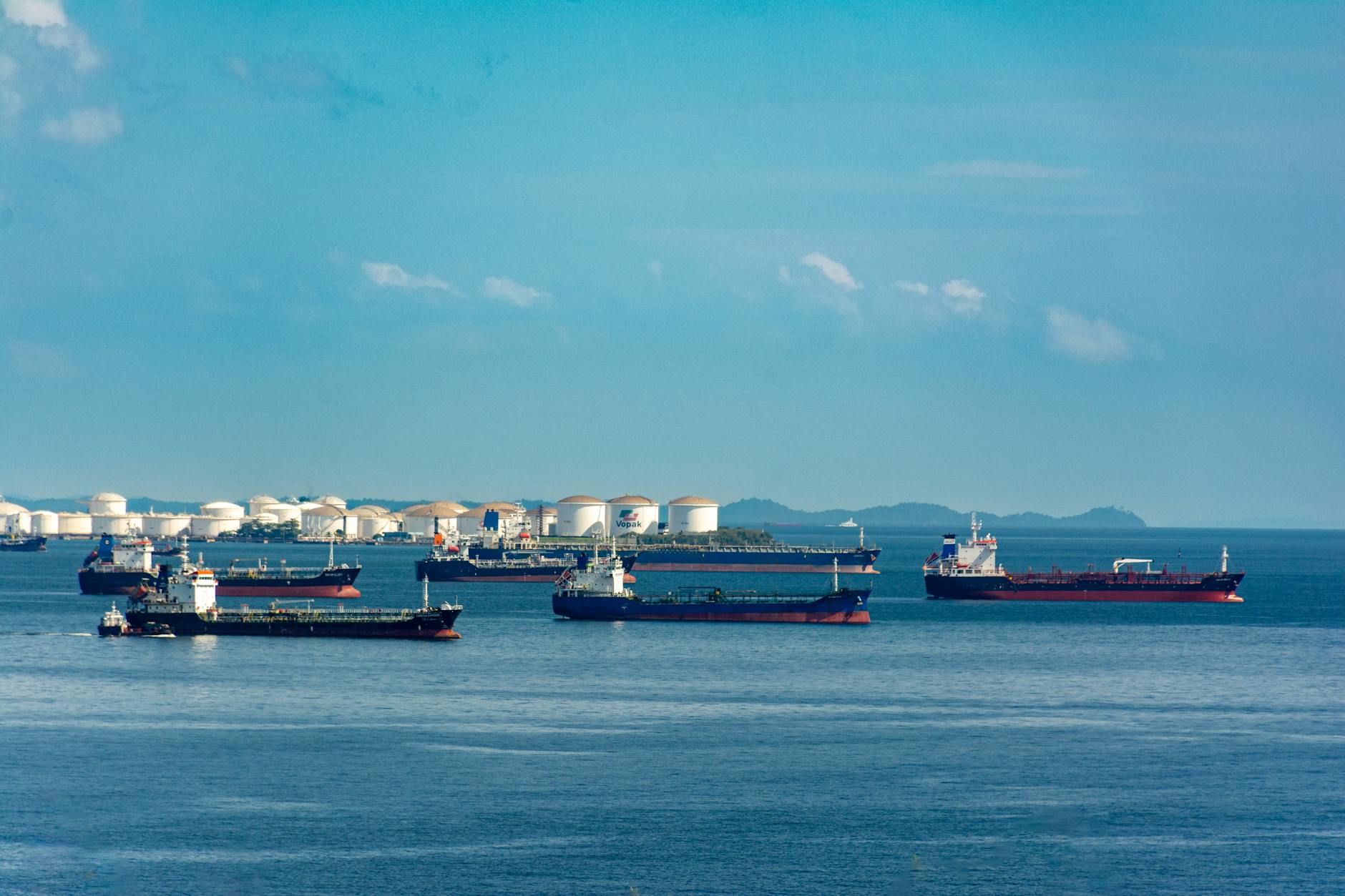
Gary Ng’s warning cuts to the core of the credit transmission chain. The Straits of Hormuz — through which roughly a fifth of the world’s oil passes — has been effectively closed to commercial shipping since late February, adding 50 to 140 per cent to freight costs and rerouting Asian trade around longer, more expensive sea lanes. For the manufacturing exporters of South Korea, Vietnam and Thailand, and the commodity importers of India and Indonesia, those costs are compounding. Ng’s point that elevated rates could outlast the shooting is the scenario that bank credit officers are now stress-testing against.

Not everyone thinks the current provisioning goes far enough. Matthew Wilson, head of financial research at Jarden, told Reuters the real impact has not landed yet.
It’s all ahead of us. Banks are late cycle and we’ll see the real impact on the domestic economy via industrials and cyclicals in the next 6 months.
— Matthew Wilson, Head of Financial Research, Jarden
Wilson’s “late cycle” diagnosis is significant because it implies the current provisioning round reflects what banks can see in their loan books today — not what will crystallise when higher input costs, reduced trade volumes and elevated borrowing rates filter through to corporate borrowers over two or three quarters. If oil stays above $100 a barrel through the third quarter, Wilson’s 6-month horizon would push the peak credit stress window into early 2027.
Australian banks: mortgage concentration meets energy inflation
Commonwealth Bank of Australia was the first mover, shedding $22 billion in market value after it flagged war-related provisions in its March-quarter update. The country’s other three major lenders — National Australia Bank, Westpac and ANZ — followed with a further A$757 million combined. NAB has lost 21.2 per cent of its share price since the war began on 28 February, and Westpac 12.4 per cent.
Australia’s big-four loan books are dominated by residential mortgages, and the Reserve Bank of Australia held its cash rate at 4.10 per cent in May, citing “persistent global uncertainty.” Higher-for-longer rates driven by energy inflation are precisely the scenario that would stress Australian mortgage books — and that is the risk Australian bank investors are now repricing.
Singapore and Southeast Asia: the second-order SME squeeze
Singapore’s three major banks — DBS, UOB and OCBC — have all stated their direct Middle East exposure is negligible, at less than 3 per cent of total lending. But that offers limited comfort when the transmission runs through trade finance and SME working capital. OCBC, the city-state’s second-largest lender, set aside S$216 million ($170 million) in war-related provisions in its first-quarter results, citing “cascading risks” to its SME portfolio.
UOB deputy chairman and CEO Wee Ee Cheong told Nikkei Asia the bank is monitoring working capital draws and repayment patterns among trade-exposed SME customers but has not yet seen a material deterioration. The question is whether that holds. S&P flags Vietnam, Indonesia and Thailand as the most exposed Southeast Asian banking markets if the conflict persists, given their relatively high SME concentration and limited sovereign fiscal buffers compared with developed APAC economies such as Australia and Singapore.
The provisioning that has currently been made represents a conservative estimate of the effects to date. If the issue can be quickly solved the provisions may be partly wound back. If the issue persists, the banks may need to provide more.
— Angus Gluskie, portfolio manager quoted by Reuters
India: pre-emptive buffers and an oil pass-through test
India’s banks are building precautionary buffers ahead of a potential second-quarter stress point. Axis Bank set aside Rs 2,001 crore, Punjab National Bank added over Rs 2,000 crore in contingent provisions, and HDFC Bank, India’s largest private-sector lender, has built a 125-basis-point provisioning buffer designed to absorb potential shocks from the conflict. Bank of Maharashtra’s CEO has warned publicly that the fallout on corporate credit quality “may emerge by Q2” if oil prices remain elevated.
India imports roughly 85 per cent of its crude, making it one of the most energy-vulnerable large economies in the region. The Reserve Bank of India held rates at 6.25 per cent in April but S&P’s downside scenario assumes a 25-basis-point hike in the second half of 2026 if oil pass-through drives headline inflation above the central bank’s 4 per cent target. Higher rates would compound the credit stress for Indian corporate borrowers already facing compressed margins from elevated input costs.
The $180 billion question
Gavin Gunning, managing director at S&P Global Ratings, frames the systemic risk in terms that go beyond any individual bank’s provisioning decision. In a detailed downside scenario published last week, S&P calculates that a prolonged energy disruption — defined as Brent crude above $110 a barrel through mid-2027 and Hormuz transit effectively blocked — could drive an additional $180 billion in credit losses across APAC banking systems over 2026 and 2027.

That figure represents roughly 2.5 times the current war-related provisioning round and would push several APAC sovereigns closer to ratings thresholds, with potential knock-on effects for the systemically important banks those sovereigns backstop. S&P notes that APAC banks’ common equity Tier-1 ratios, which currently range from 15 to 20 per cent for the region’s large lenders, provide a substantial capital buffer — but also warns that a prolonged conflict would test whether that capital is sufficient.
For now, the provisioning numbers tell a story of caution rather than alarm. A$957 million and $2.8 billion are large absolute sums, but they represent fractions of the banks’ total loan portfolios and sit well inside existing capital cushions. The Asian Development Bank has trimmed its 2026 growth forecast for developing Asia to 4.7 per cent, down from 5.1 per cent, but that is still expansion — not contraction.
What will matter over the next two quarters is the pace at which forward-looking overlays convert into actual non-performing loans. HSBC and Standard Chartered set aside $300 million and $190 million respectively in the March quarter citing Iran war caution — early signals from two of the most globally diversified lenders operating in the region. If the war persists through the northern summer, the Q2 2026 earnings season will show whether Wilson’s late-cycle warning was prescient, or whether the conservative provisioning of April and May turned out to be enough.
Naomi Voss
Banks and deals reporter covering bank earnings, fintech, M&A and IPOs. Reports from New York.