Australia AT1 phaseout draws global banks into hybrids
Australia AT1 phaseout is redirecting hybrid-bond demand to offshore issuers, showing the investor bid for bank risk has survived the crackdown.
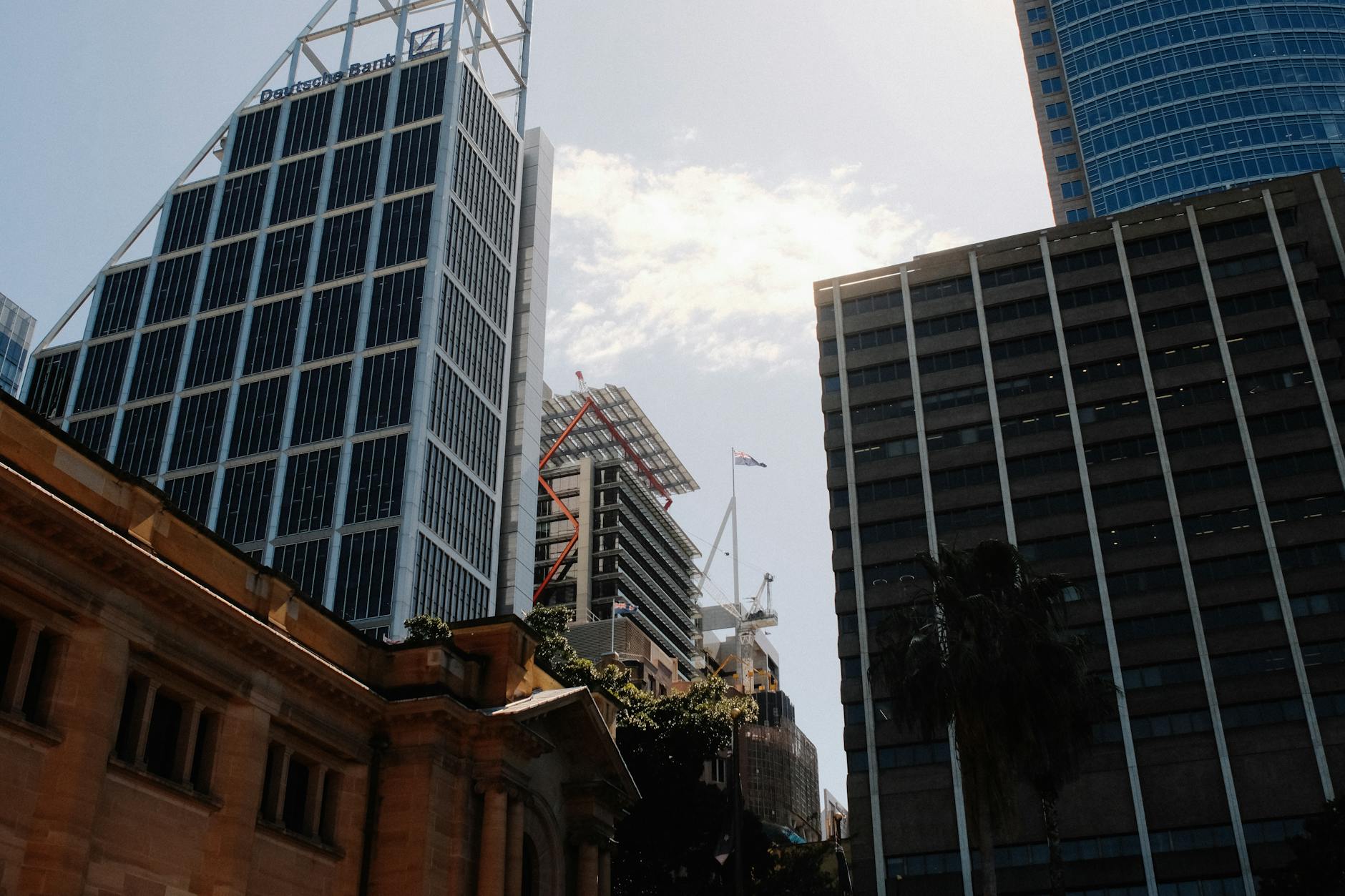
International lenders are discovering that Australia’s AT1 market was never only a domestic funding channel. With Barclays Plc preparing a dollar-denominated Additional Tier 1 deal after UBS Group AG sold A$1 billion of Australian-dollar AT1 earlier this year, the regulator-led retreat of local issuers has become a live experiment in how far investor appetite for bank risk stretches.
Australia killed the local supply pipeline, not the bid — the order books already show it. Why this matters: the Australian Prudential Regulation Authority set out to make bank capital simpler in a crisis, while investors kept pricing the same slice of the balance sheet through a portfolio lens — yield, subordination and scarcity. No funds went home after the phaseout ruling. The market swapped passports.
Viewed through a narrow prudential lens, none of this is the regulator’s problem. APRA’s case has held steady since late 2024, when it declared AT1 would stop counting as eligible bank capital from 1 January 2027 and would be fully phased out by 2032. Contractual loss absorption, the agency argued, did not deliver the kind of clean crisis resolution regulators wanted once it met real-world stress.
“While Australia’s banks are unquestionably strong, overseas experience has shown AT1 doesn’t operate as intended during a crisis.”
— John Lonsdale, APRA chair, via Reuters
Resolving one question from the policy side, that stance cracks open another from the market side. If the reform’s goal is to push Australian banks toward thicker, more legible capital stacks, then offshore issuance into the same investor base isn’t a contradiction. Call it collateral damage, or proof that the old hybrid market housed two businesses under one roof: a regulatory capital tool for banks and an income product for buyers. APRA can extinguish the first inside Australia. Legislating away the second lies beyond its remit.
A 2026 note from Lonsec sized the local hybrid market at more than A$40 billion and argued demand would not evaporate simply because local bank supply stopped. Portfolio Adviser made the structural point more bluntly: Australian hybrids had become unusually retail-heavy, while European and US AT1 markets were held almost entirely by institutions. Embedded in that mix was always the expectation that the phaseout would land as a portfolio shock at least as much as a prudential reform.
What makes the first replacement deals matter, then, isn’t their size. No one needs to demonstrate that a foreign bank can raise money in Australia. The buyer base still treats AT1 as a usable sleeve for bank risk, provided the issuer sits outside APRA’s perimeter. Australian demand is proving portable.
Why offshore banks can step in
Foreign lenders can fill the gap because APRA’s rule change is about what counts as regulatory capital for Australian banks, not about whether Australian investors are allowed to buy loss-absorbing bank paper from somebody else. BNP Paribas and UBS were able to test the market for precisely that reason, and Barclays is now lining up behind them. Demand survived the rule rewrite.

For the domestic banks, the replacement arithmetic looks more sober. APRA said the roughly 1.5 per cent AT1 layer in large-bank capital structures would be replaced mainly by 1.25 per cent more Tier 2 capital, with no change to overall capital requirements. Quality and crisis usability drove the decision, not a push to make banks carry more capital in aggregate.
“There will be no overall increase in capital requirements for banks.”
— APRA
Even if that formula calms one obvious fear — that Australian lenders would be shoved into a meaningfully higher funding burden just as global credit markets become less forgiving — it still does not erase the competitive asymmetry. Domestic lenders lose a product that offshore peers can keep selling into Australia. Part of the economics of Australian demand for subordinated bank risk now accrues to foreign balance sheets. The market survived by changing issuers, and Barclays’ timing makes that the real takeaway.
Sharpening the cross-border angle further is a broader debate over contingent capital shaped by the failures and forced rescues that occupied regulators for several years. Australia’s answer: simplify. Europe’s answer: keep the instrument but live with tougher questions about documentation, investor understanding and resolution credibility. In becoming a live comparison between those approaches, Australia’s market now poses an awkward question. The more smoothly offshore AT1 deals clear, the harder it is to argue the product itself was unfinanceable. As APRA’s case strengthens on crisis design, the entire argument pivots from demand to resolvability.
What investors lose and regulators gain
Investors left behind are not incidental to that story. Retail buyers owned an unusually large share of Australian hybrids, which means the phaseout removes not just a bank funding tool but also a familiar income product. Some of that money can migrate into Tier 2 debt, senior bank paper or other credit instruments. A portion will go offshore, chasing the same risk through foreign issuers. None of those substitutes fully recreates the old package of yield, brand familiarity and franked-income appeal that made bank hybrids sticky in local portfolios.

Seen from a broker statement rather than Canberra, the reform looks messier. APRA’s transition timetable is long enough to avoid a funding shock, but it still forces a slow reallocation of household capital. Investors who once expressed a bullish view on Australian bank balance sheets through domestic hybrids are being told to choose again: accept lower risk and lower return elsewhere in the capital structure, or keep the risk profile and buy it from a foreign issuer.
For advisers and wealth platforms, the unresolved question is how much displaced money can be absorbed by Tier 2 without erasing the income profile hybrid buyers had come to expect. Portfolio construction will do part of APRA’s work slowly. Money shifts down the risk curve, some leaves bank capital altogether, and some follows offshore issuers — a repricing of demand, not its disappearance.
“This release concludes our multi-year review of AT1.”
— Therese McCarthy Hockey, APRA member, via APRA
Read as a tidying-up exercise, the official line holds — this is not a retreat from market funding. In prudential terms, APRA may be right. A capital structure that relies less on a trigger-heavy instrument and more on common equity and Tier 2 debt is easier to explain and, in theory, easier to resolve under stress. Yet the early market evidence points to something beyond that: the investor constituency built around Australian hybrids ran deeper than the instrument’s domestic regulatory use case.
What that means beyond Australia cuts to the core of the global AT1 argument. Regulators can decide whether a capital instrument works for supervised banks in a crisis. Markets decide whether the underlying risk still clears at the right price. Australia’s phaseout shows those judgments can diverge for years. Local banks are being pushed out of AT1, yet the capital-market machinery around AT1 remains active enough for global lenders to step in and monetise the gap. APRA may yet win the prudential argument. For now, the market verdict is narrower and more inconvenient: Australia killed AT1 for its own banks, but it did not kill the trade.
Naomi Voss
Banks and deals reporter covering bank earnings, fintech, M&A and IPOs. Reports from New York.