SpaceX S-1 Filing: Starlink Made $4.4B. AI Lost $6.4B. The IPO Targets $1.75T.
SpaceX lost $4.94B in 2025 as AI capex hit $12.7B, its S-1 filing revealed. Starlink's $4.4B operating profit funded a $6.4B AI division loss. The $1.75 trillion IPO opens what could be the largest listing year in history.
SpaceX lost $4.94 billion last year. Its satellite internet business earned $4.42 billion in operating income. Its artificial intelligence division lost $6.36 billion. And the company wants public investors to value the whole enterprise at $1.75 trillion.
Those are the headline numbers from the nearly 400-page S-1 registration statement SpaceX filed with the Securities and Exchange Commission on Wednesday, kicking off what is expected to be the largest initial public offering in history. The filing, which could raise up to $75 billion, opens the books on a company that has guarded its financials more closely than any private enterprise of comparable scale.
What the document reveals is a business that has quietly transformed itself. The company that lands orbital-class rockets on drone ships is, by any financial measure, now an AI infrastructure provider with a satellite broadband arm on the side.
The future of AI will be determined by control of the physical stack.
— SpaceX S-1 registration statement
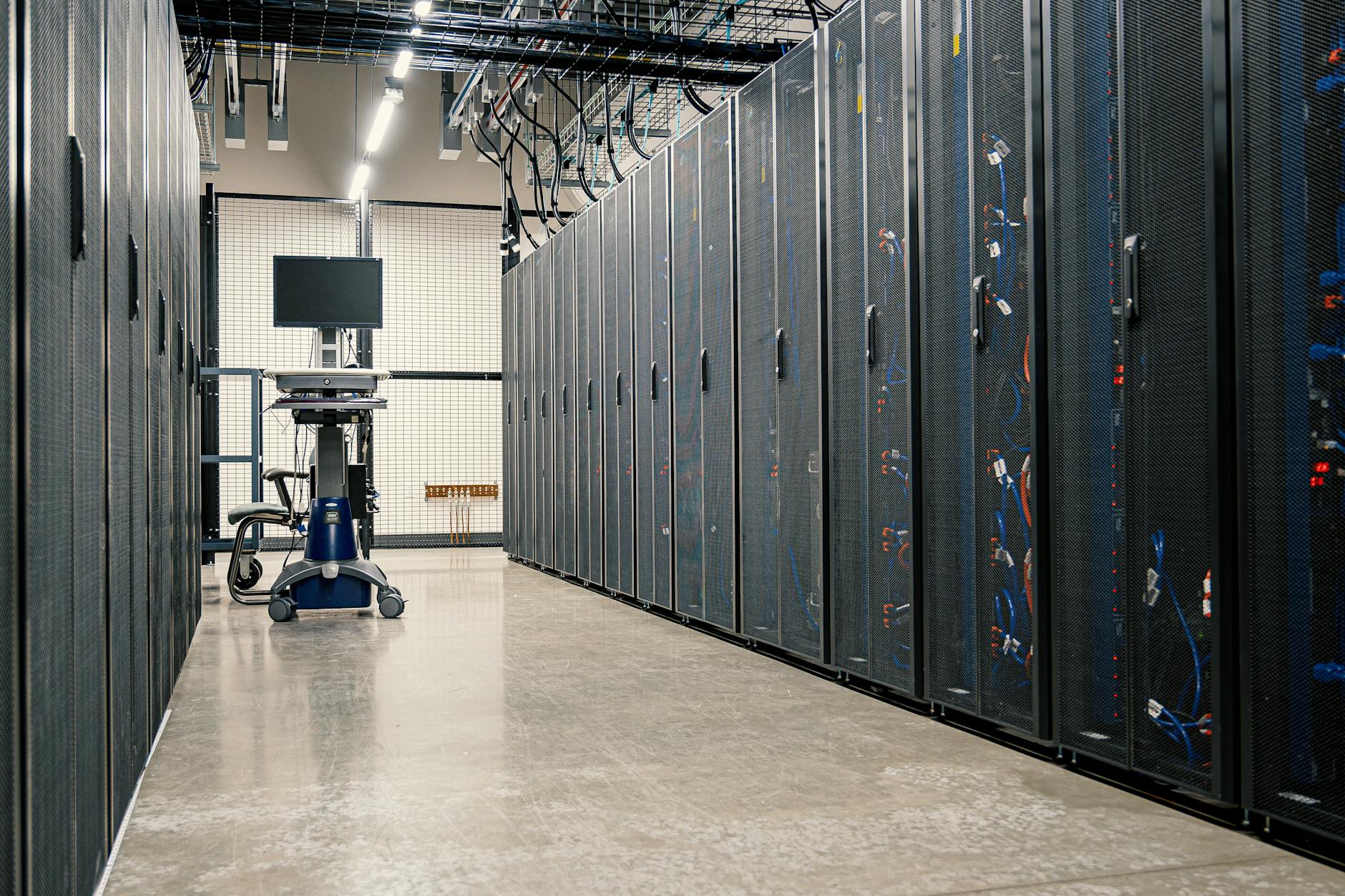
Of the $20.7 billion SpaceX spent on capital expenditure in 2025, $12.7 billion — 61 per cent — went to its AI segment. That exceeded the combined capex of its Space division ($3.8 billion) and its Connectivity segment, which houses Starlink ($4.2 billion). In the first quarter of 2026 alone, AI capex hit $7.7 billion, an annualised run-rate of roughly $30.8 billion that shows no sign of slowing.
The AI division, which houses xAI and its Colossus supercomputer infrastructure, generated $3.2 billion in revenue in 2025. It lost $6.36 billion. The losses are accelerating: the segment’s operating loss widened in the first quarter of 2026, and the S-1 offers no timeline for breakeven.
The Anthropic paradox
Buried in the filing is a detail that complicates the AI investment thesis. SpaceX has been selling compute capacity on its Colossus infrastructure to Anthropic — a direct xAI competitor — at $1.25 billion per month through May 2029. The deal is worth roughly $15 billion a year in guaranteed revenue, a figure Wired reported on Wednesday makes Anthropic one of SpaceX’s largest customers.
For an AI division burning cash at an accelerating rate, $15 billion in annual third-party compute revenue is meaningful. But it also partially neutralises the very compute advantage xAI is spending $30 billion a year to build. Anthropic, which expects to book approximately $10.9 billion in second-quarter revenue and is approaching its first operating profit, is using SpaceX’s own infrastructure to compete against xAI.
The S-1’s risk factors do not name Anthropic directly on this point, but the filing’s language is unusually blunt about the AI segment’s uncertainties. Orbital AI data centres — the long-term vision that underpins much of the $1.75 trillion valuation narrative — “may not achieve commercial viability,” the filing states. The technology is described as early-stage and unproven, with no deployment timeline attached.
But the sceptical reading is not the only one. Dan Ives, the Wedbush analyst who has been the loudest public bull on the SpaceX IPO, argues that treating the AI losses as a straightforward negative misreads the business. The $12.7 billion in AI capex is building an asset — compute infrastructure — that generates both xAI’s own models and third-party revenue from customers including Anthropic. In that framing, the losses are investment, not waste.

The Starlink floor
What makes the AI bet possible is Starlink. The satellite broadband business generated $4.42 billion in operating income in 2025 on what the filing implies is a 63 per cent segment adjusted EBITDA margin. Subscriber growth is running at roughly 2x year-over-year: 10.3 million subscribers as of March 2026, up from 5.0 million a year earlier.
Starlink’s operating profit alone was enough to cover more than two-thirds of the AI division’s $6.36 billion loss. Without Starlink, the cross-subsidy chain that funds Starship research and development ($3.0 billion in 2025) and the AI division’s negative cash flow would collapse.
Any failure or delay in the development of Starship at scale would delay or limit our ability to execute our growth strategy.
— SpaceX S-1 registration statement
The question for public investors is how long the subscriber-growth engine can sustain its trajectory before market saturation begins to flatten the curve. The S-1 does not provide a total addressable market estimate for Starlink, but the filing notes that competition from terrestrial fibre, other satellite constellations, and regulatory barriers in key markets — including China and India — could limit growth.
SpaceX’s Space division remains the smallest contributor by both revenue and profitability. Launch services generated approximately $4.1 billion in revenue in 2025 and posted a $657 million operating loss, weighed down by the $3 billion Starship programme. The launch business itself, excluding Starship R&D, is modestly profitable — but the S-1 makes clear that Starship is years away from generating meaningful commercial revenue.
Governance and the IPO wave
The filing’s governance disclosures will command as much attention as its financials. Elon Musk holds 85.1 per cent of combined voting power through a dual-class share structure that will survive the IPO. Class B shares carry 10 votes each; Class A shares, which are what the public will buy, carry one. The arrangement means public shareholders will have no meaningful say over executive compensation, related-party transactions with Musk’s other enterprises — including Tesla and xAI — or the scale of AI capital expenditure.
An investment in our Class A common stock involves a high degree of risk.
— SpaceX S-1, Risk Factors summary
The S-1’s 36 pages of risk factors are a sobering read even beside the eye-watering numbers. Beyond the orbital-compute warning, the filing flags that Starship delays “would delay or limit our ability to execute our growth strategy,” that Musk’s successor “may not be selected in a timely manner or at all,” and that the company faces regulatory exposure across multiple jurisdictions — including ongoing investigations related to Grok, xAI’s large language model.
Eric Talley, a corporate governance specialist at Columbia Law School who has written extensively on dual-class IPOs, notes that the SpaceX structure concentrates risk alongside power. When a public company’s CEO simultaneously runs Tesla, xAI, and SpaceX, the question of where fiduciary duty sits in a conflict — between what benefits SpaceX shareholders and what benefits Musk’s broader interests — has no clean answer in the S-1.
SpaceX’s filing does not arrive in a vacuum. OpenAI is expected to confidentially file for its own IPO as soon as Friday, working with Goldman Sachs and Morgan Stanley on a listing that could come as early as September. Anthropic is also exploring a debut, putting 2026 on track to be the largest year for IPOs ever recorded. SpaceX’s public S-1 provides the pricing benchmark against which every subsequent AI listing will be measured.
At $1.75 trillion, SpaceX’s target valuation represents a roughly 40 per cent premium over Scottish Mortgage Investment Trust’s last private mark of approximately $1.25 trillion. For that price, public investors are buying three things: Starlink’s demonstrated profitability and subscriber trajectory; the optionality of Starship as a commercial platform years from now; and the belief that $30 billion a year in AI compute capex will eventually generate returns that justify the spend.
The filing itself offers reason to pause on all three. Starlink’s growth rate is strong but saturation risk is unquantified in the document. Starship’s timeline is explicitly uncertain. And the AI division’s losses are widening at the same moment its largest customer — Anthropic — is approaching profitability using SpaceX’s own rails.
As the SpaceWar analysis put it in the hours after the filing dropped, the S-1 “contains the refutation of its own central investment thesis.” Public markets are about to decide whether they care.
Sloane Carrington
Markets columnist. Analytical pieces and deep-dives on monetary policy, capital flows and corporate strategy. Reports from New York.