Japan borrowing costs hit 30-year high on debt fears
Japan borrowing costs hit 2.83 per cent, the highest since 1996, as debt worries and a still-hawkish BOJ pushed bond yields higher.
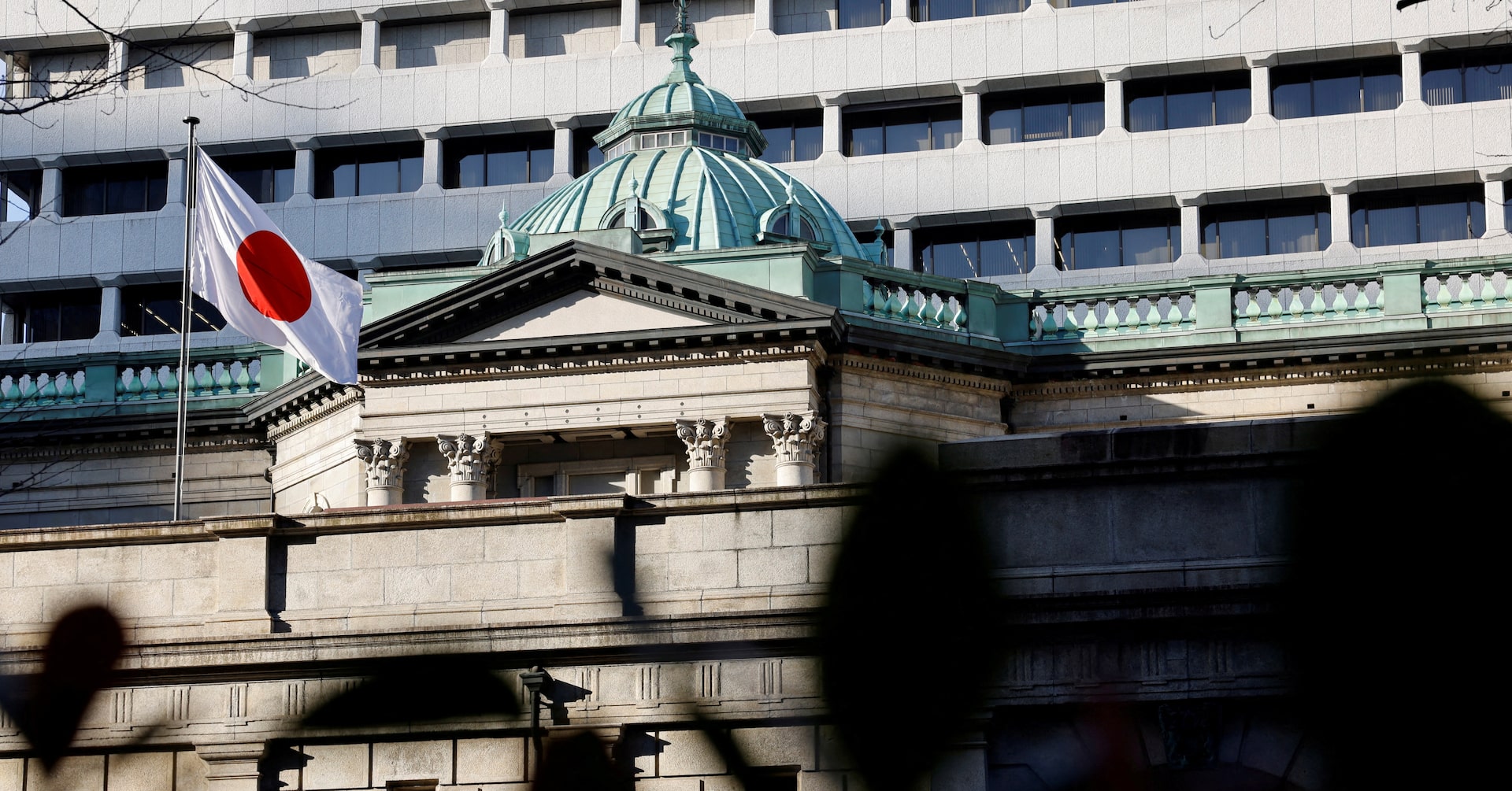
Japan’s benchmark borrowing cost touched a three-decade high on Wednesday, after investors cut exposure to long-dated government debt. The 10-year Japanese government bond yield hit 2.83 per cent, putting fiscal risk back into a market already testing how much further the Bank of Japan can tighten.
The marker was stark. The Financial Times reported that the jump took benchmark borrowing costs to levels last seen in 1996, a sharp break for a sovereign market that spent years under the shelter of central-bank buying.
Fiscal anxiety was only part of the move. Bloomberg reported that Japanese bank lending rose 6.3 per cent in June from a year earlier, the fastest pace since August 2020. For the BOJ, that is evidence that credit demand remains firm even after the recent bond-market adjustment.
Traders are now weighing two pressures at once: heavier spending risk from the government and a central bank that may still have room to lift rates.
Tokyo’s wording made the market more sensitive. A separate Bloomberg report, citing the Asahi newspaper, said the government may alter language on monetary policy in its annual economic plan. In a quiet market, that might have passed as drafting nuance. With yields rising, it fed concern that elected officials could try to influence the BOJ.
Economy minister Minoru Kiuchi pushed back on that reading. He told Reuters there was no change in the government’s position that specific monetary policy decisions fall under the BOJ’s jurisdiction. The clarification was aimed at a market wary that higher funding costs could pull politicians toward lower-rate rhetoric.
Within the BOJ, the argument is still conditional. Board member Toichiro Asada told Reuters he was not opposed to rate increases in principle, despite voting against the latest move, and said any future support would depend on evidence that inflation is being driven by demand rather than temporary cost pressures.
“I am not always opposed to rate hikes. I voted against one this time, but I intend to make decisions based on an assessment of prevailing conditions at each point in time.”
Toichiro Asada, Bank of Japan board member, to Reuters
Asada’s numbers show why the debate is not close to normal. Reuters reported that he put Japan’s nominal neutral rate in a range of 1.1 per cent to 2.5 per cent and said the BOJ’s government bond holdings were still roughly 80 per cent of nominal gross domestic product.
Even after the rise in yields, Japan is unwinding an unusually heavy policy footprint.
Why the selloff deepened
That leaves private investors with a harder calculation. If the government presses ahead with large spending commitments while the BOJ keeps reducing monetary support, the market has to absorb more duration risk just as official demand becomes less reliable.
The selloff therefore looks less like a one-day reaction than a funding warning. Once the benchmark yield crossed territory unseen in almost 30 years, attention moved from wording in Tokyo to whether Japan can fund its ambitions at materially higher rates, as the FT and Reuters reporting indicates.
The next test is whether stronger credit growth and the demand-driven inflation Asada wants to see outweigh the stress created by higher yields. Wednesday’s trading sent a plainer signal for now: Japan’s debt market is no longer insulated from the trade-off between fiscal ambition and tighter money, and testing that trade-off has become more expensive than at any point since the 1990s.
Helena Brandt
Macro reporter covering the Federal Reserve, ECB, inflation prints and jobs data. Reports from Washington.