ECB rate hike 2026: Iran oil shock redraws stocks
ECB rate hike 2026 expectations are forcing traders to price two moves, higher oil and a harder split across European stocks.

European traders enter the new week with a sharper problem than their US peers: the European Central Bank is expected to tighten policy while the Iran war keeps the energy channel hot. Equity desks now have to decide which sectors can still carry that load.
Whether the ECB lifts rates again is no longer the real question. A 0.25 percentage-point move is close to a done deal, with economists surveyed by Reuters seeing the deposit rate at 2.25 per cent after Thursday’s meeting and another increase likely in September. What matters more is the trade after the first hike, because Europe is being asked to absorb higher policy rates, oil-price pressure and a valuation base that is no longer cheap.
In that setup, the ECB has a cleaner hawkish profile than the rest of the G7. The Federal Reserve is still balancing resilient US labour data against political pressure for easier money. Japan’s central bank has its own currency and wage complications. Frankfurt, by contrast, has a more direct inflation problem: euro-zone inflation rose to 3.2 per cent in May, Reuters reported, with energy and services doing enough damage to keep the Governing Council focused on expectations.
Trading desks read the same evidence differently. An imported oil shock is not a demand boom, so a hawkish response can protect credibility while still cutting into earnings, balance sheets and consumer spending. Sector selection therefore matters more than the meeting statement.
The ECB’s cleaner hawk case
Start with the part of inflation Europe cannot easily wish away. In its April policy decision, the central bank said energy prices had weakened confidence and that the persistence of the war mattered for the inflation path.
The longer the war continues and the longer energy prices remain high, the stronger is the likely impact on broader inflation and the economy.
ECB Governing Council
That sentence, from the ECB’s monetary policy decision, is doing most of the work. It makes the hawkish turn less about one inflation print and more about second-round effects: wages, services prices, expectations and the risk that firms treat higher energy costs as a permanent input rather than a temporary shock.

Bloomberg’s policy read puts the ECB in the role of the G7’s lead hawk, with officials treating the war-driven energy shock as a reason to lean against inflation rather than wait it out. Equity investors preferred a different pattern in 2024 and 2025, when every soft price reading could be traded as a future cut.
Cleaner does not mean safer. The inflation threat is visible, but the growth backdrop is not strong. Europe is tightening into an oil shock, not out of a productivity boom, which is why the trade can look logical to policymakers and uncomfortable to equity holders at the same time.
Markets price a cycle
By now, the first hike has lost most of its informational value. Reuters polling shows economists expect the ECB to raise rates by 0.25 percentage point this week and see another move as likely in September. Bloomberg’s trader guide says markets have at least two increases priced through year-end.
That makes Thursday a path-setting meeting. A single move to 2.25 per cent can be digested if traders believe oil prices normalise and inflation rolls over. A cycle is different. It pushes discount rates higher, lifts funding costs and forces equity investors to score companies by pricing power rather than index weight.
Roland Kaloyan, Societe Generale’s head of European equity strategy, captured the gap between what the market has priced and what it still wants to believe in Bloomberg’s stock-trader guide.
The ECB’s rate hike in June is fully anticipated by the market, which however really wants to believe that the rise in oil prices and inflation will prove temporary.
Roland Kaloyan, Societe Generale
No one is shocked by the hike. The exposure is to a regime in which the hike becomes the first move and the ECB has less room to comfort markets after every weak data print.
Valuation makes the adjustment harder. The Stoxx Europe 600 trades around 15 times forward earnings, according to Bloomberg’s sector guide, compared with less than 12 times in 2022. Europe still trades at a discount to the US, but it is no longer priced as if bad news has already done all the work.
Banks and energy get first call
Higher rates usually land first in financials, and this setup is no exception. Banks have the clearest near-term argument because higher policy rates can support net interest income, especially if credit losses do not accelerate quickly. Lenders with deposit franchises can present a higher-rate ECB as margin relief rather than an outright macro threat.
That argument has limits. Weak growth can still hurt loan demand and push defaults higher. Against rate-sensitive property companies or long-duration growth names, though, European banks enter the week with a simpler story to sell: policy tightening can help revenue before it hurts credit.
Energy majors carry a different cushion. The Iran war has tightened the oil conversation, and Reuters reported that world shares fell while oil jumped as Middle East unrest deepened. If crude stays bid, integrated oil companies can benefit from the same shock that complicates the ECB’s job.

Politics and demand are the check on that trade. High oil prices can support cash flow, but they also tax consumers and industrial firms. Bob McNally, the former White House energy adviser, warned in the Financial Times that an oil shock does not stay neatly inside the energy complex.
It detonates fragilities in the broader economy and financial system.
Bob McNally
FT reporting on US oil inventories, which fell to the lowest level since 2004, gives the European equity trade a global fuel-price backdrop. This is not just a euro-zone inflation story. It is a supply-security story feeding into central-bank reaction functions.
The rate losers look exposed
Crowding sits on the other side of the trade. Real estate is the clearest pressure point because higher yields cut property values, lift refinancing costs and make dividend stories less attractive. Bloomberg’s trader guide puts 2026 real-estate profit growth at minus 2.1 per cent, compared with 4.9 per cent for utilities and 12 per cent for the benchmark.
Utilities occupy a greyer zone. Regulated cash flows can look defensive when growth slows, but bond-like equities lose some appeal when policy rates rise and sovereign yields reset. The sector can defend earnings better than property, yet still suffer if investors demand a larger yield premium.
Luxury faces a different problem. It is less mechanically tied to ECB policy than real estate, but more exposed to the confidence channel. Higher energy bills and tighter credit do not hit the high-end consumer first. They do matter for the broader European demand pulse, China-linked sentiment and the market’s willingness to pay premium multiples for cyclical growth.
Here the skeptic’s case deserves a hearing. If the oil shock damages demand quickly enough, companies may find it harder to pass through costs. Inflation can stay too high for the ECB while earnings momentum softens. That is not a clean stagflation call, but it is close enough to make index-level comfort dangerous.
Equity traders cannot rely on weak growth to stop the ECB. The central bank needs a credible reason to stop inflation expectations from drifting. Once the policy debate moves there, weak demand becomes a constraint on how far the ECB can go, not a guarantee that it stops after one move.
What traders should watch
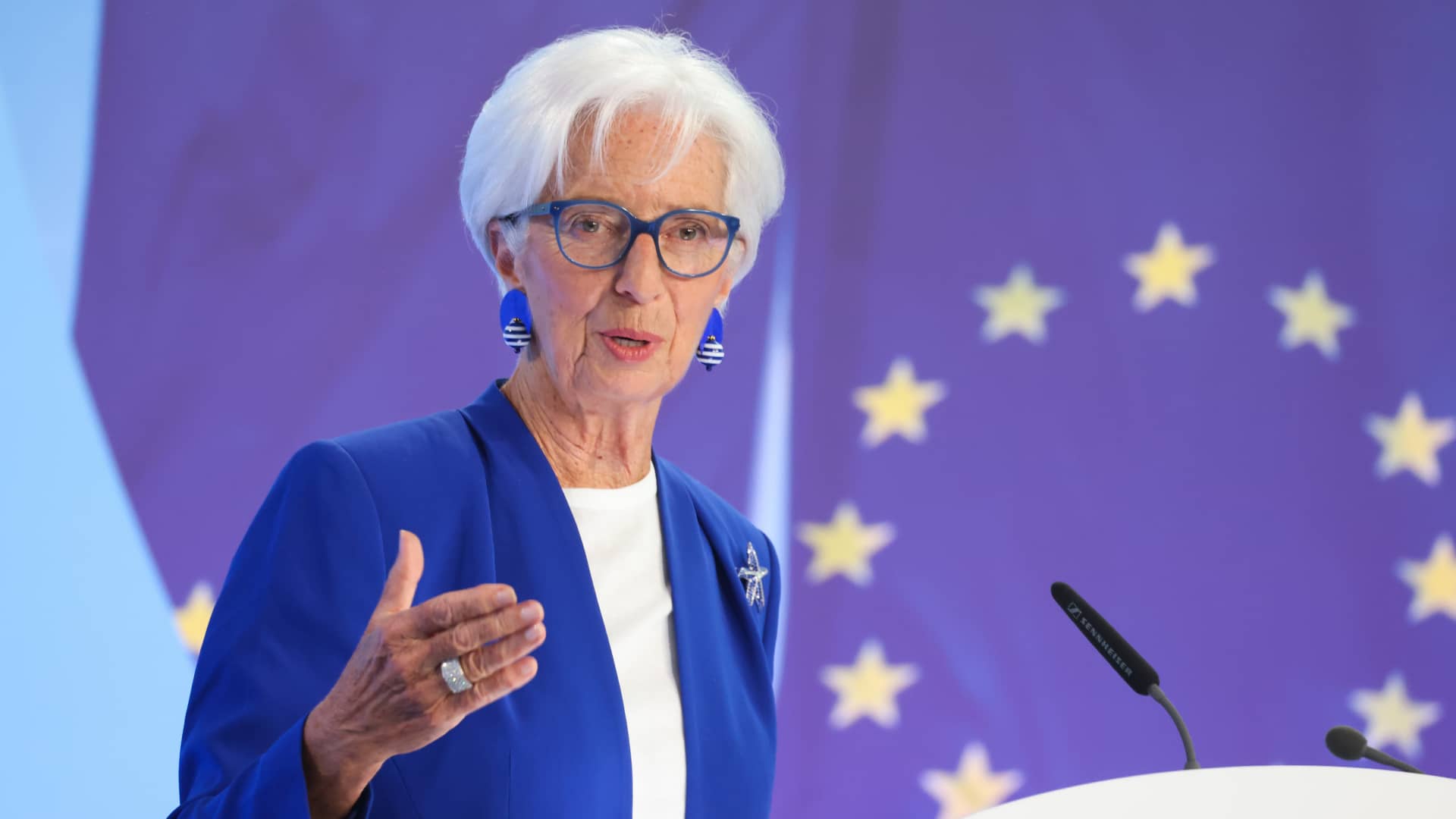
Language around persistence is the first signal. If Christine Lagarde and the Governing Council describe the oil shock as temporary, the market can keep treating June as insurance against a bad inflation patch. If they stress expectations, wages and services, the second hike becomes harder to fade.
The curve is next. A front-end repricing that leaves longer yields contained would say investors see a short tightening burst followed by slower growth. A broader selloff would carry a harsher message: policy rates are moving higher while the market also demands more compensation for inflation risk.
Sector leadership after the decision may matter most. Banks and energy should not merely outperform on the day. They need to hold gains if investors are truly rotating toward beneficiaries of higher rates and higher oil. If defensives rally instead, the market is trading the growth scare, not the hawkish cycle.
For now, the ECB has the clearest inflation-hawk story in developed markets. That clarity is not necessarily bullish for Europe. It means the central bank’s reaction function is easier to read at the exact moment the earnings consequences are becoming harder to avoid.
So the trade is less about guessing Thursday’s vote and more about sorting Europe by tolerance for tighter money. Banks can argue for margin support. Energy can point to cash flow. Real estate, utilities and luxury have to prove they can absorb a higher discount rate without giving up too much earnings momentum.
That is the new European equity screen. The ECB may be acting to keep inflation credibility intact. Stock traders have to price what that credibility costs.
Helena Brandt
Macro reporter covering the Federal Reserve, ECB, inflation prints and jobs data. Reports from Washington.