ECB inflation outlook to rise in June, Lagarde signals
Christine Lagarde said the ECB is likely to raise its inflation outlook in June, signalling that Europe's energy shock is still feeding through the wider economy.

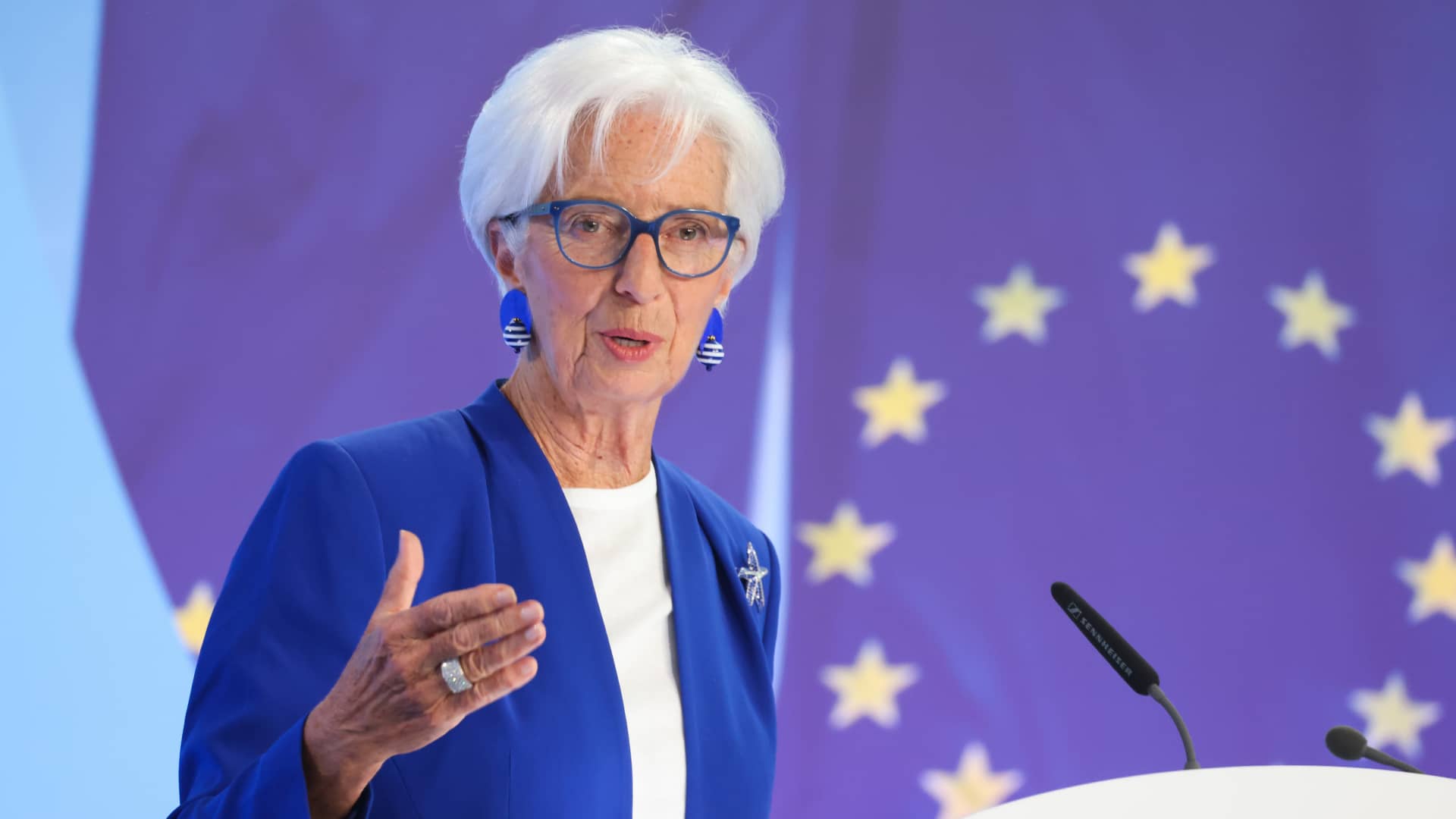
European Central Bank President Christine Lagarde said the bank was likely to lift its inflation outlook at next month’s meeting, a sign euro-area price pressures may prove stickier than officials thought a few weeks ago.
Speaking in comments reported by Bloomberg, Lagarde said the June projections would “probably be revised” because conditions had “evolved” since the ECB’s March meeting. If energy costs keep moving into household bills, freight and other parts of the economy, the staff path published in March may already understate the problem.
The ECB’s March baseline put 2026 inflation at 2.6 per cent, above the bank’s 2 per cent target. Another upward move in June would make it harder for policymakers to say the latest price shock is easing quickly while growth remains soft.
Bloomberg quoted Lagarde as saying the outlook “will probably be revised” because “the situation has evolved” since March.
Europe’s energy squeeze sits behind that shift. In reporting carried by BNN Bloomberg and the AP, officials said oil and gas prices in Europe were likely to stay high at least through the end of 2027, a backdrop that points to inflation pressure lasting longer than the ECB assumed in its earlier projections.
The same report put European officials’ inflation expectations at 3.1 per cent for 2026 and 2.4 per cent for 2027. It also cited eurozone growth forecasts of 0.9 per cent for 2026 and 1.2 per cent for 2027.
Together, those numbers leave Frankfurt with a harder policy mix: weak activity and less certainty that inflation will drift back to target without keeping policy tight.
Valdis Dombrovskis, the EU economy commissioner, said “energy inflation will gradually also trickle down to different sectors of the economy”, according to BNN Bloomberg and the AP.
That warning gave Lagarde’s short remark more significance than a routine forecast tweak. Once higher energy costs start feeding into services, manufacturing and consumer goods, the ECB has to decide whether June’s update still describes a temporary commodity shock or a broader second-round problem.
The distance between the ECB’s 2.6 per cent March view and the 3.1 per cent figure cited by EU officials is large enough to test the bank’s credibility. If staff move nearer the higher path, policymakers will need to show why inflation lasted longer than expected and how much of it still comes from energy rather than domestic demand.
In the March policy statement, the ECB said it would stay data dependent and decide meeting by meeting. A hotter inflation track would not alter that framework, but it would leave less room to present price pressure as a problem already heading back to target.
Why June matters
June is when the ECB refreshes the projections that help shape its policy language. As Reuters reported after the March meeting, the bank had already raised its inflation forecast earlier this year because of higher energy costs. Lagarde’s latest remarks suggest that revision may have been too modest.
Lagarde did not pre-commit to a rate move, and the ECB still has to balance weak activity against persistent price pressure. Still, an upward revision next month would strengthen the view that Europe is dealing with a longer energy shock rather than a brief run of firmer readings.
For investors and policymakers, the June forecast now looks less like housekeeping and more like a test of how the ECB explains persistence. If the bank lifts its path again while growth stays below 1 per cent next year, the question is how long the euro area will need to live with restrictive policy as the energy shock keeps moving through the system.
Helena Brandt
Macro reporter covering the Federal Reserve, ECB, inflation prints and jobs data. Reports from Washington.