ECB June hike risk rises as Iran war lifts inflation
ECB June hike risk rose after Pierre Wunsch said an unresolved Iran war could force tighter policy as energy-led inflation rewrites the euro-area outlook.
A senior European Central Bank policymaker has turned the Iran-war inflation shock into an explicit June tightening warning, telling Bloomberg Television that a rate increase is quite likely if the conflict is still unresolved next month. For markets, the debate shifts. Whether higher energy prices are already close to changing the ECB’s rate path is the open question.
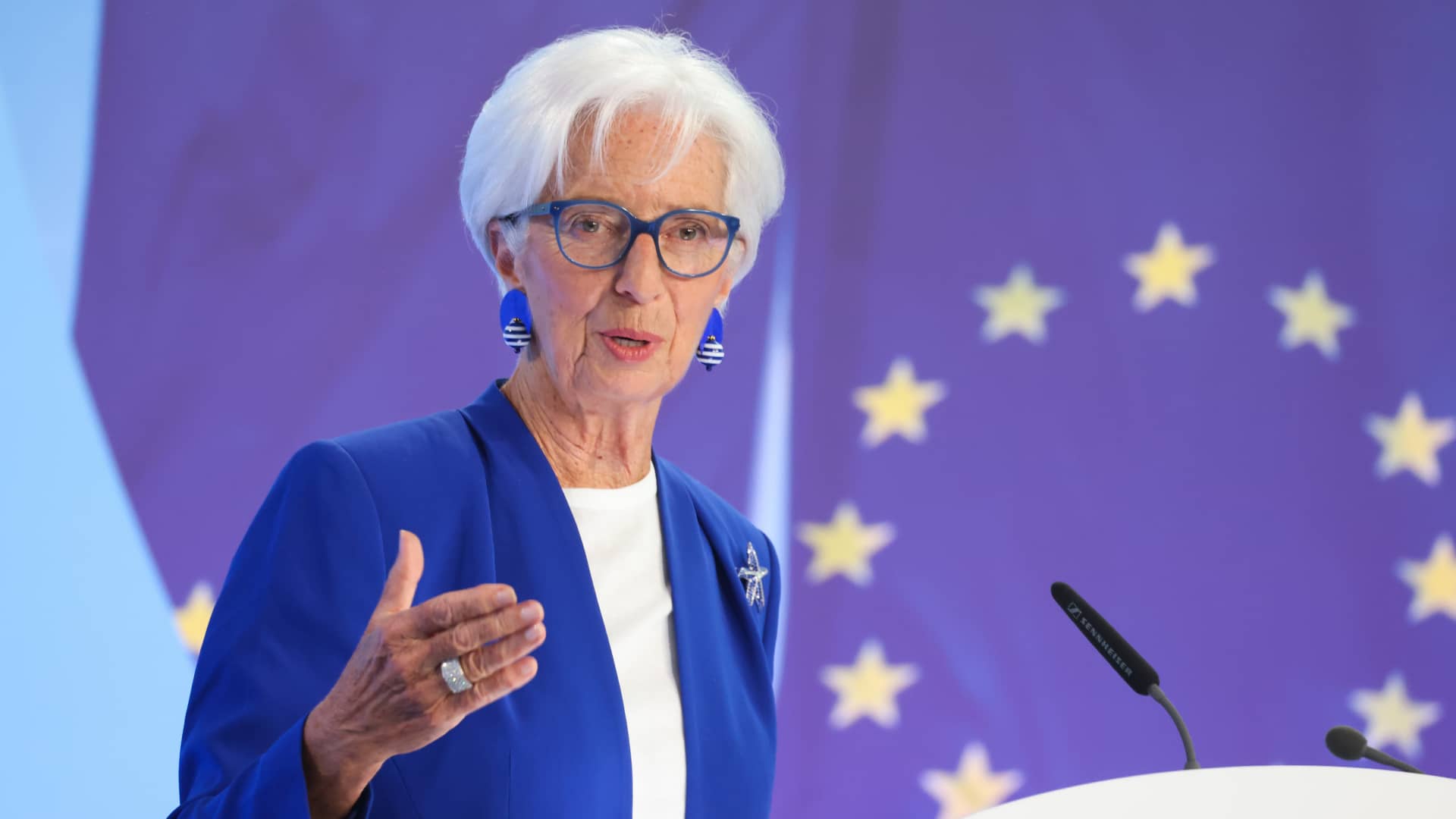
At the ECB’s last policy meeting, President Christine Lagarde said policymakers were “certainly moving away from the baseline.” The deposit rate still stands at 2 per cent, while euro-area inflation hit 3.0 per cent in April. Pierre Wunsch’s latest intervention builds the bridge between shock and instrument for traders. If the Iran conflict is still running into the June meeting, a 25 basis-point move to 2.25 per cent looks less like a remote tail risk and more like a live policy choice.
Months ago, Wunsch said in a National Bank of Belgium summary of a Bloomberg interview that an April increase was not out of the question. The earlier remark marked him as one of the Governing Council’s clearer hawks. Today’s warning carries more weight: it ties the rate debate to a specific external shock. An unresolved war has become a condition in the policy script.
Economists hear something harder than a single hawkish soundbite. A Reuters poll found 59 of 70 respondents expect a June increase to 2.25 per cent and see inflation averaging 3.2 per cent across the rest of 2026. The survey sits close to the centre of the distribution. Wunsch is articulating a scenario many forecasters already treat as plausible.
The growth-first camp reads the same shock differently. In the same Reuters poll, Generali economist Martin Wolburg argued that markets may still be leaning too far toward three hikes if second-round effects stay contained. Oil can lift headline prices fast. It can also squeeze activity before wage dynamics catch up. The June meeting is more than a one-day headline because that tension sits unresolved at its core.
From option to signal
Wunsch’s comment extends a sequence. On Tuesday, Bundesbank President Joachim Nagel told Bloomberg that the ECB may “have to do something” if the Iran shock persists. On Wednesday, Emmanuel Moulin said in a Bloomberg interview that policymakers must be ready to act while keeping an eye on growth. Timing has become the internal conversation. The shock now sits inside the reaction function.
“If the conflict is not resolved by June, then I think the likelihood of a hike is quite high.”
— Pierre Wunsch, Bloomberg Television
Markets have been asking what would persuade the ECB that the shock is persistent enough to tighten. Wunsch’s answer is duration. A brief jump in crude can wash through the monthly data. A conflict that keeps energy markets tight into the next meeting raises the risk of second-round effects in wages, transport and services. The timing of the Iran conflict now matters almost as much as the level of oil itself.
Lagarde’s April line frames the institutional backdrop. The ECB is no longer talking about a stable disinflation path with a little extra volatility around the edges. It is preparing markets for a world in which an external supply shock can force a different policy response, even after rates had settled at 2 per cent.
“We are certainly moving away from the baseline.”
— Christine Lagarde, ECB press conference, April 30
Look at the shift through transmission and the picture sharpens. The ECB cannot keep petrol or liquefied natural gas off a consumer basket. It can influence how long the shock lingers in expectations. Once companies start treating higher freight, fuel and electricity costs as sticky, central bankers stop dismissing energy as a temporary nuisance and start asking whether services inflation will follow it higher.
What markets are pricing
The analyst view is more mechanical. A June hike to 2.25 per cent would only be the first step. If inflation averages 3.2 per cent through the rest of 2026, as the Reuters survey suggests, the next question becomes whether the ECB stops after one insurance move or has to rebuild a small tightening cycle.
“At least two rate hikes seem likely.”
— Jens Eisenschmidt, Morgan Stanley chief Europe economist, via Reuters
Eisenschmidt captures how quickly an energy shock can migrate from headline inflation to term pricing. Markets can absorb one insurance move. Two hikes imply policymakers think the shock could outlast the summer and seep into expectations. Traders have been trying to identify that threshold since the Iran conflict began.
In simple arithmetic, one move takes the deposit rate from 2 per cent to 2.25 per cent. A second move would lift it to 2.5 per cent. Both levels remain low by the standards of the last inflation cycle, but the direction matters more than the level. A central bank that believed the shock would fade cleanly would be less likely to reopen the tightening debate at all.
June gives traders a date around which to organise probabilities. For companies, financing costs and currency hedges start to move before the decision itself. A policymaker putting a calendar month on the table changes the conversation even if the ECB ultimately waits for another round of data.
There is a credibility angle as well. Once officials start sketching the circumstances for a hike, staying on hold becomes harder unless the shock visibly eases. Markets would read any retreat as evidence that policymakers judged the inflation threat temporary after all. That is what makes the June meeting a genuine inflection point, not just another policy date.
Wunsch may not speak for the whole Governing Council, and the ECB will still want another round of staff projections and energy data. Even so, a named policymaker has now attached a calendar month to the hawkish case — trimming one layer of ambiguity. For rate markets, fewer conditionals around June can matter almost as much as a fresh inflation print.
The growth case against overreaction
The skeptic case is serious. Monetary policy cannot ship more crude to Europe or reopen disrupted routes. A rate increase would work through demand, credit and confidence. If the energy shock fades quickly, the ECB could end up tightening into a slowdown while the inflation impulse is already easing.
Moulin’s growth caveat sharpens the point. Europe is dealing with a supply shock that originates outside the banking system and outside domestic demand. Higher rates can cool household spending and corporate borrowing. They cannot lower tanker insurance costs or shorten shipping detours through stressed routes. Some economists still see the risk of overreaction if the conflict stabilises before second-round effects take hold.
Growth-sensitive policymakers will keep watching for second-round evidence. Are wages re-accelerating? Are services prices re-widening? Are firms treating higher fuel and freight costs as temporary or sticky? If the answer stays mixed, the case for more than one move weakens. If the answer hardens, Wunsch’s June warning will look less like a personal marker and more like advance guidance.
For now, the clearest shift is rhetorical. The ECB spent much of the spring talking about a baseline with rates at 2 per cent and inflation moving back toward target. The Iran war has put that baseline under strain. Wunsch’s message is that June tightening is live, and that alone is enough to force a repricing of what Europe’s summer rate path could look like.
Helena Brandt
Macro reporter covering the Federal Reserve, ECB, inflation prints and jobs data. Reports from Washington.