SEC vs CFTC crypto regulation: where oversight splits
SEC vs CFTC crypto regulation still shapes token sales, derivatives and exchange rules as Congress weighs a cleaner market-structure line.

What decides whether a crypto fight belongs with the Securities and Exchange Commission or the Commodity Futures Trading Commission? The answer usually starts with a plain but costly test: is the product being sold as an investment contract, or is it closer to a commodity contract in the CFTC’s derivatives regime. That line determines who writes the rules for token sales, which watchdog examines exchanges, and what customer-protection standards apply when a platform puts spot trading beside margin bets.
The split is tidy only in the abstract. The SEC’s March 23, 2026 interpretive release narrowed part of the ambiguity around crypto assets, and Congressional Research Service analysis said the new framework sorts crypto activity into five practical buckets. The market has not become that simple. Many crypto businesses still package issuance, brokerage, custody, spot trading and derivatives in one place, which is why market-structure disputes keep returning to the SEC-CFTC seam.
What puts crypto under the SEC
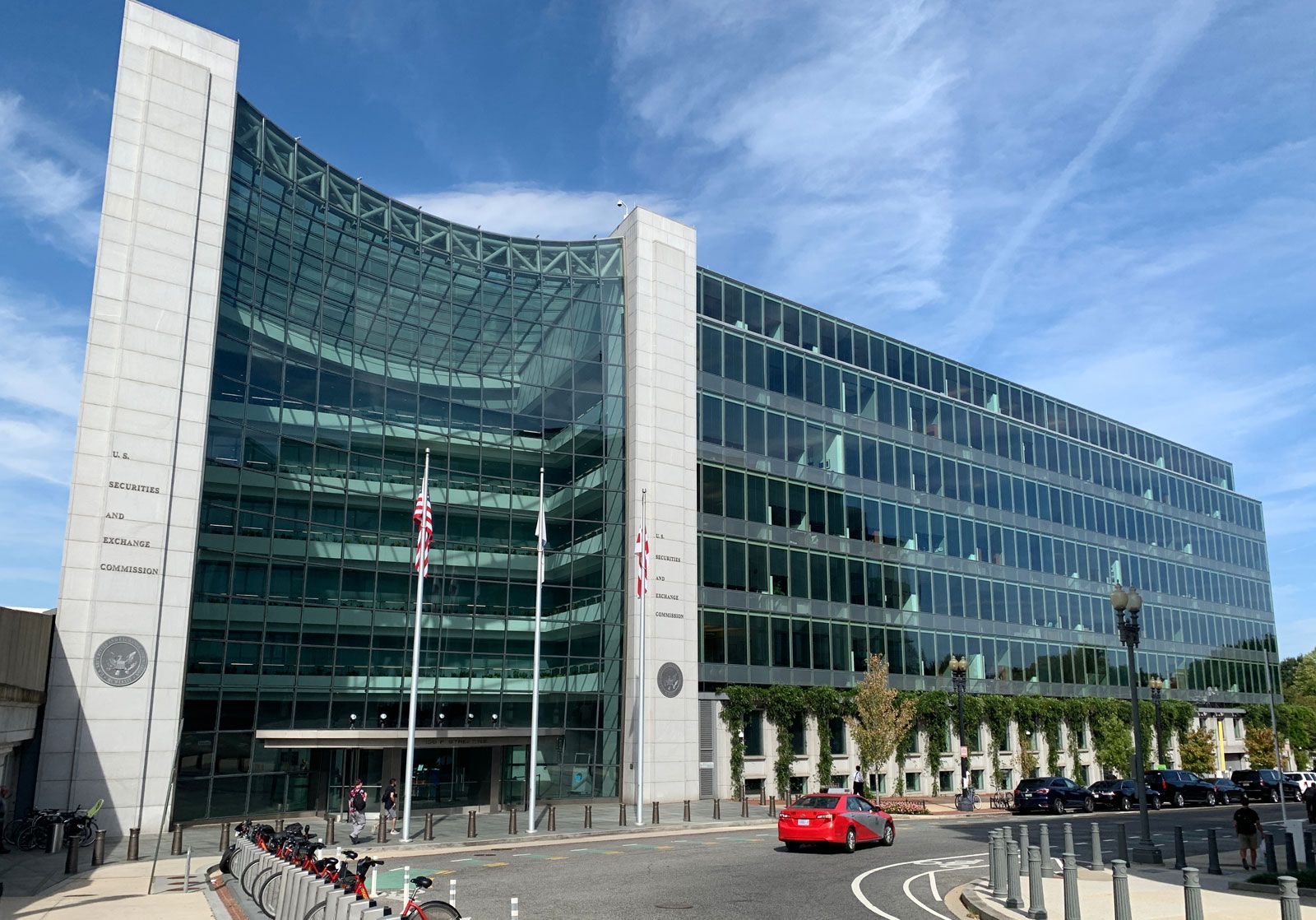
The SEC was created in 1934 after the crash-era reforms to oversee securities markets and capital raising. In crypto, its strongest claim usually involves tokens or arrangements that look less like a digital commodity and more like an investment in someone else’s enterprise. The reference point is the 1946 Howey test: are buyers putting money into a common enterprise with an expectation of profit based mainly on the work of others. When a crypto project sells that promise, the SEC’s view is that investor-protection rules travel with it.

That is the premise behind the agency’s 2026 crypto guidance. The label on the token is not enough. Regulators look at who issued it, what rights the buyer gets, how it was marketed, and whether buyers are really backing a team that says it will build value later. A network-access token can still raise securities-law questions if the pitch sounds like an equity story in lighter packaging.
Labels do not settle it. Facts do.
A project can call a token utility, governance or community and still invite SEC scrutiny if buyers are financing managerial work with an eye on resale gains. That economic-substance approach is why enforcement fights often turn on promotional language, lockups, treasury control and promised ecosystem development, not code alone.
“After more than a decade of uncertainty, this interpretation will provide market participants with a clear understanding of how the Commission treats crypto assets under federal securities laws.”
Paul S. Atkins, SEC
The consequences move beyond issuance. If an asset or transaction is treated as a security, the questions spread to intermediaries: broker-dealer obligations, securities-exchange registration, disclosures, custody arrangements and rules for customer orders. The SEC can therefore loom over a crypto business even when executives describe it as a technology platform rather than a financial institution.
Where the CFTC becomes central
Across the divide, the CFTC, formed in 1974, is the core U.S. regulator for derivatives markets, including futures, options and swaps tied to commodities, benchmarks and many digital assets. In crypto, the agency becomes central when the product is not a token sale to fund a project but a contract that lets traders bet on price moves, hedge exposure or take margin positions over time.

For exchanges, that remit matters because design choices become regulatory choices. The CFTC has long had the clearest authority over crypto futures and other derivatives. Its authority in spot markets is narrower and usually focused on fraud and manipulation, not a full day-to-day supervisory regime. In plain English, the CFTC can police deceptive conduct in cash crypto markets, but it does not automatically regulate every spot token venue the way it regulates derivatives venues.
Spot authority is where the hard cases sit. Crypto traders often use market to mean everything on an exchange page; Washington does not. Cash trading, collateral management, clearing and derivatives can trigger different statutes even when a user experiences them as one product suite. The operational question for a venue is not just whether bitcoin or ether looks like a commodity. It is whether the platform is also offering contracts and risk-transfer tools that place it inside the CFTC’s traditional lane.
“The mission of the Commodity Futures Trading Commission is to promote the integrity, resilience, and vibrancy of the U.S. derivatives markets through sound regulation.”
CFTC mission statement, CFTC
That is where hybrid venues become difficult. A business that lists spot tokens, holds customer assets, routes orders and sells perpetual-style or futures-linked exposure is not living in one regulatory bucket. It is operating near the seam. The closer the model moves to margin, clearing or synthetic exposure, the more the CFTC’s role shifts from background context to operational fact.
Why the split still drives market-structure fights
The hardest crypto policy arguments are about market structure: who can list what, which rulebook governs customer assets, what surveillance standards attach to trading, and whether one company can sit at several points in the chain. Lawmakers, exchanges and lobby groups return to the SEC-CFTC boundary because once the line moves, the compliance map moves with it.
CRS’s current read is useful because it does not pretend the job is finished. Congress is still considering whether to write a cleaner division between securities-style crypto activity and commodity-style trading markets. Until then, businesses will keep arguing over classification because classification decides the regulator, and the regulator decides the business model.
Market-structure bills attract industry attention for the same reason. If Congress assigns more explicit spot-market authority over digital commodities, or creates a bespoke registration path for crypto venues, the biggest change may be a new operating template for exchanges that now have to guess which parts of their stack belong to securities law and which belong to commodities law.
A workable rule of thumb: the SEC is strongest when the crypto asset is sold like an investment contract or distributed through securities-like market functions. The CFTC becomes central when the product is a derivative, when commodity-style trading is involved, or when fraud and manipulation questions arise in markets tied to digital commodities. Some products fit one box cleanly. Many do not. Stablecoin structures, staking arrangements, exchange tokens and hybrid platforms often push facts from one category toward another.
The safer reading of the current framework is not to ask which agency owns crypto in the abstract. Neither does. The better question is which part of the transaction is being regulated: capital raising, secondary trading, custody, margin finance, clearing or derivatives. The answer can change from one product to the next, and sometimes from one stage of a product’s life to another.
Next comes the real test. Congress may write the split more explicitly into statute, the SEC and CFTC may develop a more stable handoff for hybrid platforms, and exchanges may keep building products that blur spot and derivatives in ways the old categories were not designed to handle. As long as crypto companies combine issuance, trading and borrowed exposure inside the same interface, the question of where SEC oversight ends and where CFTC oversight begins will keep driving the next market-structure fight.
Tomás Iglesias
Financial regulation and legal affairs. SEC, CFTC, FCA, market-structure and enforcement. Reports from Washington.