SEC, CFTC align on six enforcement fronts
SEC and CFTC launched coordination across six regulatory fronts to eliminate duplicative enforcement, CFTC Chair Michael Selig said.
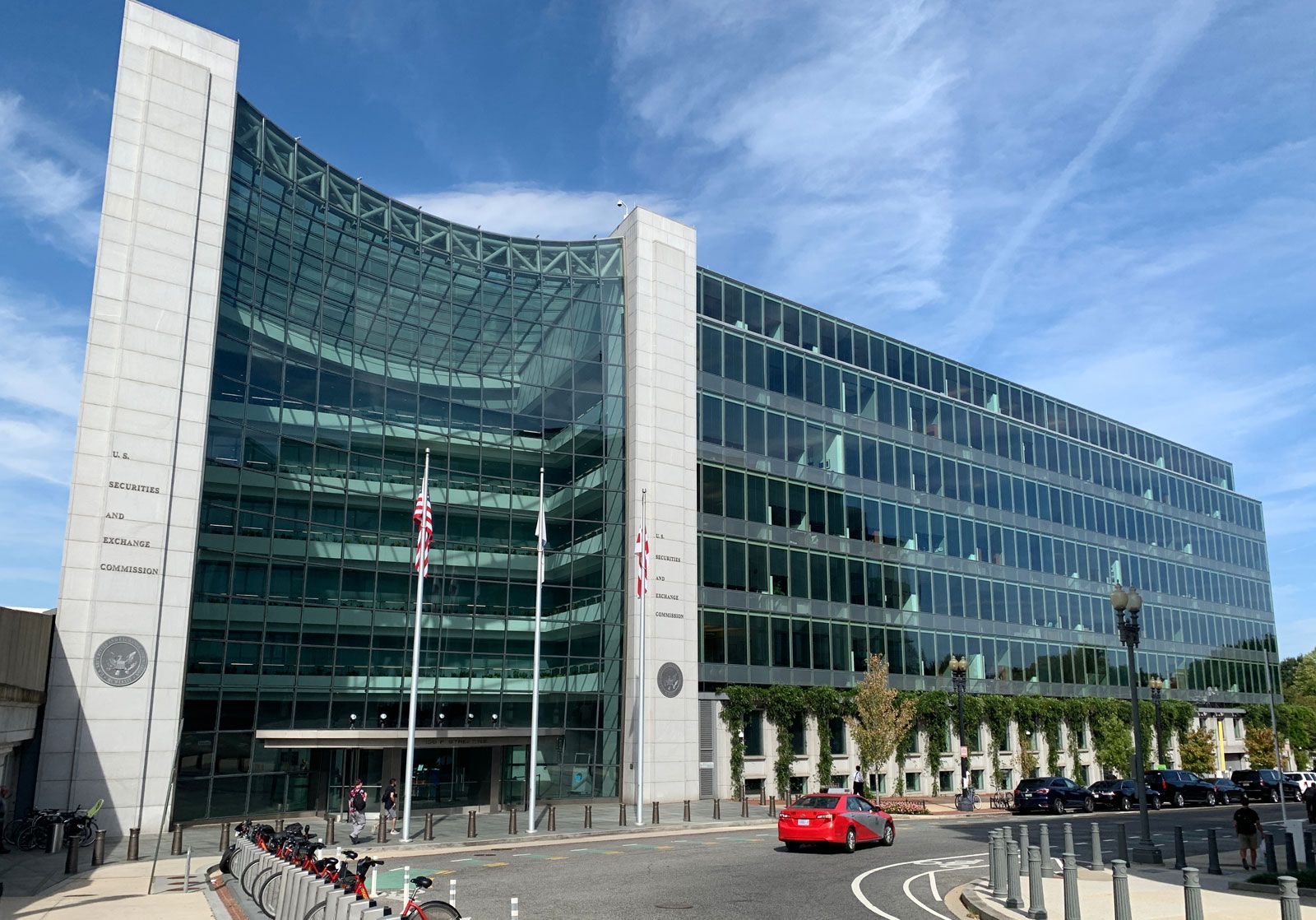
The Securities and Exchange Commission and Commodity Futures Trading Commission are coordinating across six regulatory fronts to cut the risk of firms facing overlapping enforcement actions for the same conduct.
CFTC Chair Michael S. Selig, speaking at the FINRA 2026 Annual Conference, outlined the cooperation framework that has taken shape since the two agencies signed a memorandum of understanding in March. The six areas cover product definitions, clearing and margin frameworks, dually registered exchanges, crypto assets, regulatory reporting, and examinations and enforcement.
“In recent months, we’ve entered into a memorandum of understanding, launched a joint harmonization initiative, joined the SEC’s Project Crypto, and advanced a common-sense crypto asset taxonomy to deliver clarity to our nation’s builders and innovators,” Selig said.
For crypto firms, hedge funds, and trading platforms that have navigated a landscape where the two agencies could pursue separate — and sometimes conflicting — enforcement theories against the same activity, the shift carries immediate operational significance.
“Our parallel actions and information sharing have reduced the risk of duplicative or inconsistent outcomes for the same underlying conduct,” Selig told the FINRA audience.
New leadership, new alignment
Both agencies are under leadership installed after the 2024 presidential election. Selig was confirmed as CFTC chair and Paul S. Atkins now leads the SEC. That personnel reset, combined with direction from the White House to streamline financial regulation, provided the political window for the March 2026 memorandum of understanding.
The six coordination workstreams address operational rather than ceremonial issues. According to law firm Alston & Bird, they cover product definitions — which determine whether an instrument falls under SEC or CFTC jurisdiction — as well as clearing, margin, and collateral rules that currently differ between the agencies. Dually registered exchanges and broker-dealer intermediaries are on the agenda, along with crypto assets and emerging technology. Regulatory reporting requirements and a joint approach to examinations and enforcement referrals round out the list.
Crypto in the crosshairs
For the crypto industry specifically, the inclusion of Project Crypto and the joint taxonomy effort marks a departure from the pattern of the past five years. SEC enforcement actions against Coinbase, Binance, Kraken, and other exchanges were filed without parallel or coordinated CFTC proceedings during that period. Separately, the CFTC pursued its own cases against decentralized finance platforms and unregistered derivatives venues. Firms caught between the two agencies sometimes faced duplicate legal teams, parallel discovery processes, and two penalty calculations for what was functionally the same conduct.
That approach generated uncertainty that chilled institutional participation, according to industry lawyers who have tracked the cases. A digital asset might be treated as a security by one agency and a commodity by the other, pulling the same product into two different regulatory streams with no mechanism for resolving the conflict short of litigation.
Project Crypto, the SEC-led initiative that the CFTC has now formally joined, is meant to replace that ad-hoc pattern with a structured interagency consultative process. Whether it delivers on that promise will depend on staffing, sustained leadership buy-in, and whether the taxonomy effort yields definitions both agencies can enforce.
“We have a real opportunity here for greater collaboration,” Selig said. “Not to merge identities or flatten important differences, but to align the organizations in ways that help regulators and market participants.”
The Arnold & Porter enforcement practice noted that the harmonization initiative may take years to fully implement, given that many of the six workstreams require formal rulemaking rather than staff-level guidance. The law firm told clients that the information-sharing component of the MOU is already operational and has begun reshaping enforcement referral patterns between the two agencies.
A crypto lending product once sat squarely in the gap. It could draw an SEC inquiry on the theory that the offering constituted a security, while the CFTC simultaneously investigated it as a swap or leveraged commodity transaction. Under the new framework, the agencies have committed to consult before opening parallel investigations and to coordinate penalty calculations to avoid double-counting the same harm.
What the pact doesn’t do
This alignment push does not merge the agencies or erase their statutory differences. The SEC retains jurisdiction over securities and the CFTC over derivatives and commodities. But for conduct that straddles the line — and most crypto spot and derivatives activity does — the cooperation framework is designed to produce a single regulatory answer rather than two.
Whether the détente survives the next change in leadership at either agency remains an open question. The MOU is an agency-to-agency agreement, not a statute, and could be unwound by future chairs. For now, the signal from both sides of the Washington regulatory divide is that overlapping enforcement is a problem worth fixing — and that the fix has already begun.
Tomás Iglesias
Financial regulation and legal affairs. SEC, CFTC, FCA, market-structure and enforcement. Reports from Washington.