House panel presses Trump to fill CFTC as crypto agenda grows
House Agriculture leaders pressed Donald Trump to fill four empty CFTC seats as the agency's role in crypto market structure and prediction markets widens.
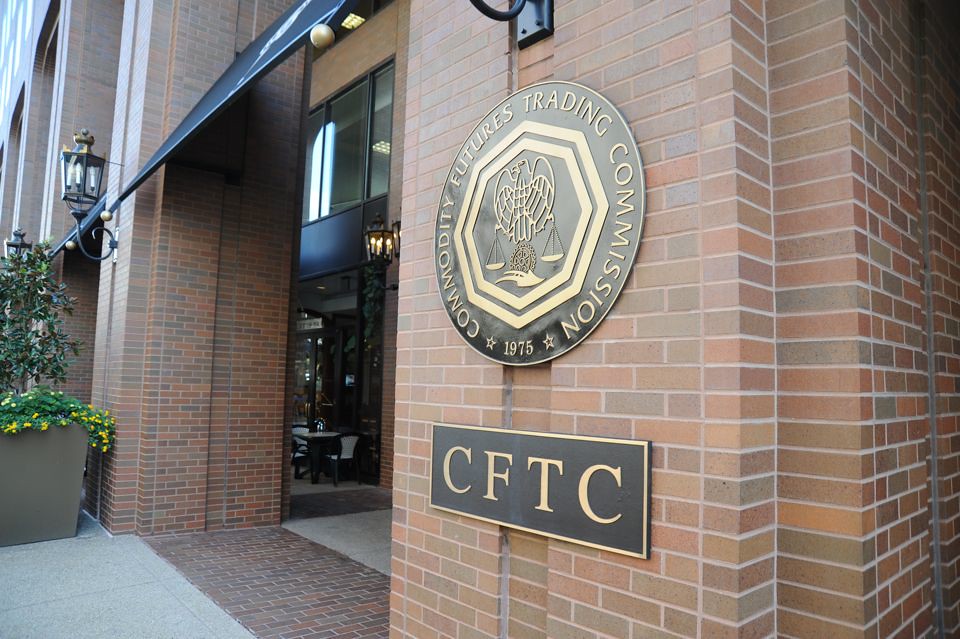
Four empty seats at the Commodity Futures Trading Commission are drawing fresh pressure from the House Agriculture Committee, which urged President Donald Trump to fill the panel just as the agency faces a larger role in crypto market structure and prediction-market oversight, according to a CoinDesk report on the lawmakers’ appeal. The agency may soon be asked to write or police more of the digital-asset rulebook. Four vacancies on a five-seat commission make that harder.
Glenn “GT” Thompson, the committee’s Republican chairman, and ranking Democrat Angie Craig spelled out their position plainly. In remarks cited by CoinDesk, they wrote that “the public, the markets and the agency itself will be best served by a full five-member commission.” The two lawmakers oversee the agency’s authorizing committee. A five-seat regulator operating with four empty chairs may be legal, but Thompson and Craig are telling the White House it is not enough for the decisions ahead.
Legally, the CFTC can still act. Michael S. Selig, the agency’s chairman, said in a Reuters report on his Senate confirmation scrutiny that “our statute does not require a quorum,” and that he is able to operate as chairman and vote on behalf of the commission. A one-member commission keeps the machinery running. What it lacks is room for internal debate when politically charged judgments arrive.
Congress is pressing now because the CFTC’s remit is widening. The CLARITY Act’s advance through the Senate Banking Committee by a 15-9 vote revived the prospect that the derivatives regulator could become the main federal referee for large parts of the crypto market if Congress draws a clearer line with the Securities and Exchange Commission. For exchanges, brokers and token issuers, that determines who writes the first draft of the rules, how quickly those rules arrive and how aggressively the regulator leans on enforcement while the framework is still under construction.
The commission’s own chairman and commissioners page makes the imbalance plain: a body designed for five members is now being discussed as a one-person operation at the top. In quieter stretches that might be awkward but manageable. In a year when crypto jurisdiction, exchange oversight and event contracts are converging, the institutional thinness is harder to set aside.
Why the vacancies matter
Prediction-market disputes are part of the reason. The research brief behind the story cast the House intervention as a market-structure signal, not generic Washington churn, because event contracts and crypto oversight are landing on the same agency at roughly the same time. A fuller commission would not remove that pressure. It would give the CFTC more visible breadth as it responds.
Those decisions do not stay in Washington. They feed into product design, compliance budgets and the legal risk around contracts that sit close to the line between finance and betting.
Trump has unusual latitude as a result. Filling four seats at once would let the White House shape the balance, tempo and public voice of the commission in a single stretch, even if Senate politics slow the process. Because the CFTC is designed as a bipartisan panel, a new slate of nominees would also determine how much dissent or consensus is visible when hard crypto and event-contract cases arrive. Lawmakers appear to be warning that delay carries a cost of its own. Markets can live with temporary vacancies. They are less comfortable when the vacancies coincide with a period in which Congress is redefining the regulator’s lane.
Markets notice those gaps because personnel and policy are now moving in tandem. CoinDesk tied the House appeal to the legislative push around crypto market structure, while Reuters showed Selig already fielding questions on how he would approach digital-asset oversight. In the same Reuters interview, he called the moment “a real opportunity” to build a framework in which software developers can thrive, phrasing that places the CFTC at the centre of the debate rather than at its periphery.
The practical point is straightforward. The CFTC can keep operating with one commissioner, but Congress is signalling that bare-minimum functionality is no longer enough for the agenda in front of the agency. As crypto market-structure legislation advances and prediction-market disputes keep landing on the regulator’s desk, the empty chairs begin to look like a market issue as much as a Washington one.
Tomás Iglesias
Financial regulation and legal affairs. SEC, CFTC, FCA, market-structure and enforcement. Reports from Washington.