Hormuz LNG trade goes dark as Iran war rewrites routes
Hormuz LNG trade is moving through dark transits as war-risk premiums surge and US-guided passages redraw shipping rules.
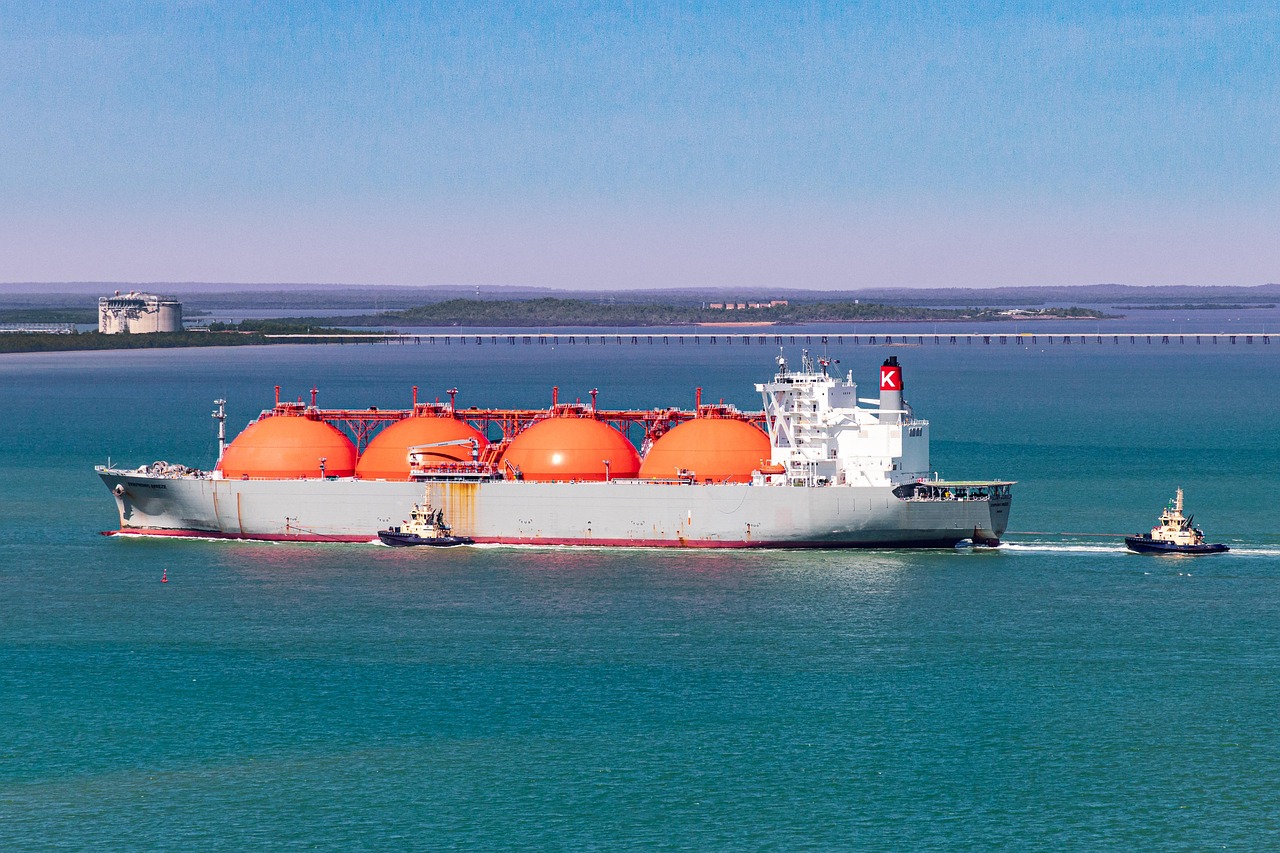
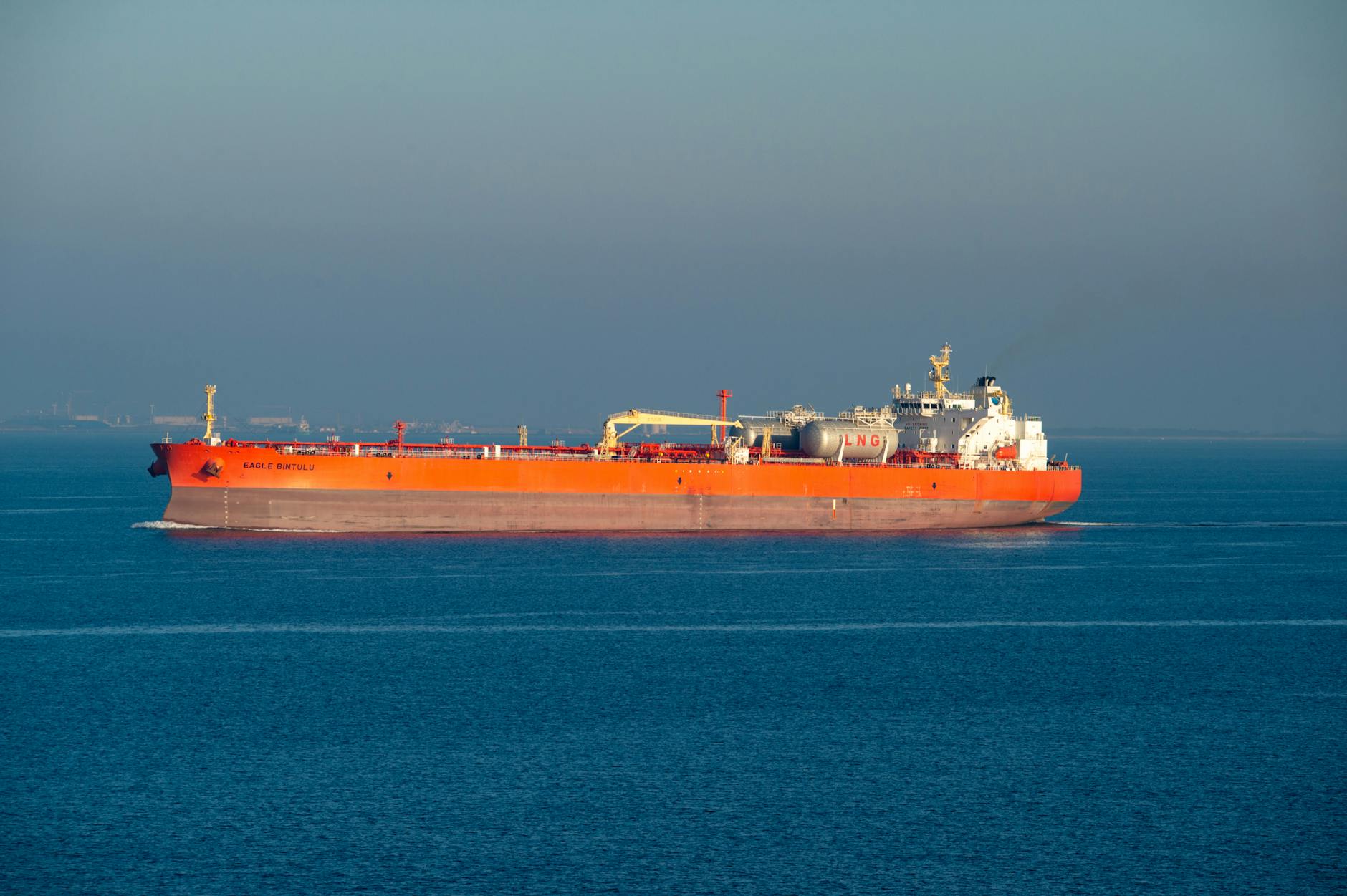
In May, the Iran war pushed at least four Qatar-linked LNG vessels and at least four Adnoc vessels through Hormuz in low-visibility transits, turning a gas chokepoint into a test of how much commodity trade can still function when visibility itself becomes a risk.
Cargoes have not stopped. That is the first point. The sharper one: the visible market is thinning. Bloomberg reported that major Gulf producers are bending the maritime rulebook by asking vessels to cross the Strait of Hormuz with automatic identification systems switched off or routes deliberately obscured. Reuters has also tracked oil and LNG tankers exiting Hormuz with transponders off.
Underwriters see a different problem. A moving cargo is not the same as a cargo that can be priced, insured, tracked and financed normally. In that gap, the gas trade starts to look less like the transparent LNG market Europe and Asia built after Russia’s invasion of Ukraine, and more like the shadow-oil system that sanctions helped create.
Visibility becomes a liability
With LNG, the AIS blackout is more than a tactical safety measure. It tells the market that a basic assumption is breaking under war conditions: valuable cargoes are not always easier to trade when everyone can see them.

In Bloomberg’s account of the dark transits, Michelle Wiese Bockmann, a maritime intelligence analyst at Windward, framed the issue in security terms.
This is a battle for the freedom of navigation.
Michelle Wiese Bockmann, Windward
Bockmann’s phrase matters because Hormuz is no longer being treated only as a physical lane. It is becoming an information lane. Shipowners, charterers, buyers and insurers all depend on the same stream of vessel data to decide whether a cargo is deliverable, whether a ship is exposed to attack, whether a premium is justified and whether a counterparty is breaching sanctions or political instructions.
A switched-off transponder may help a vessel pass. It also makes the commercial record harder to audit. That trade-off is tolerable for a single emergency crossing. It is much more consequential if it becomes a repeated operating model for Qatar, the United Arab Emirates and buyers in India, Pakistan or China.
So far, the market’s first-order question has a workable answer: enough gas is moving. Bloomberg tracked Qatar vessels that appeared to cross Hormuz in May, while Adnoc quietly sent cargoes through the same corridor. Reuters separately reported Middle East oil and LNG tankers heading for Pakistan and China after leaving the strait.
The second-order question is tougher: if ships can move only by hiding, what is the benchmark value of a visible cargo versus a dark one?
Insurance is the new choke point
War-risk cover may now matter as much as spot gas prices. Reuters reported that war-coverage premiums for vessels in the Gulf surged by more than 1,000 per cent as the conflict widened, shifting the immediate constraint from molecules to contract terms.

Higher prices are easier for LNG buyers to absorb if the cargo arrives. They have a harder time accepting uncertainty over vessel cover, insurer warranties, U.S. coordination, or Iran’s ability to decide which flag, owner or customer is safe enough to pass.
The New York Times’ reporting on the war-insurance room captured that shift: coverage is being repriced not around abstract geopolitical fear, but around specific evidence of whether Hormuz can be crossed and verified. For a shipowner, the premium is not a rounding error. It can decide whether a voyage happens at all.
Qatar and Adnoc face a revenue-capture problem. They have an incentive to keep cargoes moving because lost loadings transfer value to alternative suppliers, especially the U.S. Gulf Coast, Australia and any portfolio player with uncommitted cargoes. They also have to preserve the credibility of their delivery chain. A cargo sold at a premium today is less valuable if the customer concludes that future cargoes will need darkness, military coordination or special permissions to arrive.
Saul Kavonic, senior energy analyst at MST Marquee, put the normalization risk directly in Bloomberg’s report.
It’s natural for gulf LNG producers to try and evade Iranian attacks, and adopt shadow fleet practices in the process.
Saul Kavonic, MST Marquee
Normalized workarounds change contracts. The shadow fleet in sanctioned oil did not begin as a single neat system. It accumulated through older vessels, opaque ownership, ship-to-ship transfers, patchy insurance and inconsistent tracking. LNG is harder to hide because the ships are specialized and the buyer base is narrower. Still, Hormuz is showing that even a high-specification market can import some of the same habits when the alternative is a stalled cargo.
A two-tier corridor
Open or closed no longer captures the route structure. It is more granular and more political.
The New York Times reported that U.S. Central Command has guided about 70 commercial ships through Hormuz in the past three weeks, while stressing that American forces were not formally escorting them. Captain Tim Hawkins, a Central Command spokesman, described the arrangement this way:
Though U.S. forces are not escorting, we continue to communicate and coordinate with commercial ships seeking to freely and safely transit the Strait of Hormuz.
Tim Hawkins, U.S. Central Command
That is a narrow distinction, but an important one. An escort is a visible commitment. Coordination is a quieter service that can reduce risk without turning every crossing into a public military operation. Yet the same NYT account noted that U.S.-guided crossings can also occur with transponders turned off, which leaves outside analysts unable to verify every passage independently.
Some cargoes may move under U.S. coordination, some under routes that Iran tolerates, and some in darkness. In market terms, Hormuz is becoming a two-tier corridor. CNBC’s analysis argued that postwar flows may not simply return to the prewar pattern, particularly if Western-linked vessels require bilateral understandings while China-linked or regionally approved cargoes move more freely.
CNBC-cited Kalshi odds put the chance that traffic in the strait returns to normal by July 1 at 38 per cent. That is not a gas-price forecast. It is a probability that the rulebook remains fractured for at least another month.
In Europe and Asia, the distinction matters because LNG replaced pipeline rigidity with optionality. Cargoes could be redirected, swapped and repriced across basins. A politically sorted Hormuz narrows that optionality. The molecule may still be liquid. The route is less so.
What changes for LNG
Near-term supply looks manageable because cargoes are still moving and alternative exporters have an incentive to fill gaps. The structural change is less visible: price discovery weakens when a rising share of the traffic is intentionally hard to see.
Charter rates and insurance premiums become harder to separate from political permission. Buyers have to value delivery certainty as its own line item, not just as freight folded into the delivered price. Long-term contracts may start to price route risk more explicitly, with clauses for dark transits, military coordination, sanctions exposure and data gaps.
Such a shift would matter for LNG. The industry’s post-2022 expansion story has been built around transparency: more cargoes, more flexible destination clauses, more price signals and more infrastructure outside Russia. Hormuz stress pushes the other way. It rewards opacity and route control, especially for producers that can still deliver while competitors wait for cover.
Semafor’s recent argument that U.S. LNG faces a capital problem points to the competitive layer. If Middle East supply is viewed as less transparent but still cheaper or politically advantaged for some buyers, the U.S. cannot rely on a simple security premium forever. Buyers will pay for reliability, but they will also test every workaround that keeps delivered costs down.
Measured only by whether spot prices spike this week, the Iran war’s gas-market impact can look temporary. A brief price jump can fade. A new set of shipping habits can persist.
Closure was the old Hormuz risk. Partial darkness is the new one: enough traffic to avoid a clean crisis, enough opacity to make the market less efficient, and enough political sorting to give producers, insurers and navies more influence over every cargo. For LNG, that is a different kind of disruption. It rewrites the rulebook while the ships are still sailing.
Reza Najjar
Commodities desk covering oil, natural gas, gold and base metals. Reports from London.