Fairshake-backed Menefee defeats Al Green in Texas runoff
Christian Menefee beat Representative Al Green in a Texas Democratic runoff, giving Fairshake a fresh example of crypto money landing in a congressional race.
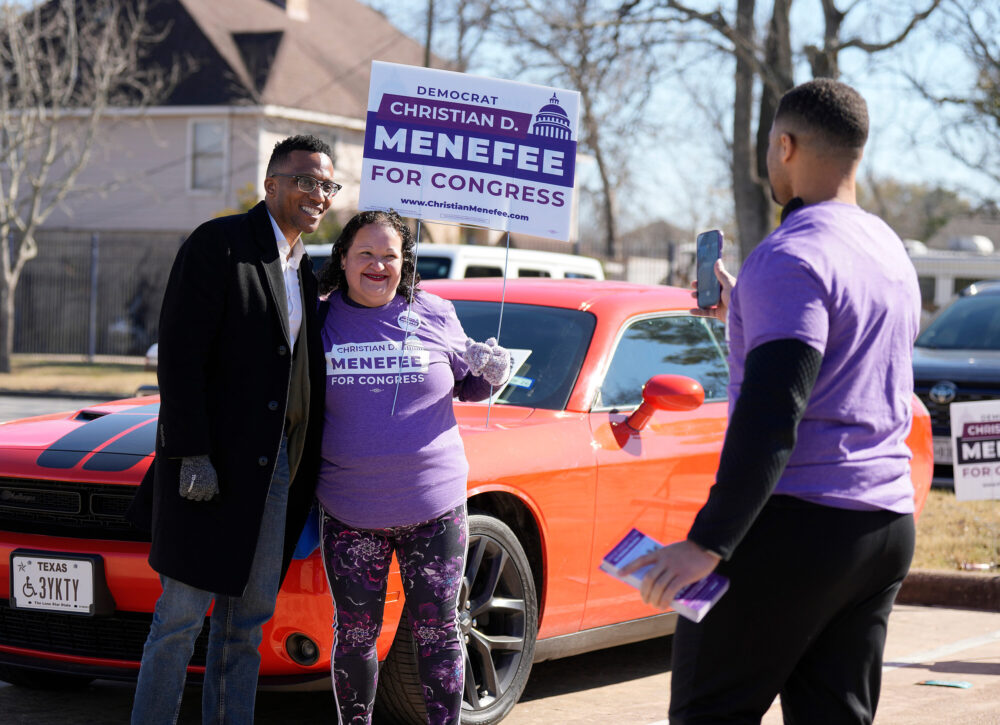
A pro-crypto candidate backed by Fairshake defeated Representative Al Green in Texas’ Democratic runoff on Tuesday, giving the digital-asset lobby a clear political win in a race the industry had turned into a test of its reach.
Christian Menefee’s victory over the 11-term incumbent carries weight beyond Houston. Green had become a visible crypto critic, and Fairshake and allied committees have spent the cycle trying to show they can back lawmakers who support the sector and punish those who do not. In Washington, the result lands as an early signal that crypto money is moving from lobbying and policy campaigns into candidate-level electoral fights.
Menefee, 38, defeated Green, 78, in the Democratic primary runoff for Texas’ 18th Congressional District. Green had represented the district since 2005 and had served 11 terms in Congress, according to The New York Times and the Texas Tribune. The upset removed a veteran House Democrat whose skepticism of the industry had made him a useful target for crypto groups looking to prove a point.
The Block reported that Fairshake and affiliated committees have raised $395 million across the 2024 and 2026 election cycles. That sum helped turn a House runoff into a test of whether opposition to the sector now carries a political cost inside the Democratic Party. For lawmakers working on market-structure and stablecoin bills, the result offers a reminder that the fight over crypto regulation is no longer confined to hearings, draft text and private lobbying.
“Rep. Green’s defeat proves that anti-crypto hostility carries real electoral consequences, making him the first Democratic incumbent this cycle to lose his seat.”
— Geoff Vetter, Fairshake spokesperson, as quoted by The Block
Why Washington will notice
Fairshake’s argument is simple: a super PAC has more influence when it can point to a result. Crypto groups have spent heavily in federal races before, but this runoff gives them a cleaner example of the message they want lawmakers to hear. Back an industry ally, target an outspoken critic, then show the rest of Capitol Hill that regulatory positions can draw a primary response.
That message is likely to sharpen the calculation for Democrats handling financial-policy questions. Lawmakers can still press for tighter rules on tokens, exchanges and stablecoins, but Green’s loss gives the industry another talking point when it argues that digital-asset policy now carries electoral consequences as well as lobbying pressure. That does not mean every crypto-backed candidate will win. It does mean the sector now has another race to cite when it tries to show it can shape the political cost of regulation.
Menefee’s own record in Congress will take time to develop, and the reporting so far frames him mainly as the pro-crypto candidate in the race. Even so, the immediate significance lies in how Fairshake and its allies used the contest. They are treating House primaries as part of the broader fight over crypto oversight, not as separate from it. That shift moves more of the regulatory battle into campaign finance and candidate recruitment before lawmakers even reach a committee room.
Tomás Iglesias
Financial regulation and legal affairs. SEC, CFTC, FCA, market-structure and enforcement. Reports from Washington.