Samsung's record quarter tests faith in the AI memory boom
Samsung Q2 profit hit a record on AI memory demand, but the share sell-off showed investors are already testing how long pricing power can last.
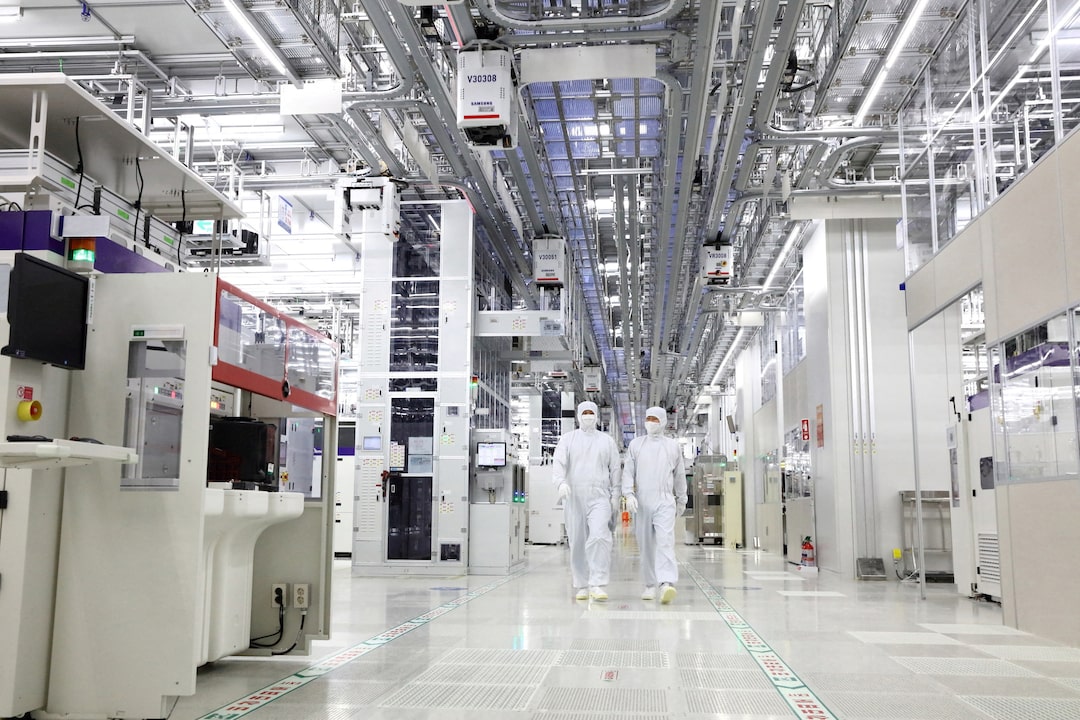
Samsung Electronics delivered record preliminary second-quarter operating profit of 89.4tn won on revenue of 171tn won, yet the shares still fell between 5 and 8 per cent in early Seoul trading on Tuesday. The reaction was a blunt sign that investors are already looking past the quarter and toward the next turn in the AI memory cycle.
By itself, the print would be a strong beat story. Profit jumped from 57.2tn won in the previous quarter and 4.7tn won a year earlier, confirming that demand for AI servers is still pushing memory pricing higher. But the Financial Times read the same move as a market warning: the debate is no longer whether Samsung is benefiting from the boom, but how long tight supply, high prices and careful capex can keep margins at these levels.
Inside the supply chain, the squeeze looks different. Counterpoint Research analyst Marc Einstein described the current setup as a product of scarcity, not exuberance.
This has everything to do with the AI boom as memory companies continue to ride a tidal wave driven by limited supply and unprecedented demand
Marc Einstein, Counterpoint Research, via BBC News
That gap is the story of Samsung’s quarter. The preliminary figures say the company is printing money from AI demand. The stock reaction says investors think the harder question sits one or two quarters ahead: what earnings power looks like once more supply appears, or once hyperscalers decide they have bought enough advanced memory for the next build-out.
The market is trading the next turn
Normally, a record quarter would be enough for a relief rally, particularly after Samsung spent much of the past cycle being judged against faster-moving rivals in advanced memory. Instead, the market treated Tuesday’s print as evidence that the best part of the move may already be in the price. That is classic peak-cycle behaviour in semiconductors: great numbers, weaker stock response, and a valuation argument that shifts from present margins to the durability of the next twelve months.

For Samsung, the 89.4tn won profit figure matters because it is not a marginal beat. On the BBC’s arithmetic, it amounts to roughly a 19-fold jump from the same period a year earlier. Revenue of 171tn won also suggests the strength is broad enough to show up beyond a single premium product line. The share move, though, implies investors are discounting those numbers as a late-cycle payoff rather than the beginning of a structurally higher earnings base.
Memory investors know the script. A recent MarketWatch analysis of Micron noted that booms have often ended the same way: today’s shortage invites tomorrow’s capacity additions, and those additions eventually crush pricing. AI may prove different because data-centre demand is larger, stickier and more concentrated around a few suppliers, but the market is not being paid to assume that difference upfront. It is being paid to ask whether this cycle can outrun the industry’s old habit of oversupplying itself.
So the sell-off after a record quarter is not hard to parse. Equity investors are valuing duration, not the quarter itself. If Samsung is near the high point of pricing power, then even a spectacular print can mark the moment when expectations stop rising. The bar moves from “did it beat?” to “can this still look scarce a year from now?”
Supply is still the margin story
Scarcity is the bullish answer. Samsung, SK Hynix and Micron are still selling into an AI build-out that looks constrained less by customer enthusiasm than by how fast the memory complex can supply the required parts. HBM, the stacked chips paired with AI accelerators, remains the obvious bottleneck, but the read-through from Samsung’s quarter is broader than that one product. It points to a market where tighter DRAM availability and richer product mix are still doing real work in margins.

IDC researcher Bryan Ma made the insider case more plainly, arguing that the shortage still has time to run.
We do expect supplies to be tight through next year given the unabated demand from AI data centres
Bryan Ma, IDC, via BBC News
Ma’s point matters because Samsung’s quarter is not really a one-company event. The Financial Times’ reporting on SK Hynix’s planned US IPO described the same theme from a different angle: the three big memory names, Samsung, SK Hynix and Micron, are being re-rated by the same AI data-centre demand shock. Samsung’s results strengthen the case that AI memory is a trade across several suppliers, not a single Korean earnings surprise.
Capacity remains the incomplete answer. Suppliers will expand; no shortage that lucrative stays untouched. But there is a difference between adding supply and normalising the market. New fabs take time, customer qualification is slow, and AI buyers are not ordering generic commodity memory for a laptop refresh. They are competing for the components that determine how quickly new clusters can be brought online. That lag is why the market can doubt the out-years and still concede that the near-term earnings engine remains unusually strong.
Why the boom now reaches beyond servers
A broader reading is starting to form around Samsung’s quarter. AI memory is no longer a niche supplier story; it is influencing pricing and policy further down the hardware chain. A late-June CNBC report on the Magnificent 7 sell-off called memory a key bottleneck in the wider AI spending wave, which helps explain why investors are prepared to keep backing chipmakers even as they grow more selective elsewhere in the AI trade.
For consumers, the question is where the shortages show up next. The Hill reported that stronger memory demand is already feeding into higher prices for products such as MacBooks and Xbox consoles. Wired argued that the same shortage is helping push up costs across phones, computers and game hardware. If that spillover persists, Samsung’s quarter will read less like an isolated windfall and more like evidence that AI infrastructure is repricing consumer electronics from the component level upward.
Policy follows shortage. Earlier reporting from SiliconAngle said chipmakers were already urging the White House to avoid broad interventions in the memory market as shortages deepen. The longer Samsung and its peers can convert tight supply into extraordinary profits, the more likely governments and large buyers are to scrutinise whether the shortage is a natural bottleneck, an industrial-policy problem, or simply the cost of letting AI demand outrun fabrication timelines.
The record quarter does not settle the argument. It sharpens it. Samsung has offered one more proof point that the AI memory boom is real, large and still highly profitable. The market’s refusal to celebrate says the next phase of the story is about durability: how long pricing can hold, how carefully supply comes onstream, and whether AI demand stays strong enough to keep this quarter from looking like a peak. For now, Samsung has won the quarter. Investors are already trading the quarter after that.
Sloane Carrington
Markets columnist. Analytical pieces and deep-dives on monetary policy, capital flows and corporate strategy. Reports from New York.