Cash hoarding keeps banknote demand high as card use grows
Cash hoarding helps explain why banknote demand stays high even as card payments grow, exposing shadow-economy use and crisis saving.
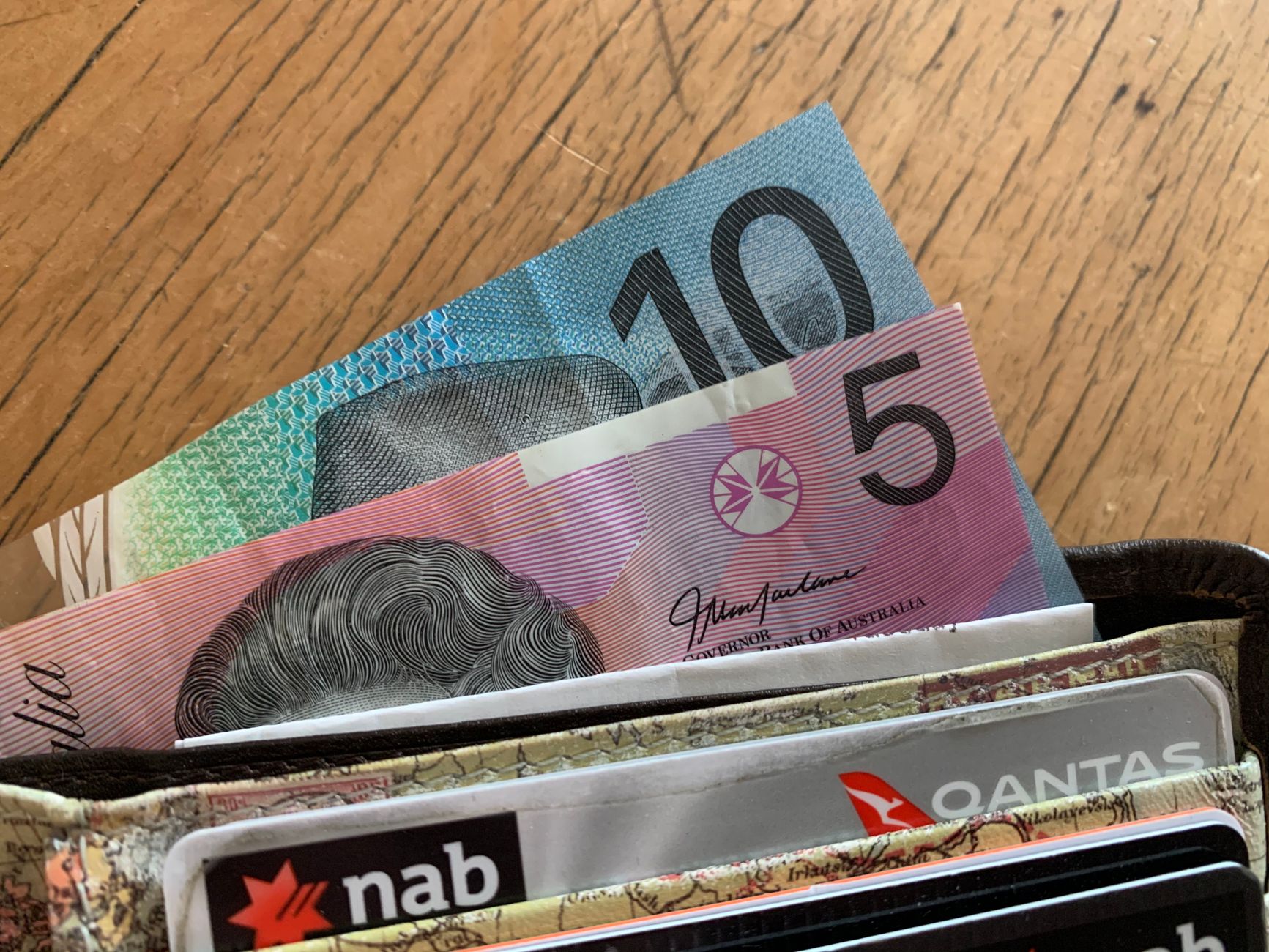
Cash is fading from Australian checkouts, but banknotes in circulation still rose 22 per cent, or A$19 billion, from March 2020 to a December 2022 peak, according to the Reserve Bank of Australia. The move is plain enough. The harder part is why notes are no longer doing their old job at the till.
The split shows up in RBA data and in ABC News’s reporting: public use of cash is shrinking while private demand for it remains stubborn. Transactional use of banknotes has fallen by 5 percentage points since early 2020, the RBA said, yet total demand still sits near a historical high because households store notes, some leak into the shadow economy, and some leave the country or disappear into holdings that are not measured.
For banking analysts, that is where the real story starts. A card-heavy economy should, in theory, need fewer notes in circulation. Instead, the RBA’s residual estimate says 55 per cent to 80 per cent of Australian banknotes, worth A$56 billion to A$81 billion, are being hoarded domestically or internationally rather than used for ordinary purchases. Nostalgia for cash explains very little here. The stronger clue is what people still want from money once they are away from the register: privacy, optionality and a store of value that does not rely on a bank, an app or a power supply.
Regulators read the same evidence differently. The Australian Taxation Office defines the shadow economy to include undeclared cash wages, under-reported sales and off-the-books contracting. On the RBA’s own estimates, cash used in the shadow economy ranges from A$5.3 billion to A$10.5 billion, depending on whether one uses Australian Bureau of Statistics assumptions or the Black Economy Task Force benchmark. Recent small-business compliance guidance has highlighted cash jobs, missing records and informal payment arrangements as recurring problems. So the banknote puzzle is not only about precautionary household saving. It is also about where digital payment rails still do not reach, and where some users do not want them to.
“It’s a mystery.”
Louis de Koker, La Trobe University, via ABC News
De Koker’s line sticks because the story resists a single-bucket answer. The RBA can measure what banks order, what ATMs dispense and how many notes are needed for day-to-day transactions. Motive is harder to observe. An A$100 note in a drawer, a bundle of cash in a small-business till and a stack carried offshore all look identical in circulation data.
What the RBA can see
Rather than treating “cash” as one behaviour, the RBA analysis breaks demand into competing uses. Its bulletin argues that the transactional share of banknotes has continued to fall even as overall demand stayed high, which means the extra notes are being absorbed elsewhere. In circulation data, that turns the rise in banknotes into a balance-sheet story, not a retail one: more liabilities are sitting outside the banking system in paper form, even while consumers tap phones and cards for everyday spending.

Denominations make the pattern clearer. The RBA said growth in low-denomination notes has been relatively slow, while larger notes have done more of the work. That fits storage better than groceries. An A$100 note is efficient if the aim is to keep value in a cupboard, move funds discreetly or settle an informal payment. It is awkward if the aim is to buy coffee.
For central banks, the uncomfortable part sits beyond payments statistics. Supplying notes that do not return quickly through retail channels means servicing demand for a parallel monetary function. Some of that function is benign. Households keep emergency cash for storms, outages and other system shocks. Some of it is less comfortable. Cash that sits outside audit trails also supports tax leakage, under-reported labour and parts of the informal economy that only show up when authorities catch them.
ABC’s rough arithmetic put about A$32 billion of Australian banknotes in an “unaccounted for” bucket after the main uses are added up. That number is not proof of criminal use, and the RBA is careful not to claim that it is. Residual categories in monetary data tend to hold several behaviours at once. Analysts see precautionary savings. Regulators see leakage. Skeptics see assumptions doing a lot of work.
Why the shadow-economy read persists
From a policy angle, cash may be losing the checkout, but it still wins where users want speed, informality or deniability. The ATO’s description of the shadow economy covers exactly those zones, from undeclared income to hidden sales. That makes the decline in consumer cash payments less reassuring than it first appears. Payments can digitise on the surface while a meaningful cash economy survives underneath.

Skeptics counter that hoarding can become a catch-all explanation. If the residual is large enough, one can explain almost anything by saying notes are in jars, safes or mattresses. De Koker’s uncertainty matters more than a colourful sound bite for that reason.
“Researchers have theories, but they are still scratching their heads.”
Louis de Koker, La Trobe University, via ABC News
Because the answer is incomplete, the banking argument gets sharper. If a modern financial system cannot fully explain why so much of its physical currency is still demanded, cash remains a live hedge against features of digital finance that users do not fully trust or do not fully want. A deposit in a bank is convenient, but it is also surveilled, intermediated and, in a technical sense, contingent on the system staying up. A note in a wallet is none of those things. Instant payments and mobile wallets have reduced the need to spend cash. They have not removed the incentive to hold it.
Offshore holdings also remain plausible even if Australia lacks the global reach of the US dollar or euro. Economist John Hawkins told ABC that the euro is better known internationally than the Australian dollar, suggesting Australia’s notes are less likely to circulate abroad at scale. Still, “less likely” is not the same as “absent”. Resource-linked trade, migration corridors and informal cross-border saving can keep notes moving beyond the domestic payments system without leaving a neat statistical trail.
What the puzzle says about banks
For lenders, the cash puzzle is a small but telling reminder that deposits are not the only store of value households use when uncertainty rises. The 22 per cent jump in notes on issue between March 2020 and the late-2022 peak came during a period that combined pandemic shock, rate volatility and a broad rethink of contingency planning. In those moments, physical currency behaves less like an old payment method and more like uninsured optionality: liquid, immediate and outside the screen.
Digital payments are not failing. They are plainly winning the everyday commerce battle. The monetary system still performs several jobs at once, and banks do not control all of them. When consumers or small firms want backup liquidity, privacy or a way to transact beyond formal rails, they can still choose banknotes. That choice reduces visibility for tax agencies, complicates demand forecasting for central banks and leaves banks serving a public that is cash-light in public but not fully cashless in private.
Seen that way, the mystery is not why cash use is falling. That part is easy to see every time a shopper taps a phone. The harder question is why so many people still want paper claims on the central bank once the transaction is over. The RBA’s answer is that hoarding now does more of the work. The ATO’s answer is that informal activity still matters. The market answer may be simpler: when stress rises, trust in digital convenience does not entirely replace the appeal of money one can hide, hold and spend without asking a network for permission.
Sloane Carrington
Markets columnist. Analytical pieces and deep-dives on monetary policy, capital flows and corporate strategy. Reports from New York.