Wall Street cuts euro rally bets as the Fed trade returns
Euro forecast 2026 turns less bullish as Fed hike bets outlast the ECB, pulling Wall Street toward a $1.10 target and back into the dollar trade.
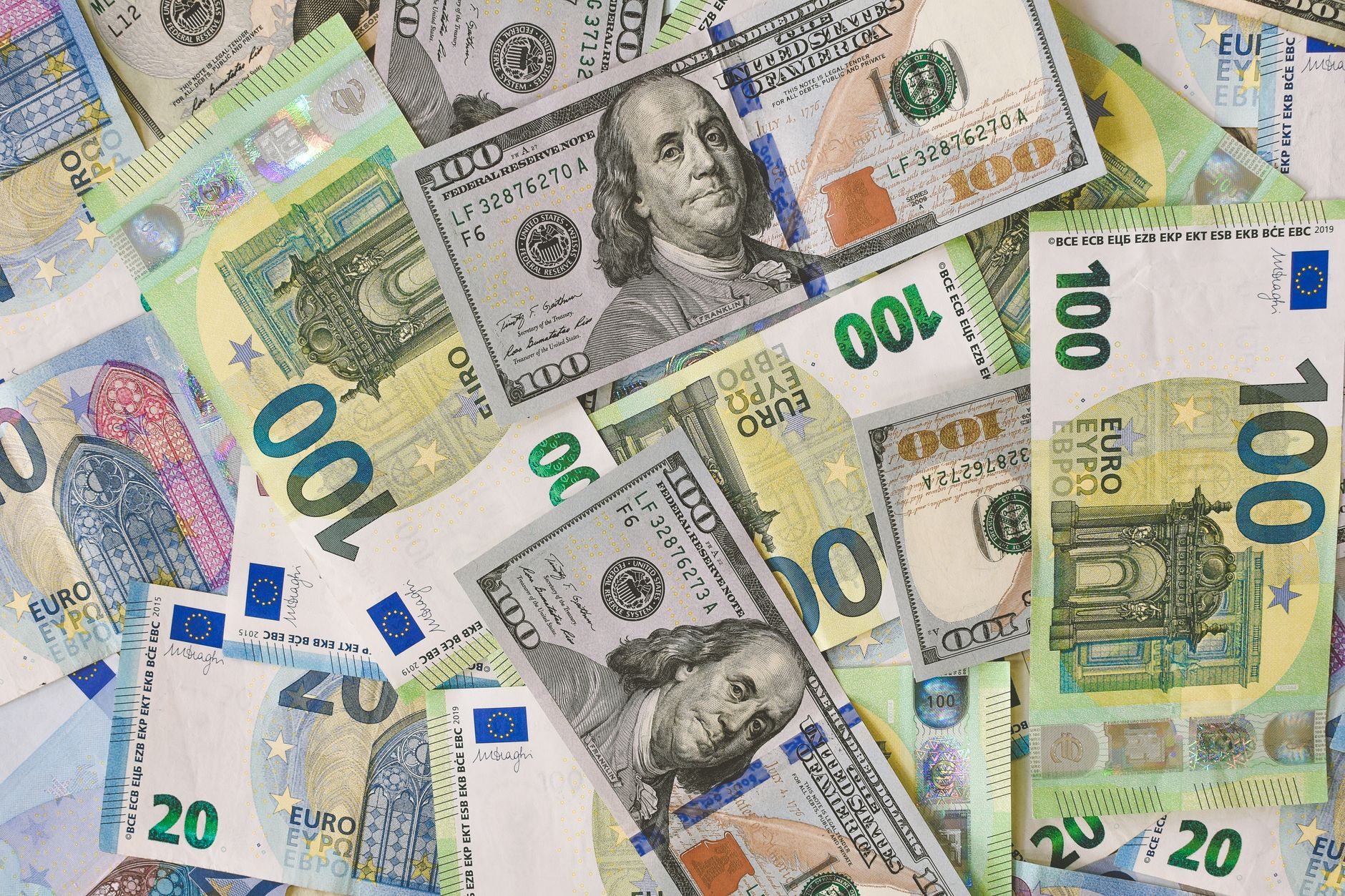
Currency desks are retreating from stronger-euro calls as traders rebuild a higher-for-longer dollar position, with forecasts sliding back toward $1.10 instead of the mid-$1. teens that looked plausible when the market thought the European Central Bank could keep pace with the Federal Reserve.
At stake is a shift in what drove the euro’s rally in the first place. The story was never mainly about Europe finding a new growth engine. It was about a narrowing rate gap. The Federal Reserve’s H.10 table put euro-dollar at 1.1403 on June 26, still near the top of this year’s range, but the move had already started to fray after Bloomberg reported on June 23 that the single currency hit its lowest level since August as Christine Lagarde’s rate language diverged from the Fed.
Policy desks on either side of the Atlantic are now reading the same evidence differently. In the United States, a Reuters poll of economists found 15 forecasters, including five primary dealers, now expect at least one Fed increase this year, while only nine still look for cuts. Across Europe, the ECB’s June 11 decision raised its three key rates by 25 basis points, yet the institution is still trying to square 2026 inflation of 3.0 per cent with growth of just 0.8 per cent. That is a poor backdrop for a consensus stronger-euro trade.
“That’s a materially hawkish surprise and it does indicate the Fed’s reaction function has turned.”
Stephen Juneau, Bank of America economist, via Reuters
Kit Juckes put the strategist view more bluntly. Reuters reported that the Société Générale chief FX strategist argued that “for once, the U.S. has both a stronger economy than the euro zone and a rates market that prices in more Fed tightening than ECB tightening in the coming months.” His line explains why this no longer looks like a spot move in search of a narrative. It looks like a rate differential reasserting itself.
The rate gap is back
By late June, investors had stopped treating the euro’s rally as self-sustaining and started treating it again as a relative-rate trade. Bloomberg’s weekend account described Wall Street banks as capitulating on stronger-euro bets, while Reuters’ June 23 currency report showed the dollar climbing to a 13-month high as markets priced a more hawkish Fed and a rebound in oil complicated the inflation outlook.
For investors, that changes the question. A month ago the debate was whether the euro could extend a cyclical rally as Europe’s rate path normalised. Now it is whether there is any reason to hold a crowded euro-long position if U.S. front-end yields can still move higher and the ECB looks closer to the end of its tightening cycle.
“for once, the U.S. has both a stronger economy than the euro zone and a rates market that prices in more Fed tightening than ECB tightening in the coming months”
Kit Juckes, Société Générale chief FX strategist, via Reuters
Timing matters. Bloomberg’s earlier report on the euro’s August-low break showed that fragility in the currency was visible before Wall Street’s target cuts became the headline. The same day, another Bloomberg Markets report framed the dollar’s jump to its highest level since November as a direct consequence of firmer Fed hike expectations. Seen that way, the new $1.10 target looks less like a dramatic downgrade than the street catching up with the rate market.
Across assets, the euro story also bleeds into everything else. When the dollar rally is being driven by a repricing in U.S. policy rather than a one-off geopolitical hedge, the spillover reaches commodities, equity multiples and emerging-market funding conditions. The euro is the visible casualty. The trade underneath it is broader.
The ECB side no longer does the same work
No one can call the ECB dovish in the casual sense of the word. The central bank raised its three key rates by 25 basis points on June 11, taking them to 2.25 per cent, 2.40 per cent and 2.65 per cent. For euro bulls, the problem is that the move did not reopen a wide upside path for European rates. It merely kept the ECB in the inflation fight while growth remained soft.

That distinction counts. The euro tends to benefit when markets can believe Europe is both tightening and holding up economically. The ECB’s own statement offered a harder mix: 2026 inflation still at 3.0 per cent, but growth at just 0.8 per cent. A central bank facing that combination can sound firm and still struggle to deliver the kind of sustained policy surprise that keeps the currency bid.
Inside the United States, the ledger looks less conflicted. The Fed held the funds rate at 3.50 per cent to 3.75 per cent, but the signal from June was that cuts were not around the corner. That is why Stephen Juneau’s point about the Fed’s reaction function mattered. Even without an immediate move, the market heard a central bank willing to tolerate tighter conditions for longer if inflation does not cool fast enough.
Fresh inflation signals add a second-order problem for the euro. Bloomberg Economics reported on June 26 that the euro zone was expected to show its first inflation slowdown since the Iran war began, while another Bloomberg report said consumers’ short-term price expectations had fallen sharply. Both developments ease some pressure on the ECB to keep surprising upward. Good news for households, in isolation. In currency markets, it removes part of the argument for owning the euro against a dollar backed by renewed Fed resolve.
What the repositioning means for portfolios
The portfolio question is less dramatic but more durable. Corporate treasurers and global allocators are not asking whether euro-dollar can bounce two big figures on a softer U.S. data print. They are asking whether hedge costs and dollar funding assumptions need to be reset for the second half. On the evidence now in front of them, the answer is closer to yes than it was when the stronger-euro trade was still consensual.
The Washington Post reported that foreign investors helped drive the dollar to a 13-month high, drawn by the AI boom and the prospect of another Fed increase. That matters because it suggests the dollar bid is not purely a tactical short squeeze in currencies. Capital is chasing U.S. growth and yield together, a combination Europe has struggled to match.
Anyone still positioned for a simple dollar fade is getting less help from cross-asset signals. HSBC argued this week that an explosive dollar rally could become one of the biggest pain trades of the second half. Separately, CNBC’s analysis of global bond allocations pointed to the appeal of playing different rate cycles outside the United States. That still may be right over a longer horizon. Near term, though, the rate cycles are not diverging in a way that helps the euro. They are diverging in a way that restores the dollar’s carry advantage.
For allocators, the conclusion is only partly comforting. A stronger dollar becomes a persistent hedge-cost problem when the Fed-ECB gap is doing the work and when foreign money still prefers the U.S. combination of growth, liquidity and yield. That does not require euro-dollar to collapse. It only requires the market to stop believing that every pullback in the dollar is the start of a lasting turn.
Wall Street’s retreat from stronger-euro calls is less a verdict on Europe than a reminder about the hierarchy of macro trades. When the market decides the Fed still matters more than the ECB, currency targets adjust fast. The euro may still find tactical support around data releases or positioning squeezes. Without firmer growth and a clearer case for more tightening in Europe, the cleaner trade remains the one the street is rediscovering now: fewer heroic euro targets, more respect for the dollar, and a much less forgiving path back above 1.14.
Sloane Carrington
Markets columnist. Analytical pieces and deep-dives on monetary policy, capital flows and corporate strategy. Reports from New York.