Fed stress test 2026 clears big banks for higher payouts
Fed stress test 2026 results let big U.S. banks raise dividends and buybacks, giving lenders fresh leverage as capital rules are rewritten.
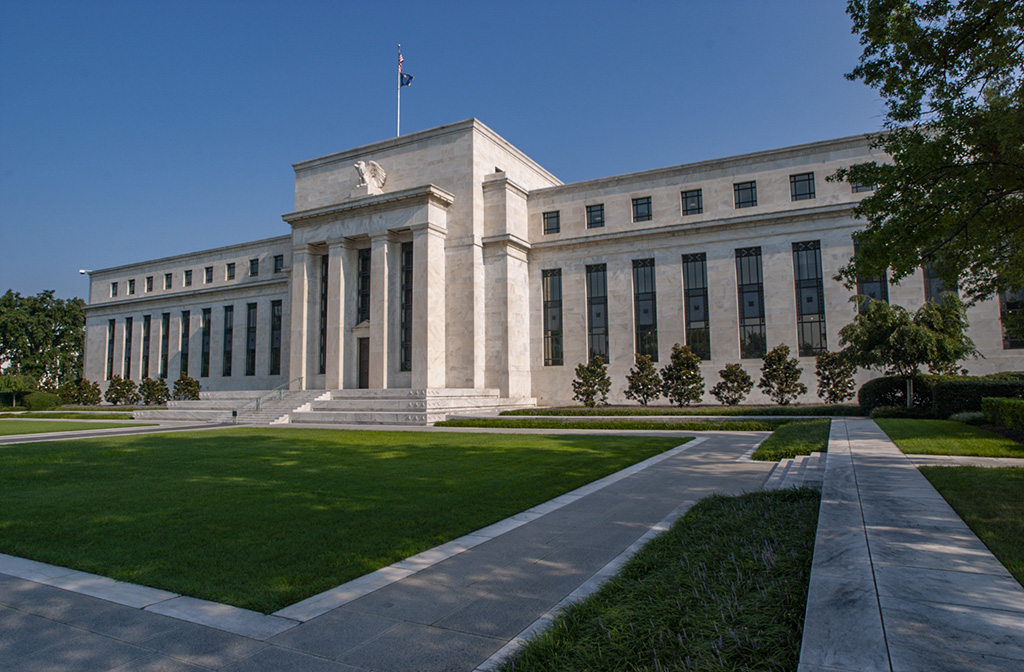
The Federal Reserve said Wednesday that the 32 largest U.S. banks could absorb more than $708 billion in losses in a severe downturn and stay above minimum capital requirements, giving several of the biggest lenders room to lift dividends and, in some cases, add to buybacks.
For markets, the pass was less interesting than the capital it frees up. Washington is again arguing over how much loss-absorbing cushion the largest banks should hold, and a clean stress-test cycle gives bank executives another data point as they push back on tougher Basel III Endgame rules.
Fed vice chair for supervision Michelle Bowman cast the results as evidence that the post-crisis regime is still working as intended.
“Today’s results underscore the strength of the banking system.”
Michelle Bowman, Federal Reserve vice chair for supervision
The numbers still showed real strain. The group’s aggregate common equity tier 1 ratio fell to 11.2 per cent from 12.8 per cent in the Fed’s hypothetical recession, a 1.6 percentage-point decline that left the industry above regulatory minimums, according to Reuters’ report on the test. The exercise asks whether large lenders could keep credit flowing through a deep shock. On that narrower test, the Fed’s answer was yes.
Banks moved quickly on capital returns. JPMorgan Chase said it would raise its quarterly dividend to $1.65 a share. Goldman Sachs lifted its payout to $5 a share, and Morgan Stanley raised its dividend to $1.15. CNBC reported that JPMorgan also announced a $50 billion buyback authorization, a reminder that investors usually care more about post-test capital returns than the annual pass-or-fail label.
Why the policy fight matters more now
This year’s exercise has less mechanical bite than usual. The Fed said it would leave stress capital buffers unchanged until after the 2027 test while it reworks the methodology, so the 2026 results will not feed directly into required capital the way earlier tests did.
That timing matters.
Once the annual exam stops resetting buffers immediately, its role shifts from hard constraint to public signal. Banks can point to a system that survived a modeled downturn with more than $708 billion in losses and argue that materially tougher requirements are harder to justify. Supervisors can cite the same figures as proof that the test remains a useful check on balance-sheet resilience. The fight moves from arithmetic to interpretation.
Bowman is leaning into that shift. For the industry, a passing score in a lower-stakes test becomes a talking point in the campaign against tougher capital treatment. For the Fed, the challenge is preserving credibility while conceding that this year’s results will not flow straight into firm-specific buffers. The 2026 exercise matters less as a penalty box than as public evidence.
A Reuters Breakingviews analysis reached the issue from another angle, arguing that a lower-stakes framework could produce a clearer signal about resilience because banks have less incentive to manage specifically to the test. That cleaner signal now lands in a more openly political fight over the next version of the rules.
The industry is still waiting for the next draft of the Basel III Endgame proposal. Analysts have already signaled that the rewrite matters more to valuations than the stress-test score by itself. Christopher McGratty of KBW called the latest exercise “going through the motions”, a blunt way of saying the market is looking past the annual ritual to the framework that will govern payouts in coming years.
For now, the Fed has given the largest U.S. banks three useful things: evidence that they can withstand a severe recession, room to return more capital, and a stronger line in the next lobbying round over bank rules. Shareholders get the near-term benefit through higher dividends and larger buyback capacity. Washington gets the harder question: whether a stress test that no longer changes buffers until 2027 can still be the sharp regulatory tool it once was.
Naomi Voss
Banks and deals reporter covering bank earnings, fintech, M&A and IPOs. Reports from New York.