Why the Cursor deal matters more than SpaceX's post-IPO surge
SpaceX Cursor deal turned a post-IPO rally into acquisition currency, showing why investors care more about AI coding leverage than first-week euphoria.

SpaceX shares rose 16 per cent on Tuesday after investors treated the company’s $60 billion agreement to buy Cursor, the AI coding startup controlled by Anysphere, as more than a victory lap after the biggest IPO in history. Wall Street read it as a capital-allocation judgment: a newly public company taking a stock re-rating and turning it into strategic leverage before the first-week glow faded.
Only days after listing, SpaceX is using a higher share price as acquisition currency. The 8-K merger filing fixes Cursor’s equity value at $60.0 billion, while CNBC calculated that the stock consideration equates to about 3.4 per cent dilution at SpaceX’s IPO valuation. If the market keeps paying up for Musk’s public vehicle, the effective ownership cost of buying a scarce AI asset falls quickly.
Investors rewarded the acquisition instead of punishing it as empire building. Bloomberg’s original reporting noted that SpaceX had only 30 days after its debut to decide whether to exercise an option to buy Cursor, and the FT’s earlier IPO analysis traced that option back to April, before the stock ever started trading. That chronology points to planning. SpaceX set up the transaction while private, then used the public revaluation to make the paper easier to spend.
Another detail helped. SpaceX did not burn fresh float cash on a software asset whose value still depends on a brutally competitive market. Management kept liquidity, kept the story of post-float balance-sheet strength and still claimed an AI asset that plugs into Musk’s broader compute push. A cash-rich splash would have been harder to defend. This first serious post-IPO test ended in a rally, not a discount.
Why the market liked it
A stock-for-stock structure was central to that response. New issuers usually spend their first weeks proving they can handle life as a public company: disclosure cadence, analyst scrutiny, guidance discipline. SpaceX instead used the moment to show that its valuation could do work. At 3.4 per cent dilution, the bill for a company Bloomberg said had about $3 billion in annualised Cursor revenue behind it is not cheap in absolute terms. Public markets are pricing something narrower: what a scarce AI application layer looks like when attached to one of the few new mega-cap stocks with momentum, cash and founder control intact.

As Semafor’s follow-up analysis put it, the market did not need another reminder that SpaceX could float stock at scale. Evidence that management would do something economically sharp with the new paper mattered more. In one stroke, buying Cursor kept the IPO proceeds available for rockets, satellites and compute, while folding an enterprise software asset into the group without asking debt investors or cash investors to underwrite the same price.
Prior collaboration reinforced the point. MarketWatch reported that Cursor engineers had already been working closely with SpaceX before the acquisition, which made the public-market step look like the completion of a plan rather than a sudden swing at a hot startup. Currency mattered. Knowing the product, the engineers and the integration path mattered as well. Investors forgive a rich multiple more readily when the buyer is not shopping blind.
What Cursor really buys
Cursor solves a product problem as much as a narrative one. Musk has compute, distribution and a sprawling industrial footprint. Developer mindshare, though, sat with other AI coding tools. Semafor’s framing put Cursor in the same field as Anthropic’s Claude Code, OpenAI Codex and Google’s Antigravity. Ars Technica’s take was plainer: the deal is about closing SpaceX’s gap with rivals that already own developer mindshare.
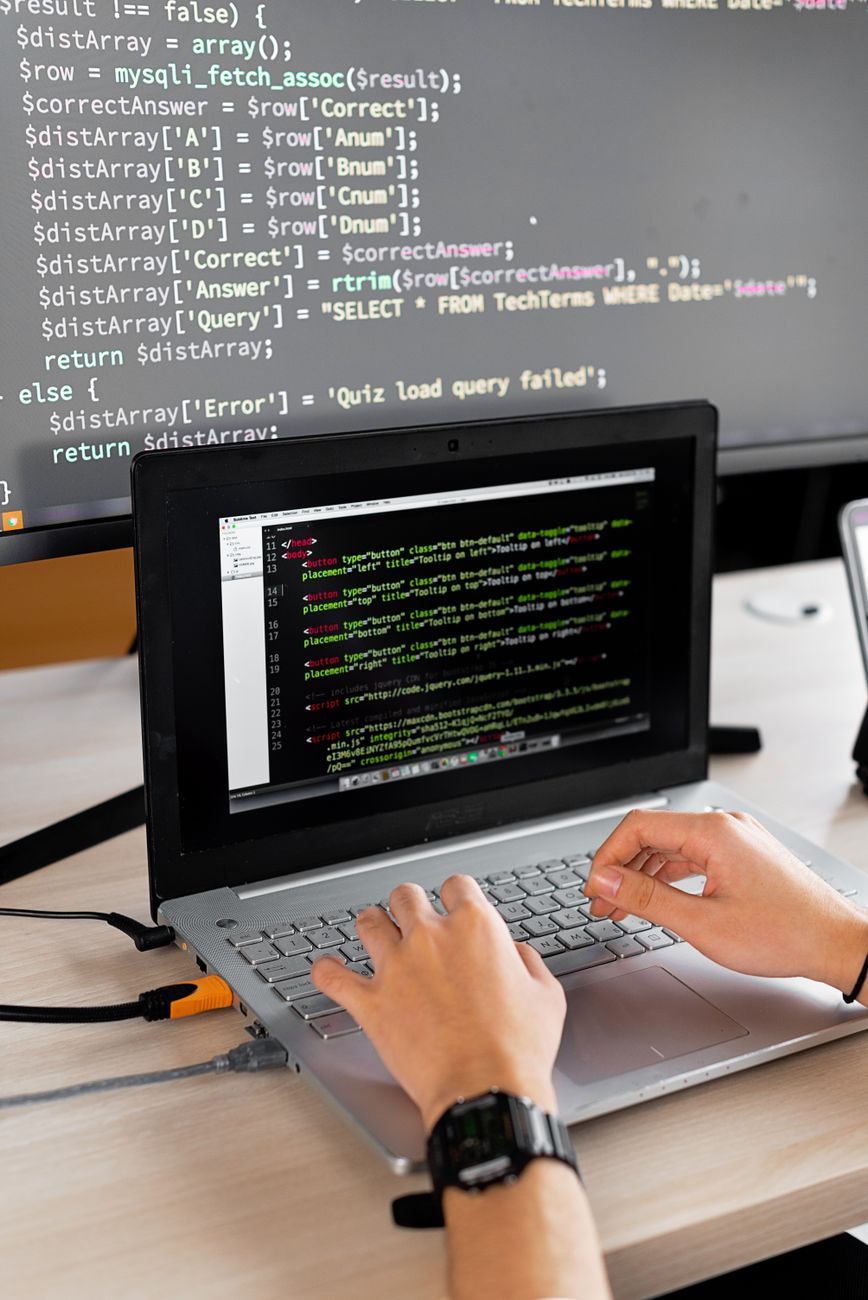
SpaceX said in a statement on X that the purchase is meant to deepen its AI stack, without dressing the ambition up as a side project.
“We look forward to working closely with the Cursor team to advance our frontier AI capabilities.”
SpaceX, statement on X
Coding tools are becoming control points inside enterprise AI, not novelty features at the edge. Owning the assistant places the buyer closer to the workflow, the proprietary codebase and the data exhaust from how engineers actually build. SpaceX is buying a front-end product that can capture usage, steer developers toward its own models and make the company’s compute spend feel more like a stack than a cost centre.
A different revenue mix is the market’s bet. Public software valuations reward recurring usage and seat expansion far more readily than launch cadence or hardware cycles. Cursor gives SpaceX a path to that kind of multiple logic. Tie coding assistance to its models and infrastructure, and the group starts to look less like a rocket company dabbling in AI and more like a vertically integrated AI vendor with industrial cash flows underneath it.
Michael Truell said on X that he was “Excited to partner with the SpaceX team to scale up Composer,” a line that captures what SpaceX is paying for: a distribution engine that already has customers.
“Excited to partner with the SpaceX team to scale up Composer.”
Michael Truell, Cursor co-founder, on X
Commercially, Bloomberg’s reporting that Cursor had reached $3 billion in annualised revenue by late April is the proof point. Set beside it was a warning. CNBC cited Ramp data showing Cursor’s share of the AI coding market fell to 26 per cent in May from 41 per cent in June 2025. In a market this young, fast growth and share erosion can coexist. They also suggest the category is consolidating around scale, distribution and model quality before the contest settles.
The harder test
What matters more than SpaceX’s post-IPO surge is the question the deal creates. The first-week rally told the market that scarcity, founder control and satellite economics still clear at extraordinary valuations. Cursor asks whether SpaceX can turn that valuation into a repeatable corporate advantage. Hot sentiment makes one stock deal easy. A product moat is what public shareholders eventually mark against results.
Practical frictions remain. Wired’s reporting on communities near xAI data centres is a reminder that frontier AI ambitions are constrained by power, permitting and local backlash, not just chip budgets. Inside the group, Cursor will compete for attention with rockets, launch cadence, Starlink capacity and AI infrastructure. Founder control does not create infinite bandwidth.
There is timing pressure, too. If Cursor keeps growing but loses share as larger rivals bundle coding agents into broader model platforms, SpaceX will have paid a peak-cycle multiple for a strategic foothold rather than a category winner. That risk is why the market’s initial reaction matters. Investors were willing to finance the experiment because the stock had rerated so violently that the equity felt cheap to spend.
For now, Tuesday’s response showed why those objections did not dominate. Trophy-asset enthusiasm was not the trade. Discipline in the use of a fresh valuation was. SpaceX kept its cash, accepted modest dilution, bought a business with real revenue and pushed deeper into a software category that matters to enterprise AI spending. The post-IPO pop was a signal. Cursor is the thesis. If integration holds, the share surge will look like the cheaper part of the story.
Naomi Voss
Banks and deals reporter covering bank earnings, fintech, M&A and IPOs. Reports from New York.