Beijing’s quiet pushback against China’s bond rally
PBOC bond purchases fell to a nine-month low in June, signalling Beijing wants tighter control of yields and liquidity without broad easing.
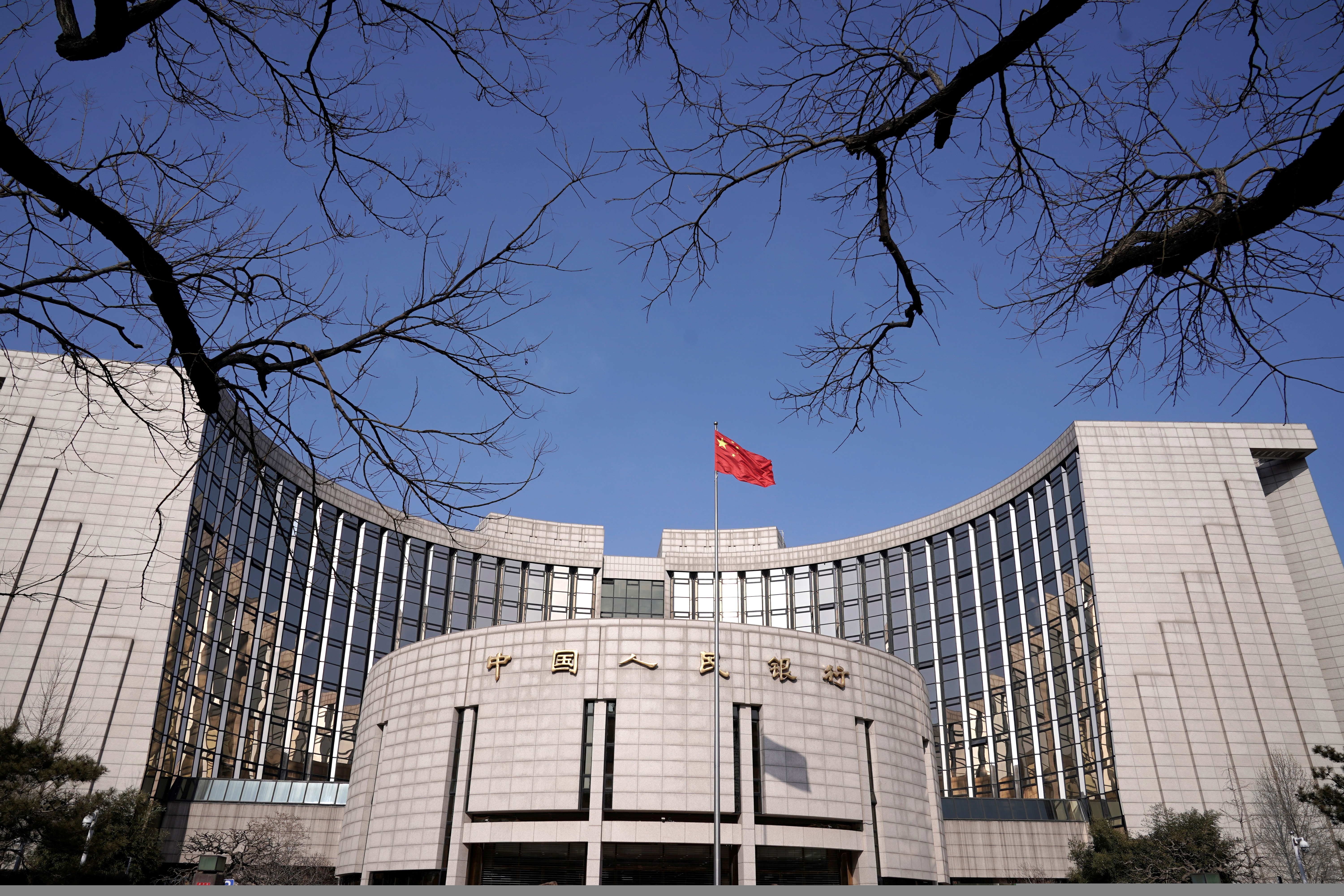
China’s People’s Bank of China cut net government-bond purchases to 10 billion yuan in June from 50 billion yuan in May, the smallest total in nine months, a Thursday shift that reads less like blanket easing and more like a warning that Beijing is growing uneasy with ever-lower yields and too much cash sloshing through the system.
From the insider’s vantage inside the PBOC’s operating framework, the move fits a narrower goal. The central bank is trying to gain finer control over overnight funding costs while keeping the seven-day reverse repo as its main public policy signal, a structure Bloomberg reported it had been building toward and Reuters later detailed when the first overnight reverse repo arrived at 1.25 per cent.
But the same sequence looks different from the skeptic’s side of the bond market. If the central bank is injecting cash at the very front end while cutting the pace of outright bond buying, it is effectively telling duration bulls that policy support for growth does not amount to permission for a one-way rally in government debt. That tension, more than the June flow number itself, is the real message from Beijing.
The point is not that China has suddenly turned hawkish. It is that the PBOC is trying to separate two jobs that investors often collapse into one: supporting an economy that still needs help, and preventing a fall in yields that could create fresh financial-stability risks or distort how policy is transmitted through the curve. The shift keeps this a rates-and-liquidity story, not a broad China-growth explainer.
A new overnight corridor
Beijing has been preparing the market for this in stages. Bloomberg wrote in mid-June that the PBOC was hinting at a framework centered more clearly on an overnight policy rate, closer to the operating systems used by the Federal Reserve and other major central banks, while Reuters reported on June 25 that the new tool was meant to manage short-term liquidity more precisely.
That builder-optimist case is straightforward. On June 29 the PBOC injected 300 billion yuan through its first overnight reverse repo at 1.25 per cent, or 15 basis points below the seven-day rate, and followed with another 600 billion yuan on June 30 at the same level, according to Reuters. A tool that can be switched on at month-end or around sudden funding squeezes gives policymakers a far more surgical way to smooth money-market pressure than relying on broad bond purchases alone.
Analysts also read the design choices as intentional. The bank did not publish the overnight rate in its own statement when the first operation was announced, even though the level quickly circulated in the market. That matters because it partly answers one of the analyst community’s main questions: whether the new instrument is supposed to displace the seven-day reverse repo or merely sit beneath it.
“Markets have been speculating on the overnight rate, and generally agree it will come in lower than the seven-day rate at around 1.30%-1.35%.”
— Lynn Song, chief economist for Greater China at ING, via Reuters
Song’s point, carried in Reuters’ reporting on the launch, was less about a single fixing and more about the shape of a corridor. Traders had expected the new rate to clear below the seven-day tenor; the 1.25 per cent debut confirmed that the overnight tool is meant to anchor the very front end without rewriting the bank’s headline signal.
That interpretation was reinforced by another reaction in the same Reuters report. Economist Xing Zhaopeng said the choice not to publicise the overnight rate suggested the PBOC had no intention to “undermine the status of the seven-day reverse repo rate.” In other words, Beijing appears to want Fed-style operational finesse without Fed-style transparency around every step. That preserves optionality, but it also means the market has to infer policy intent from actions such as June’s bond-purchase slowdown.
A warning to bond bulls
That is where the skeptic’s reading becomes hard to ignore. Bloomberg’s report on Thursday said net government-bond purchases fell to 10 billion yuan in June from 50 billion yuan in May, the lowest in nine months, precisely as officials grew more wary of further yield declines and excess liquidity. The message is subtle, but it is still a message: policymakers are less comfortable when long-end rates fall too fast, even if lower yields look supportive for headline financing conditions.

That concern is not new. Reuters reported as far back as June 2024 that falling bond yields were already leaving the PBOC with a difficult trade-off between easier financing conditions and the risk of an overheated government-debt rally. What changed in June 2026 is that Beijing now has a more granular toolkit. Smaller outright purchases can lean against duration exuberance while overnight operations continue to support the plumbing underneath the market.
That also helps explain why investors may have initially over-read the mid-June framework shift. Bloomberg reported on June 18 that analysts expected the new rate regime to damp money-market volatility and support bonds. Both points can still be true. Better liquidity transmission can be bond-positive at the front end even as reduced central-bank buying makes life harder for investors positioned for a relentless rally further out the curve.
“This is a key step in China’s interest rate reform.”
— Guosheng Securities, via Reuters
The reform language, quoted in Reuters’ June 25 report, is important because it frames the overnight tool as infrastructure rather than stimulus. That is why the bond-purchase cut matters. Infrastructure upgrades tend to be mistaken for an easier stance when they first arrive. June’s smaller buying total suggests the PBOC wants to make sure the market does not confuse a cleaner operating system with a promise of ever-cheaper long-term money.
What Beijing wants next
From the builder-optimist side, that separation should make the broader system more stable, not less. If the overnight facility becomes a standing month-end valve, the PBOC can add or drain liquidity where pressure is sharpest instead of leaning on larger balance-sheet signals. For Asia rates investors, that means the question is no longer whether China is easing in the old sense, but how finely it can target easing without losing control of the curve.
There is also a broader structural reason this matters. Bloomberg has argued that China’s growing reliance on bonds rather than bank loans gives the central bank a wider channel through which to influence borrowing costs. That channel is broadening as well: foreign governments, Wall Street banks and multinational companies have been flocking to China’s panda bond market to tap cheaper yuan funding, CNBC reported in June. A country that increasingly transmits policy through capital markets needs better control of the overnight rate, repo conditions and the front-end corridor. It also needs to stop the long end from turning into a one-way macro trade.
That leaves the market with a more nuanced conclusion than either camp would prefer. The insiders are probably right that the PBOC is modernising its framework. The skeptics are probably right that smaller bond purchases are a warning shot to investors who assumed modernisation automatically meant lower yields. And the analysts are right that Beijing’s refusal to foreground the overnight rate shows it still wants the seven-day reverse repo to do the heavy signaling.
For now, the cleanest way to read Thursday’s move is that the PBOC is trying to buy itself room. Room to keep growth support in place. Room to prevent excess liquidity from feeding a destabilising bond rally. Room to let the overnight rate become more useful without turning it into the only number that matters. In China’s current policy mix, that looks less like indecision than a deliberate attempt to keep the bond market obedient while the rest of the economy steadies.
Sloane Carrington
Markets columnist. Analytical pieces and deep-dives on monetary policy, capital flows and corporate strategy. Reports from New York.