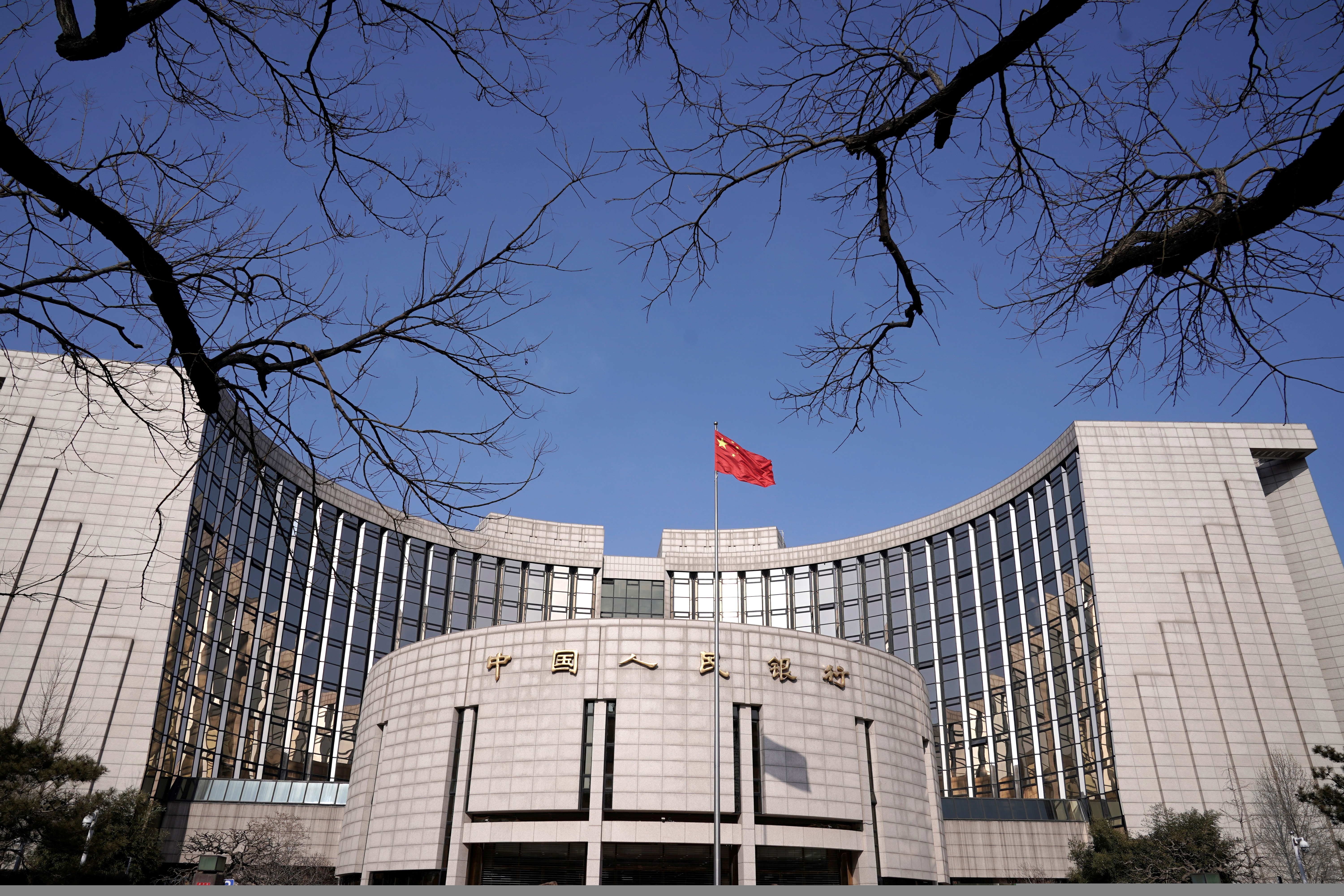
PBOC rate regime shift could steady China bond markets
PBOC rate regime changes could lower China funding volatility, support bonds and widen the yuan's appeal to global reserve managers.
The People’s Bank of China narrowed its overnight repo corridor by five basis points this week, a technical adjustment that analysts cited by Bloomberg Markets said should make short-term funding cheaper and easier to read. Bond desks get the most direct signal: fewer abrupt cash squeezes and a firmer anchor for the front end of the curve. Beijing is making a broader bet, though, that cleaner market plumbing can do part of the work normally assigned to an outright rate cut.
The move matters beyond a central-bank operations note. China’s policy backdrop still looks cautious rather than aggressively stimulative, and the main policy rate was left unchanged. By tightening its grip on the overnight market, the PBOC is giving traders a clearer signal about where it wants money-market rates to sit. Credit demand remains uneven, the property drag has not fully lifted, and a steadier funding floor can matter as much as a headline cut.
In China, that distinction carries unusual weight because the policy signal has often been spread across several instruments at once: open-market operations, medium-term lending tools and periodic administrative nudges. Traders could infer direction. The operating target was rarely as transparent as the Fed funds corridor or the ECB’s deposit framework. This adjustment does not erase that complexity, but it moves the PBOC closer to a system in which the overnight market is where intent shows up first.
Governor Pan Gongsheng has framed the problem less as simple easing than as risk control, liquidity management and broader financial opening. That puts the move in a second register. The issue is not only how cheap cash is tomorrow morning; it is how intelligible China’s policy framework looks to banks, foreign reserve managers and bond investors pricing yuan assets against global alternatives.
What changed in the corridor
Bloomberg Economics had already reported that the PBOC was edging toward an overnight policy framework more familiar to Fed watchers, with reverse repos doing more of the steering and broader benchmarks doing less of the signalling. This week’s tweak makes that shift harder to miss. Rather than rely on a looser, partly inferred operating band, the central bank is narrowing the corridor around overnight funding and expanding short-dated injections when stress appears.

The tweak tightens the PBOC’s control over short-term rates and shows an easing bias.
Xiangrong Yu, Citigroup economist, via Bloomberg Markets
Yu’s point separates the framework from the stance. A tighter corridor gives the PBOC more control; an easing bias suggests where that control is currently directed. Those are not the same thing. China is not announcing a Fed-style regime shift in bright lights. Instead, officials are importing some of the operating logic of developed-market central banking, then bending it to a domestic cycle in which they still want room to support growth without looking trapped in a full easing campaign.
Xinquan Chen, the growth watcher cited by Bloomberg, offers the skeptic’s case. If activity data keep softening, a five-basis-point corridor move may look less like a new regime than a prelude. Analysts still see scope for a symbolic 10 basis point cut in the second half of 2026, Bloomberg said. In that reading, the corridor is useful because it prepares traders for smoother transmission of a larger move later. For now, the PBOC has chosen the plumbing before the headline.
Why bonds are reacting first
Bonds are the cleanest market for that calibration to show up. More predictable overnight cash lets leveraged investors hold duration with less fear of a sudden funding spike, while banks can manage balance-sheet liquidity with more confidence. Bloomberg said Goldman expects 10-year Chinese government-bond yields to stay in a 1.7 per cent to 1.8 per cent range. That is a low bar, not a breakout call, but it captures the market’s reading: fewer air pockets, not a reflation boom.
Everbright’s Xu Zhang put the transmission channel more mechanically in Bloomberg Markets:
Additional overnight reverse repo operations will help ease volatility in the overnight repo rate and enhance the influence of the policy rate.
Xu Zhang, via Bloomberg Markets
That sounds minor. In money markets, though, marginal changes often matter most at month-end, quarter-end and moments of regulatory strain, when institutions stop pricing off averages and start pricing off access. A central bank that can squash overnight volatility more quickly also earns more credibility when it says the front end should stay calm.
The contrast with other major bond markets sharpens the point. The Federal Reserve, the ECB and the Bank of Japan are judged on where benchmark rates go next. China is trying to make the path between its signal and its funding conditions less noisy. Domestic investors have spent years parsing a cluttered mix of lending rates, window guidance and ad hoc liquidity operations. A more legible overnight anchor does not solve weak credit appetite. It does make the policy reaction function easier to trade.
Why the yuan angle matters
Reuters reported that China is widening the institutional plumbing around yuan use, including authorising six large state banks to handle offshore yuan business in Shanghai’s free-trade zone and pushing tools such as FIMA RMB Repo, which would let overseas central banks and sovereign funds borrow yuan against top-rated Chinese bonds. The corridor shift fits that agenda. A reserve currency does not live on diplomatic ambition alone; it needs usable money markets, predictable collateral practice and bond investors who trust that cash funding will not lurch unexpectedly.

CNBC tied that logic to the private side of the market, reporting that Wall Street banks and foreign borrowers were rushing into panda bonds to tap cheaper yuan funding. Beijing is trying to make yuan assets more attractive at both ends of the spectrum: official holders that care about reserve utility, and private issuers that care about funding cost. Cleaner control of the overnight rate helps both. It tells foreign participants that China’s domestic bond market can be navigated through operating conventions they already recognise.
For foreign reserve managers, the practical question is not whether Beijing wants the yuan used more widely. Collateral has to move quickly and funding lines have to work when domestic stress flares. A repo-friendly government-bond market answers that question better than any policy speech does. The corridor change reduces the odds that a first taste of onshore yuan funding comes with a disorderly overnight move.
Pan’s own framing suggests officials are alive to the risks of opening faster than their liquidity tools can handle:
As financial markets continue to deepen and develop … cross-market risk contagion may become more frequent,
Pan Gongsheng, PBOC governor, via Reuters
That is the regulator’s counterpoint to the market’s enthusiasm. Beijing wants a deeper, more international yuan system, but it wants one that is easier to quarantine when volatility jumps from one market to another. A narrower corridor and more frequent overnight reverse repo operations are defensive as well as supportive. They are instruments of control.
The cleanest read is that China is borrowing the Fed’s operating playbook without borrowing its macro stance. The PBOC is not signalling an all-out easing pivot. It is refining the machinery through which easing, if needed, would reach banks, bond desks and offshore yuan users. If growth disappoints, the skeptics may still get their 10 basis point cut later this year. If it does not, the central bank may still have won something valuable: a domestic rate regime that produces less noise, steadier bond demand and a currency ecosystem that looks more usable to the outside world. That is enough to explain why bonds liked the move before anyone could call it a true cycle change.
Sloane Carrington
Markets columnist. Analytical pieces and deep-dives on monetary policy, capital flows and corporate strategy. Reports from New York.