India's rupee defence edges toward capital-control territory
India currency controls are back in focus as Citi warns oil pressure and foreign outflows may push the rupee toward 100 per dollar.
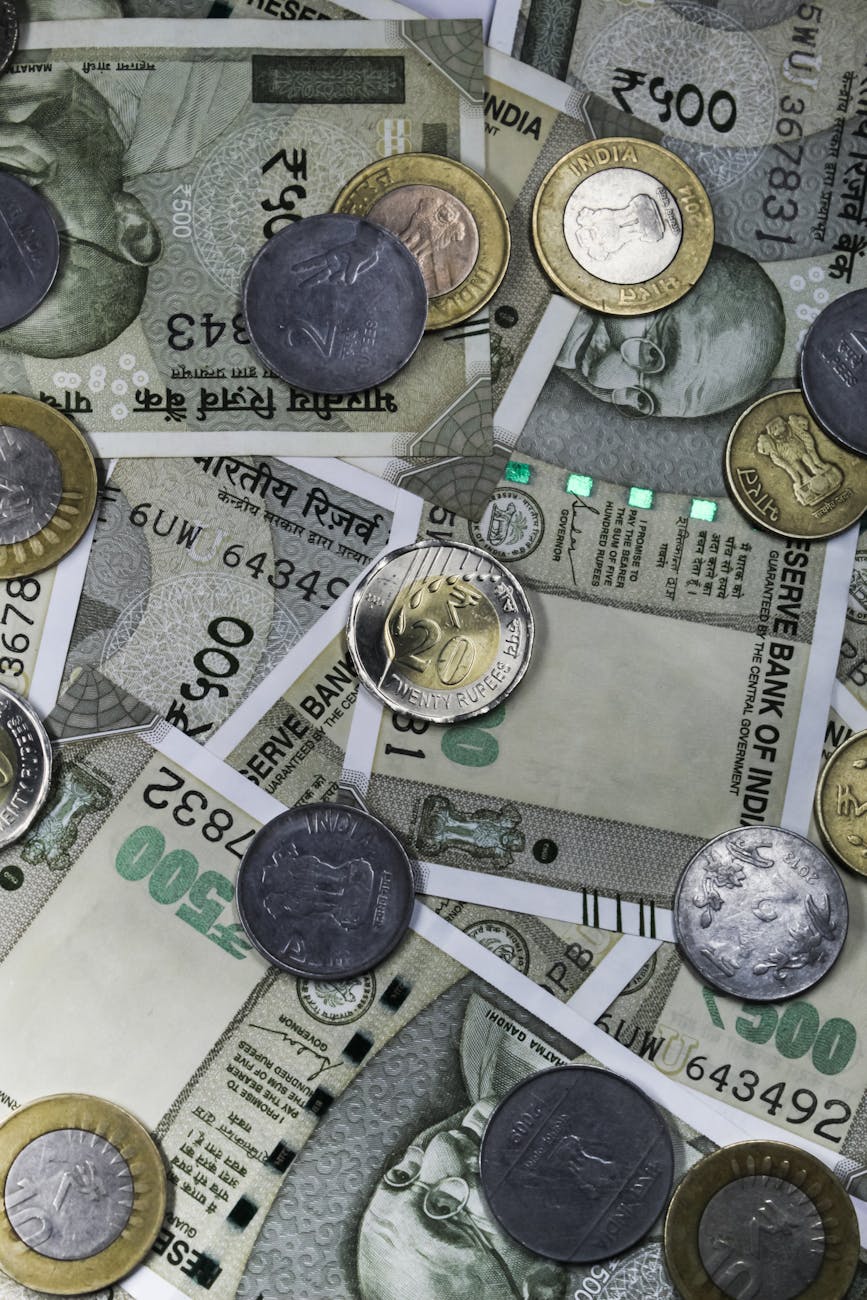
Citigroup says India may have to move beyond routine foreign-exchange intervention and toward tighter controls on capital flows if oil-driven stress keeps pushing the rupee lower, a shift that would turn a currency slide into a broader test of how far a major emerging market will go to defend its balance sheet. The rupee fell to a record 95.33 per dollar on Tuesday, and some global funds are already modelling a 100-per-dollar stress case.
That is the real story behind Citi’s warning. India still has deeper buffers than the countries usually associated with full-scale currency panic, including reserve cover of 11 months of imports. What is changing is the policy menu. A government that has already burned reserves, tightened trading rules and asked how to mobilise dollar inflows is now being discussed in terms that sound less like day-to-day FX management and more like administrative defence.
For investors, that distinction matters. A weaker rupee can be hedged. A market in which policymakers start rationing outflows, leaning harder on offshore trading or nudging companies to keep more dollars at home carries a different risk premium altogether. Citi’s point, set out in Bloomberg’s report on possible new curbs, is not simply that the currency is under pressure. It is that New Delhi may decide intervention alone is too expensive if the oil shock drags on.
From intervention to administration
India’s authorities are not starting from zero. Earlier this spring, the Reserve Bank of India tightened domestic market plumbing with a $100 million cap on onshore FX positions, part of a broader effort to make speculative rupee bets harder to warehouse. That was still a market-structure response. The next step, if it comes, would be more intrusive: discouraging outward flows from businesses, pulling more foreign currency into the banking system and accepting that exchange-rate defence may require rules as well as dollars.
The language from Citi economist Samiran Chakraborty is revealing because it frames capital controls not as a taboo but as one policy branch on the tree. In that sense, the bank is describing a government moving from smoothing volatility to choosing which flows it most wants to protect.
Regarding capital flows, the choice lies between immediate impact through capital controls and more conducive medium-term policy to encourage inflows.
— Samiran Chakraborty, The Economic Times
The Reuters / Hindu BusinessLine report on efforts to mobilise dollar inflows points to that softer path. Pulling more foreign currency into the system through incentives or balance-sheet engineering lets the RBI preserve the appearance of openness. Restricting outflows would tell markets that the authorities have moved from attracting dollars to trapping them.
Those two options are not equivalent. Encouraging inflows means offering incentives, easing access for deposits or debt issuance, and buying time. Capital controls work faster, at least on paper, because they target the exit valve directly. The cost is reputational. Once authorities hint that outbound money may be treated differently in a stress window, foreign investors stop looking only at spot levels and start pricing convertibility risk, policy unpredictability and the possibility that today’s temporary measure becomes tomorrow’s standing tool.
This is why the rupee’s approach toward 100 matters less than the route India takes to prevent it. Psychological levels can break and then stabilise. Policy regimes are stickier. If the market concludes that India is evolving from a reserve user to a rule setter, that conclusion will shape hedging costs, offshore liquidity and the way global funds compare India with other large emerging markets facing imported inflation.
Oil pressure changes the maths
High crude prices are what make the debate acute. India imports most of its oil, so every sustained move up in the energy bill feeds directly into the trade balance, importer dollar demand and inflation risk. Reuters reported that high oil prices are spurring importer hedging and damping flows, leaving the rupee exposed not just to a stronger dollar but to a domestic scramble for hard currency.

The Reserve Bank of India is still showing a preference for liquidity tools before outright barriers. On Tuesday it announced a $5 billion equivalent swap auction, a measure designed to ease local funding strains and signal that the central bank is not out of ammunition. Bloomberg Economics also reported that the RBI may hand the government a surplus of nearly 3 trillion rupees, which would give New Delhi more fiscal room to absorb part of the external shock.
None of that looks like a classic balance-of-payments crisis. Not yet. India still has reserves, domestic policy flexibility and a large local investor base. But oil shocks change sequencing. A country can have enough buffers to avoid collapse and still decide that using those buffers alone is a poor trade if it invites one-way speculation. That is the narrow bridge India is now walking.
We must prepare for the worst.
— Uday Kotak, BBC Business
Uday Kotak’s remark, quoted by BBC Business, captures the mood in India more accurately than any round number on a trading screen. The government has already urged households to buy less gold and trim foreign holiday spending, both classic signals that policymakers are thinking about dollar conservation as a national objective rather than a purely financial-market problem.
What markets would hear from new curbs
The cleanest argument against the capital-control thesis is that India knows the damage such a signal could do. Offshore rupee trading matters to price discovery, foreign participation matters to India’s financing story and Prime Minister Narendra Modi’s government has spent years selling the country as a credible destination for global capital. A sudden lurch into hard restrictions would cut against that pitch.
That sceptical view is why Mitul Kotecha, head of FX and emerging-market macro strategy Asia at Barclays, argued that India is unlikely to choose the most aggressive path.
I do not think India wants to move toward stringent capital controls or a major clampdown on the NDF market.
— Mitul Kotecha, Business Standard
Semafor reported last week that foreign investors were pulling out of India at a record pace, while Bloomberg said some funds were already sketching a 100-per-dollar scenario. In that setting, even a modest control-like step would be read less as a one-off administrative tweak than as confirmation that policymakers see deeper external pressure than they are willing to say outright.
He may be right. Policymakers usually prefer graduated measures because they preserve optionality. Yet that caution is exactly why the market is focused on marginal moves. India does not need to slam the door on capital to change the rupee trade. A little more friction on outward remittances, a little more pressure on corporate dollar demand, a little more policing of offshore-onshore arbitrage, and the message would still be clear: defending the currency has become important enough to justify administrative costs.
Elsewhere in emerging markets, that message would resonate. India’s significance is not that it is fragile. It is that it is large, investable and usually treated as a policy bellwether rather than a stress outlier. If even India begins to blur the line between intervention and control under oil pressure, investors will look harder at other import-dependent economies and ask which central banks might follow the same script if commodity shock and capital outflows arrive together.
For now, the rupee level is the headline and the policy mix is the deeper tell. Citi’s warning matters because it shifts the conversation from whether India can defend a number to what it would be willing to do in order to defend one. Markets can live with a weaker currency. They react far more sharply when a country starts debating the rules of exit.
Sloane Carrington
Markets columnist. Analytical pieces and deep-dives on monetary policy, capital flows and corporate strategy. Reports from New York.