Motor-oil shortage fears show how the Iran shock is spreading beyond crude
Synthetic motor oil prices surge as Iran war severs 44% of US Group III base oil imports. Toyota and Nissan are now rationing supplies to dealerships, with normal supply not expected until mid-2027.

The US motor oil supply chain is buckling under the weight of the Iran war, and the disruption is no longer a crude-oil story — it is a refined-products squeeze hitting every garage and dealership service lane in the country. Nearly three months after Iranian strikes damaged Shell’s Pearl GTL facility in Qatar and the Strait of Hormuz closure choked off tanker traffic, roughly 44 per cent of the Group III base oil that American blenders rely on to manufacture modern synthetic motor oils has been severed, according to the Independent Lubricant Manufacturers Association.
“We’re looking at shortages — I have no doubt in my mind. It’s a big mess — and it’s not going to be resolved quickly. It could take a year or so before we see any real relief.”
— Holly Alfano, CEO, Independent Lubricant Manufacturers Association
The supply disruption
The scale of the supply disruption is concentrated in three Persian Gulf producers that together account for 44 per cent of US Group III imports. Iranian missile and drone strikes on refining infrastructure in the United Arab Emirates, Bahrain and Qatar have taken roughly 20 per cent of global Group III capacity offline. The Pearl GTL plant alone — the world’s largest gas-to-liquids facility, which produces ultra-pure base oils essential for 0W-20 and 5W-30 synthetic blends — will take at least a year to repair, Shell executives have told industry counterparts.
Group III base oil is not crude. It is a highly refined, hydrogen-treated feedstock that gives synthetic motor oils their viscosity stability, thermal resistance and extended drain intervals. Modern engines — particularly the downsized turbocharged units that now power roughly a third of US passenger vehicles — are engineered around these precisely specified lubricants. There is no off-the-shelf substitute.
Why alternatives can’t fill the gap
But the supply problem runs deeper than Persian Gulf geography. The alternative sources that blenders would normally turn to are themselves compromised. South Korean refineries, the largest non-Middle East suppliers of Group III to the US market, are facing their own Hormuz-driven logistical constraints and have diverted output toward higher-margin diesel and jet fuel as global transport fuel prices spike. Domestically, US Group II base oil — a lower-tier product that can substitute for Group III in some applications — is also tight. Refiners are running their hydrocrackers to maximise distillate yields, not base oil. As the ILMA put it to CNN, “the Group II safety valve is effectively closed.”
What the price data shows
The price impulse is already working through the wholesale chain. Tom Glenn, president of Petroleum Trends International and publisher of the industry newsletter JobbersWorld, has tracked three rounds of wholesale price increases since the Iran conflict escalated — a sequence without precedent in his four decades in the sector.
“Three rounds of price increases over two and a half months is unheard of. And the magnitude is stunning. I’ve been in this business since 1979, and I’ve never seen anything quite like this.”
— Tom Glenn, President, Petroleum Trends International
Wholesale bulk motor oil prices have jumped more than $5 per gallon, against a normal annual increase of 70 to 80 cents. Michael Rumore, procurement director at New York City-based motor oil wholesaler Lubenet, described the scale of the moves as “enormous,” noting that the increases arrived not incrementally but “just, ‘Bam, here it is,’” Bloomberg reported.
What consumers are paying
For consumers, the squeeze is already showing up at the service counter. Toyota and Nissan have begun rationing synthetic oil deliveries to their US dealership networks, limiting the number of oil changes each service bay can perform in a given week, according to Automotive News. Independent quick-lube chains — the Take 5s and Jiffy Lubes that handle the bulk of the country’s oil changes — are reporting price increases of 30 to 40 per cent on their bulk purchases. A synthetic oil change that cost $50 in March is now running $70 or more in many markets.
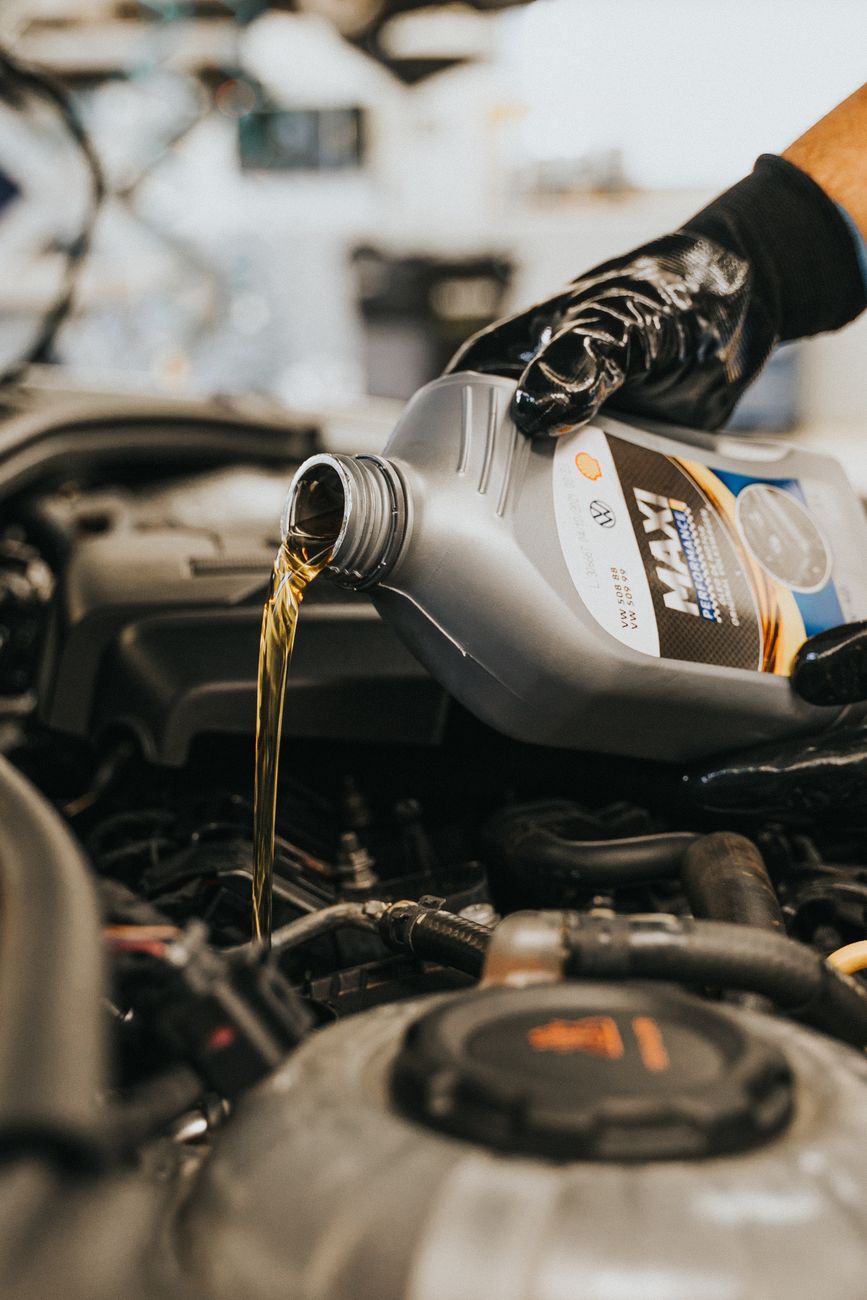
This is not a problem motorists can sidestep by deferring maintenance. Most late-model vehicles require API SP-rated synthetic oils to maintain warranty coverage, and the viscosity grade printed on the oil-filler cap — typically 0W-20 — is non-negotiable for engines with tight bearing clearances and turbocharger lubrication circuits. Using a heavier conventional oil risks accelerated wear, sludge formation and, in worst cases, turbocharger failure. Fleet operators running hundreds of vehicles on scheduled maintenance intervals face an unhedged cost spike with no obvious workaround.
The policy response
The policy options are limited. The Department of Energy has begun monitoring base-oil inventory levels and is considering temporary Jones Act waivers to allow foreign-flagged vessels to move product between US ports — a measure that could ease some of the domestic distribution bottlenecks but does nothing to replace the missing Persian Gulf feedstock. The White House has also explored asking the American Petroleum Institute to issue interim guidance on viscosity substitutions, though any such move would face resistance from automakers concerned about engine warranty exposure. The regulatory toolkit for a specialty-chemical shortage is thinner than for crude oil, and the lead time on new Group III production capacity — measured in years, not months — means that demand destruction through higher prices is the only near-term clearing mechanism.
That demand destruction is effectively a new inflation vector layered onto an already strained household budget. The May consumer price index, released this week, showed energy-related categories contributing an outsized share of the monthly increase, and motor oil looks set to join petrol and utilities in the cost-of-living conversation. It is a small line item — a $70 oil change twice a year is $140 annually — but it arrives alongside rising grocery bills, elevated credit-card rates and a housing market that has yet to offer relief. For the 40 per cent of American households that Fortune estimates cannot afford an unexpected $400 expense, the difference between a $50 and a $70 oil change is not trivial.
The timeline for normalisation is sobering. The ILMA, speaking through Alfano, has projected that US supply will not return to pre-war levels until mid-2027. Shell’s Pearl GTL rebuild is a 12-month project that has only recently begun. New Group III capacity under construction in the US — including Chevron’s Pascagoula expansion and ExxonMobil’s planned Rotterdam hydrocracker — will not contribute meaningful volumes before late 2027 at the earliest. In the interim, the motor oil market will be clearing at higher prices, with periodic localised shortages and allocation limits.
The motor oil squeeze is not the largest economic consequence of the Iran war — that title belongs to the crude oil price shock and its feed-through to transport fuels. But it is the most visible example of how a geopolitical disruption at the wellhead propagates through refining chemistry into a product that touches every vehicle owner, every fleet manager and every dealership service writer. It is the canary in the refined-products coal mine, and the canary is not singing.
Sloane Carrington
Markets columnist. Analytical pieces and deep-dives on monetary policy, capital flows and corporate strategy. Reports from New York.