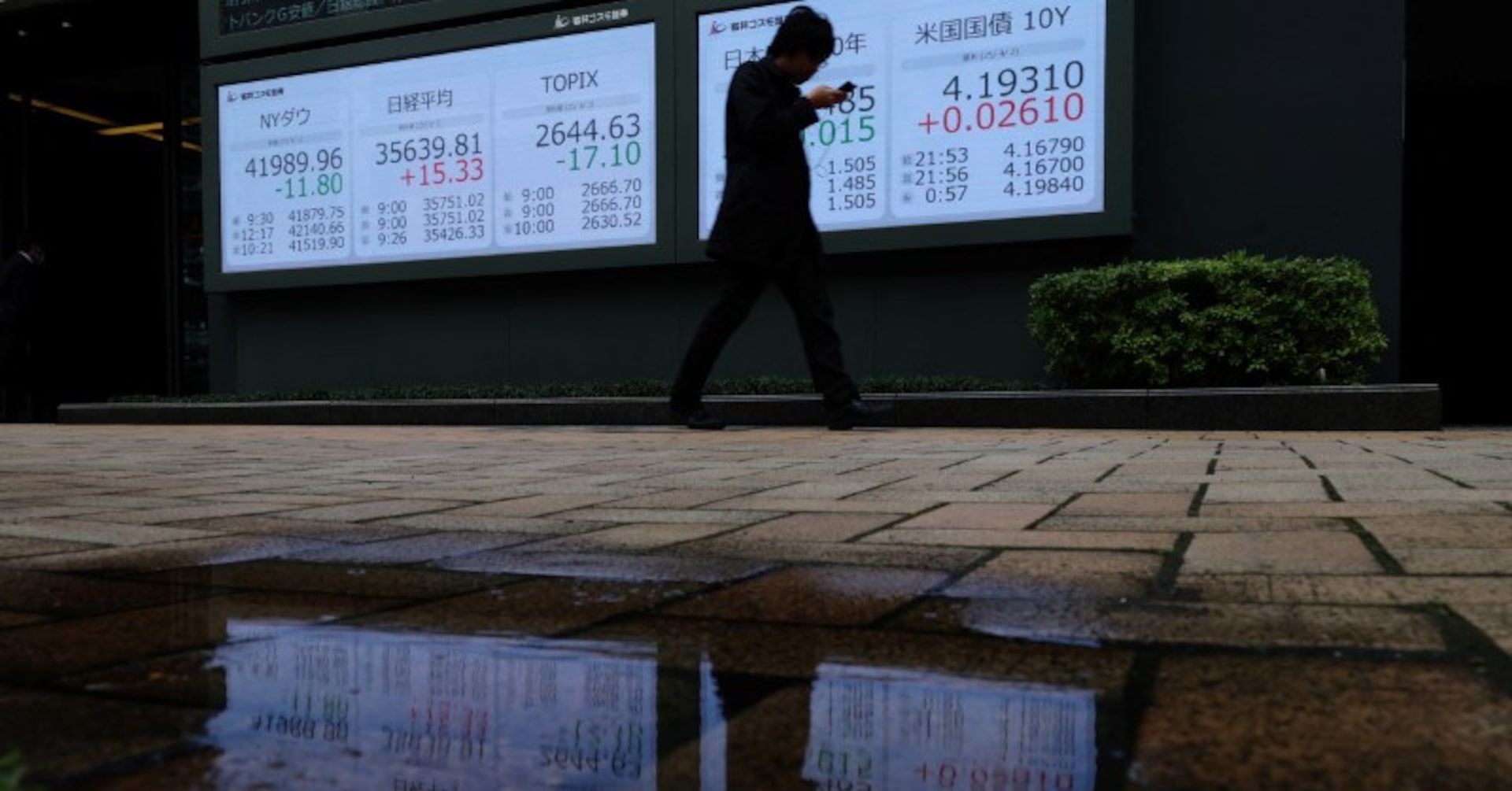
Bond markets set borrowing costs across the economy
Bond markets are where governments and companies borrow money, and their yields shape mortgage rates, stock valuations and recession bets. This explainer breaks down how bond prices work, why yields move and what to watch in 2026.
The bond market is where governments and companies borrow money. Think of it less as a single exchange and more as a sprawling price-discovery engine. In 2026, it remains one of the clearest running prices for inflation, growth and official interest-rate policy. When Treasury yields jump, traders are usually repricing several things at once — what the Federal Reserve may do next, how much debt the government must sell, and whether inflation is heading back toward the 2 per cent target described in J.P. Morgan’s 2026 bond-market outlook.
Readers typically meet the market through a single figure: the yield on a two-year or 10-year Treasury note. That number travels. A higher Treasury yield lifts the benchmark for mortgage rates, corporate borrowing costs and the discount rates investors use to value stocks. A lower yield can signal easier financial conditions, slower growth or a firmer conviction that rate cuts are approaching. The bond market is not a niche corner of Wall Street. It helps set the price of money across the economy.
In plain English, a bond is an IOU. An investor lends money to a borrower, receives periodic interest payments called a coupon, and gets principal back at maturity — provided the borrower does not default. Governments issue bonds to fund deficits. Companies issue them to finance expansion, acquisitions or refinancing. The largest and most watched segment is the U.S. Treasury market, but corporate, municipal and mortgage-backed debt sit alongside it.
Maturity is the date the borrower repays. It matters because short-dated and long-dated bonds react to different pressures. The yield curve — a line plotting yields from the shortest maturities to the longest — lets investors compare those pressures at a glance. Pension funds, insurers, banks, mutual funds and foreign reserve managers all operate in this market. Prices can shift when views on inflation, growth, regulation or government borrowing change.
The relationship between prices and yields is the concept that usually trips readers up. A Federal Reserve Bank of St. Louis explainer puts it plainly: when bond prices rise, yields fall, and when prices fall, yields rise. If a bond already trading pays a fixed coupon that suddenly looks generous, buyers bid up its price. If newer bonds offer better returns, the older one has to cheapen until its yield becomes competitive again.
That inverse relationship is why the bond market reacts so quickly to central-bank signals and inflation data. The Federal Reserve sets short-term policy rates, but longer-dated Treasury yields also embed expectations for future inflation, future growth, and the extra compensation investors demand for locking money away for years. Fidelity’s 2026 bond outlook noted that the Bloomberg US Aggregate Bond Index had returned about 7 per cent in 2025 as of late November, while the Fed had cut its benchmark rate by nearly 2 percentage points over the previous 18 months.
Robin Foley, Fidelity’s head of fixed income, wrote that “fixed income remains a valuable choice in a diversified portfolio, especially if investors seek liquidity and risk-adjusted returns.” Jake Weinstein, also quoted in the same outlook, added that “if the US sees a growth boom or if inflation remains sticky, longer-term interest rates could go higher.” Those two quotes capture the push-pull that defines bond trading: rate cuts can support prices, but sticky inflation or stronger growth can still send yields higher.
Why other markets care
Treasury yields compete with equities for capital. When a relatively safe government bond offers a higher return, richly valued shares can look less attractive at the margin. Credit markets feel the same pull — companies that issue new debt typically pay a spread on top of Treasurys, so a higher base rate raises their borrowing costs directly. Households feel it through mortgage pricing, which tends to track the same broad moves in government debt, even if not tick for tick on any given day.
Mortgages are a useful case study. A move higher in longer-dated Treasury yields filters through to mortgage-backed securities and then to home-loan pricing. A house purchase or refinance gets more expensive. Corporate finance works the same way: if the benchmark government yield rises, a borrower with weaker credit usually pays more on top of that higher base rate.
Aberdeen Investments’ 2026 fixed-income note reinforced the same message. Investment specialist Peter Marsland said markets were moving into a more normal regime in which yields once again offered income, while still demanding close attention to inflation and policy. Bonds were no longer just reacting to emergency-era central-bank support. They were again forcing investors to weigh growth, prices and government financing together.
The practical takeaway: bond-market headlines are rarely just about bonds. A move in the 10-year Treasury yield can alter mortgage affordability, the hurdle rate for a corporate investment, the refinancing bill for a heavily indebted company, and the tone of a trading day in equities. That is why bond stories keep resurfacing around inflation prints, Federal Reserve meetings and big government borrowing announcements. The same market absorbs all of those signals at once.
What to watch in 2026
For readers trying to follow bonds without staring at a terminal all day, four markers do the heavy lifting.
Inflation. It erodes the real return investors receive. When CPI or PCE prints surprise to the upside, longer-dated yields typically rise as the market prices in a slower path back to target.
Federal Reserve guidance. Policy shapes the front end of the yield curve. A shift in the dot plot or a change in the statement’s forward guidance rewrites the near-term rate outlook and ripples outward.
Treasury supply. More issuance can require lower prices and higher yields to attract buyers. Quarterly refunding announcements from the Treasury Department are now watched as closely as some Fed meetings.
Growth data. Stronger activity can keep inflation pressure alive and delay rate cuts. The monthly payrolls number, retail sales, and GDP prints all feed directly into the bond-market calculus.
A simple reading habit helps: when yields move, ask what changed. Was it inflation expectations? A different Fed path? Or supply and demand in the Treasury market? Those are not the same story, even if the headline number looks identical. The bond market matters because it continuously prices those possibilities — and every other asset class takes its cue from it.
Helena Brandt
Macro reporter covering the Federal Reserve, ECB, inflation prints and jobs data. Reports from Washington.