AI data-centre demand reprices power on PJM's wholesale market
PJM's first-quarter price spike suggests AI data-centre demand is moving from chip stocks into wholesale electricity, raising costs across the largest US grid.
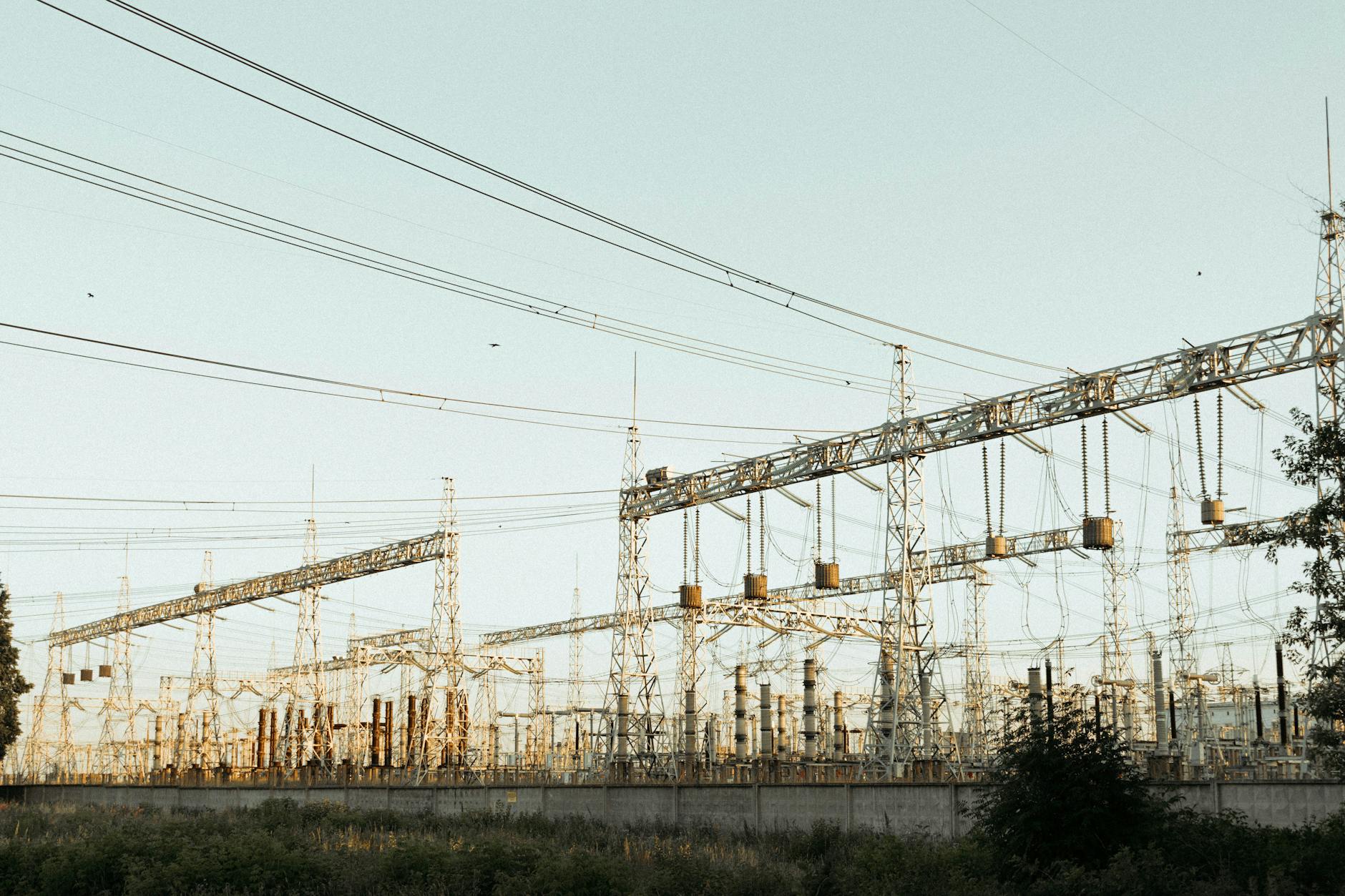
Wholesale power prices on PJM Interconnection jumped 76 per cent year on year to $136.53/MWh in the first quarter, Bloomberg reported on Thursday, as data-centre demand pushed the largest US grid into territory equity investors should recognise. The move matters beyond utility circles because PJM is where a large share of the US digital build-out is colliding with an older constraint: electricity has to be generated, moved and cleared in real time, and faster demand growth usually shows up in price before it shows up in ribbon-cuttings.
The market has started to price the load. Scramnews readers have spent the past year watching AI through Nvidia shipments, hyperscaler capex and chip supply chains. The next leg of that story runs through substations, transmission lines and capacity auctions. Once power prices begin to move alongside build-out spending, the AI trade stops being only a technology wager. It becomes regional inflation, utility finance and industrial policy rolled together.
Monitoring Analytics, the independent market monitor for PJM, has been unusually direct about the cause. In an executive summary tied to the capacity market, the monitor said “The current tight/short conditions in the PJM Capacity Market are almost entirely the result of large data center load additions.” The attribution separates this episode from the easier explanation of one noisy quarter. Power markets jump for weather, fuel costs or outages. A market monitor tying tight conditions “almost entirely” to large data-centre additions points to something stickier: demand growth arriving before enough new supply and grid upgrades can absorb it.
Utility Dive reported that PJM wholesale power costs rose 54 per cent in 2025 to $67 billion, while the last three capacity auctions produced a combined $23.1 billion cost increase from data-centre load. The more important signal is where that money lands.
Capacity costs do not live in a server room and go unnoticed. They flow through utilities, retail suppliers, large industrial buyers and eventually end customers, even when the timing and cost-sharing are fought over in regulatory proceedings.
A second Utility Dive analysis said data centres accounted for 40 per cent of PJM capacity costs in the last auction. The market is no longer asking only which chipmaker sells into AI clusters or which cloud operator wins the next enterprise contract. It is asking which power markets can host incremental load without a large repricing, which utilities can recover grid spending cleanly, and which regions may find that digital growth carries a more visible energy bill than the original sales pitch suggested.
Equity investors, meanwhile, need a wider screen. A year ago the obvious AI winners were semiconductor names, cloud landlords and construction suppliers. A repricing grid market introduces a slower but broader set of exposures: generation owners with available capacity, regulated utilities working to socialise the cost of new wires. The market will not value each of those businesses the same way, but the shared thread is scarcity. Infrastructure that once looked sleepy starts to acquire option value when a new class of customer is willing to pay for speed and reliability.
Why the market moved
Wholesale electricity markets clear continuously. Tight systems produce sharper price moves because the marginal megawatt becomes more expensive when spare capacity thins out. Data-centre demand is large, concentrated and hard to ignore in planning models. A manufacturing plant may cycle production. A data centre tied to inference, training or cloud services is built around uptime. Once several such loads queue into the same market, the system needs more generation, more wires or more flexibility — and until one of those arrives at scale, price is often the first balancing tool.
PJM’s own market-design paper frames the issue as “powering reliability” — code for needing market rules that keep reliability investable as load rises. If the operator and the monitor are both discussing tighter conditions, auction design and reliability, the issue is structural. Equity investors, utility analysts and inflation watchers all have a stake. Markets revalue bottlenecks long before physical relief arrives on the ground.
A higher clearing price on the largest US grid can improve the earnings outlook for generators that hold dispatchable capacity in the region. It complicates procurement costs for power-intensive manufacturers, merchants and retail suppliers buying into the same market. For households, the effect is slower and mediated by regulators, but the direction is hard to miss. AI capital spending was once discussed as a battle over chips and software margins. A chunk of that spend is migrating into electricity economics, where winners and losers are measured in basis points on allowed returns, auction outcomes and monthly bills.
For inflation watchers, the implication is regional before it is national. PJM prices alone will not rewrite US CPI data, but they show how digital infrastructure spending travels into utility costs and investment decisions long before it surfaces in a headline inflation print. Rate cases, procurement contracts and regional industrial bills are where that transmission mechanism shows up first. AI capex is beginning to leak out of the technology sector and into the cost base of the real economy.
Who pays for the build-out
The hardest question is the one regulators tend to reach last: who pays to make room for the new load. If large loads drive a major share of capacity costs, should existing customers absorb the bill for new transmission and reserve margins, or should the largest new users arrive with dedicated generation, tougher interconnection terms or different cost-sharing? Those fights are technical on paper. In practice, they determine whether AI infrastructure is treated as a broad economic gain or as a transfer from legacy customers to a fast-growing class of buyers.
Joseph Bowring, president of Monitoring Analytics, sharpened the point further when he said the results of the capacity market auctions for the 2025/2026 and 2026/2027 delivery years were not competitive. Once a market monitor questions competitiveness, every stakeholder has an opening. Utilities argue for faster build-out and cleaner recovery. Large customers press for bespoke arrangements. Consumer advocates challenge how much of the tab lands on ordinary ratepayers. Lawmakers get a concrete example of AI demand showing up in a cost line voters actually recognise.
The broader lesson is that AI’s physical footprint is starting to matter as much as its revenue promise. Investors have spent two years pricing the upside in semiconductors, cloud contracts and data-centre construction. PJM introduces the constraint side. Electricity is regional, regulated and slow to expand — a surge in digital demand can reprice the grid before it boosts output enough to offset the cost. PJM’s first-quarter price jump reads as an early warning: the AI trade is moving into power markets, public-utility politics and the real economy.
Sloane Carrington
Markets columnist. Analytical pieces and deep-dives on monetary policy, capital flows and corporate strategy. Reports from New York.