Kazakh oil output drops after drone hit on Russian plant
Kazakh oil output fell by about 25 per cent at Karachaganak after a drone strike shut Russia's Orenburg gas-processing plant.
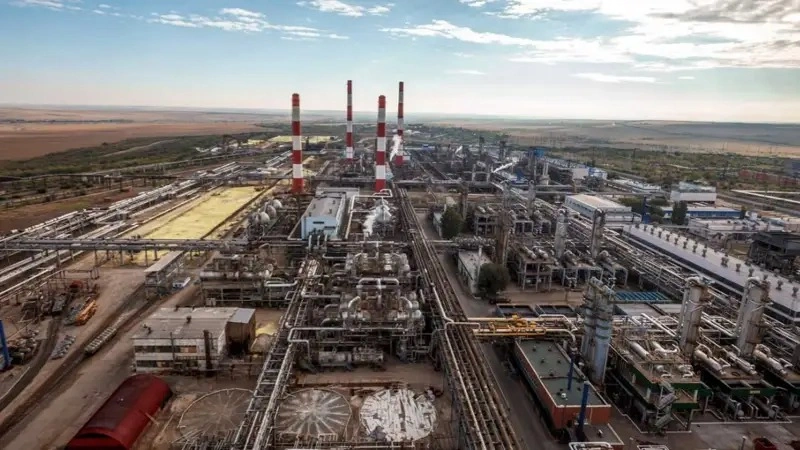
Kazakhstan’s Karachaganak field cut crude and condensate production by more than a quarter after a drone strike shut the Russian plant that processes its gas. After the outage, the field was running at about 25,000 metric tons a day, or roughly 196,500 barrels a day, Bloomberg reported.
For crude traders, the important part is the scale. Karachaganak accounts for about 10 per cent of Kazakhstan’s oil production, according to Bloomberg. A processing problem there is not just a local outage; it is a visible loss of barrels from a producer that matters to Eurasian supply.
The timing sharpened the market read. Oil desks were already reassessing regional risk after a separate container-ship attack, even as Bloomberg said traffic through the Strait of Hormuz was still moving. Orenburg brought a different vulnerability into view: processing capacity, not tanker lanes.
Kazakhstan Energy Minister Erlan Akkenzhenov said Karachaganak had to reduce gas intake after the strike hit the Russian plant handling associated gas from the field, according to Reuters. Oil, condensate and gas flows are linked at the field. When the midstream system stops taking gas, the upstream complex has little room to keep running at normal rates.
“Naturally, we have reduced the gas intake”
Source: Erlan Akkenzhenov, Kazakhstan energy minister, via Reuters
Akkenzhenov also said domestic gas supplies inside Kazakhstan had not been interrupted. That separates the incident from a broad internal fuel shortage, even though export-linked production fell. Reuters reported that the reduced run rate compares with about 263,000 barrels a day of oil output from Karachaganak in 2024.
The geography is awkward for Kazakhstan. Gas still moves inside the country, but one of its largest fields depends on processing across the Russian border. A strike on that outside link has already taken Kazakh barrels out of the market.
Why the outage matters
A sustained cut at Karachaganak would shift the story from infrastructure damage to supply constraint. The weak point is above ground: the field needs Russian processing infrastructure to handle gas, and once that system stops taking volumes the wells have to slow with it. Traders and regional producers will be watching the restoration work at Orenburg more closely than the location of the strike itself.
Bloomberg’s estimate that Karachaganak represents roughly a tenth of Kazakhstan’s oil output gives the disruption national weight. More than 25 per cent of that field is now offline. The rest of Kazakhstan’s production system can keep operating and the loss still matters, because the field is too large for the cut to be dismissed as operational noise.
The outage also complicates the wider oil backdrop. The Bloomberg market report said traffic was still moving through Hormuz after the container-ship shock, a detail that had helped cool part of the war premium. Karachaganak gives traders another supply channel to monitor, far from the Gulf and tied to infrastructure rather than shipping.
What remains unclear is duration. Akkenzhenov’s comments gave the market a number for the production cut but not a restart schedule for gas processing. Until Orenburg is taking volumes again, crude traders have to price a major Kazakh field running at roughly three-quarters of its previous output.
Reza Najjar
Commodities desk covering oil, natural gas, gold and base metals. Reports from London.