The ECB thinks markets are too calm for the risks ahead
ECB repricing warning points to stretched asset prices, rising bond risk and an Iran-war shock that markets may still be treating as manageable.
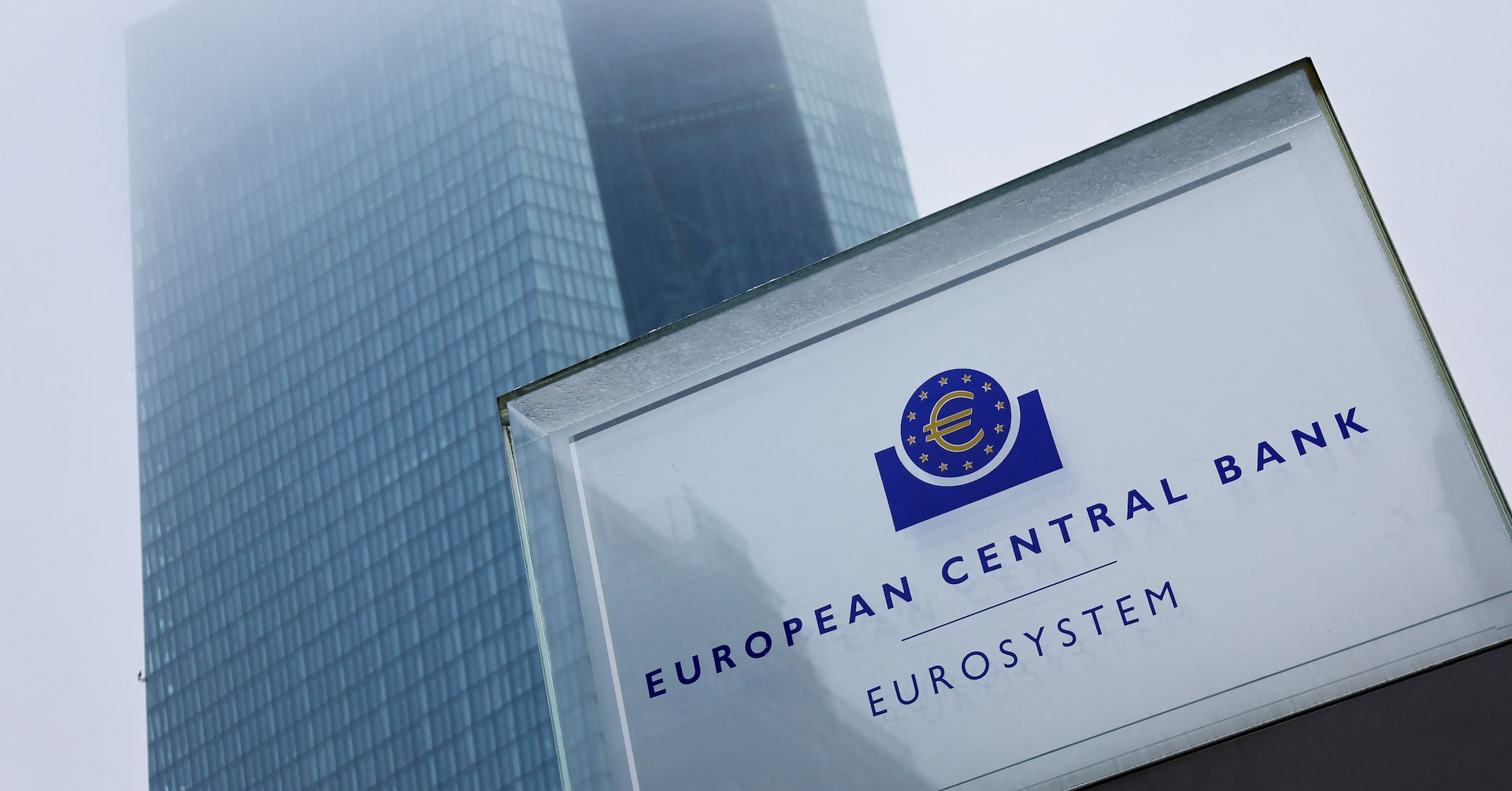
In the European Central Bank’s May 2026 Financial Stability Review, officials were not merely rehearsing tail risks. They were saying price action across Europe still looks too tidy for the shocks facing investors: the Iran war, heavier sovereign borrowing needs, elevated asset valuations and a shadow-finance system that could still turn a wobble into forced selling.
More revealing was the argument that followed. The ECB is not saying volatility has already broken loose. Rather, it is saying the calm now looks a little too comfortable. Bloomberg reported that officials see investors as underplaying the chance of a sudden correction even as geopolitical and fiscal risks build. To a markets reader, that is the signal. Once a central bank starts warning about complacency rather than panic, it is usually talking about the price of risk, not simply the headlines on traders’ screens.
A second point follows from that. The first crack may not open in equities. Sovereign debt is a likelier candidate, because even a modest shift in inflation expectations or term premia can move yields fast and then bleed into everything else. Put against the ECB’s message, the takeaway is clear: Frankfurt does not fear a generic crisis so much as a market that has grown too comfortable with the idea that any Iran shock would stay contained.
“This leaves markets vulnerable to sharp repricing.”
— European Central Bank, Financial Stability Review, May 2026
For the ECB, the problem is straightforward. Stretched valuations and thin risk premia have left too little buffer if one of today’s macro risks stops being theoretical. The report says outright that asset prices still look expensive by historical standards. Officials were not making an abstract point. They were warning that investors may have spent the spring treating each new shock as a tradable interruption instead of a reason to mark down risk itself.
Where the first break could hit
FT’s account put the weak spot in euro-area government debt. The Financial Times reported that the ECB’s concern extends to sovereign markets, where higher energy costs, looser fiscal settings and more price-sensitive buyers could combine badly if volatility rises again. That helps answer the central markets question in the brief: if a shock lands, bonds may absorb it before equities do because they sit at the intersection of inflation risk, budget stress and leveraged positioning.

Recent trading fits that read. In an interview with CNBC, Bank of France governor François Villeroy de Galhau said the oil shock had pushed the ECB “between our baseline and our adverse scenario.” CNBC also noted that Germany’s 10-year bund yield had risen roughly 32 basis points since the war began, while eurozone inflation in April accelerated to 3.0 per cent from 2.6 per cent in March. Those are not crisis numbers, but they are the sort of moves that tell investors the rates market has stopped treating oil as background noise.
Non-bank finance is the other concern. The ECB’s review spends heavy time on the part of the system that lacks the same backstops as traditional banks but now holds a growing share of credit and duration risk. If hedge funds, insurers or open-ended bond funds are forced to cut risk together, a yield adjustment that starts as a policy repricing can turn into a liquidity event. So the report’s language matters. What it flags is not only a bond sell-off, but the market structure around those bonds and the way it could amplify the move.
Reuters reported that traders were pricing roughly a 50 per cent chance of another ECB rate increase later this year after comments from Governing Council member Isabel Schnabel. Even if that pricing changes, the direction of travel is the point. Markets that began the month focused mostly on growth insurance are now being asked to consider renewed inflation risk, tighter policy and the chance that sovereign spreads and funding conditions become the transmission channel.
“asset prices still look stretched by historical standards”
— European Central Bank, Financial Stability Review, May 2026
Put that line beside the backdrop now in view. Rich valuations on their own are not a trigger. Combined with a live oil shock, heavier government issuance and a more crowded non-bank investor base, they are something else. In that setup, the central bank is effectively saying the market’s starting point is too generous for the risks being carried.
Why oil and inflation matter again
Outside trading desks, the issue reaches households, companies and borrowing costs. If higher oil prices feed into transport, manufacturing and consumer costs, the Iran shock stops being only a geopolitical story. It becomes an inflation story again, and then a rates story. That is the bridge the ECB wants investors to take seriously.

In Reuters’ interview, Schnabel put it crisply:
“high energy prices are spilling into the broader economy”
— Isabel Schnabel, Reuters
Taken together, that quote answers part of the question in the fact bundle about how quickly an energy shock moves from oil screens into broader pricing. Inflation is already back at 3.0 per cent, according to CNBC’s reporting, and the central bank’s key rate was only at 2.0 per cent last month. Europe, in other words, does not have the luxury of treating the conflict purely as a drag on growth if the price channel is reopening at the same time.
Elsewhere, investors may be misreading the institution. Markets often hear “financial stability review” and assume a catalogue of things that could go wrong someday. The ECB is making a narrower and more urgent point. Current prices may not reflect the risk that oil, yields and non-bank leverage interact at once. Bloomberg’s separate reporting on private credit exposures reinforces it: the concern is not confined to listed banks or headline equity indices, but reaches the quieter parts of the balance-sheet chain where losses can travel without much warning.
Seen that way, the ECB warning is a pushback against the market’s preferred simplifying story. This is not only a growth scare. It is also an inflation scare, a sovereign-debt scare and a liquidity scare, depending on where the first crack opens. Calm trading can survive one of those. It is less clear that it can absorb all of them at once.
For now, Europe’s markets are still behaving as though the shocks are manageable and the price of money is close to settled. The ECB has effectively told investors that this may be the complacent view. If it is right, the next repricing in Europe will matter less for how violent it looks on day one than for how many assumptions it forces traders to abandon after that.
Sloane Carrington
Markets columnist. Analytical pieces and deep-dives on monetary policy, capital flows and corporate strategy. Reports from New York.