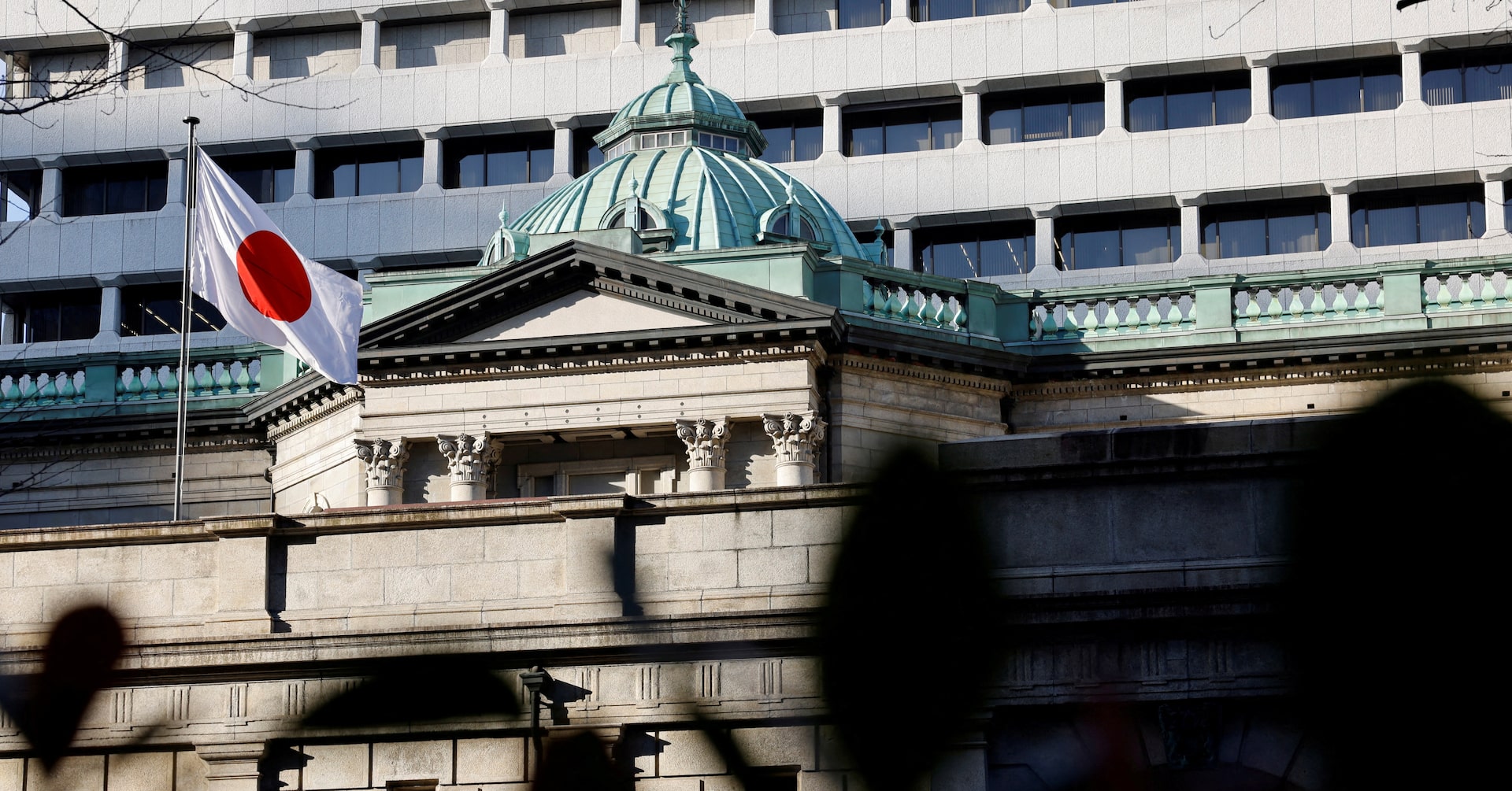
Japan bond yields deepen divide in regional bank stocks
Japan bond yields are splitting regional bank stocks as stronger lenders absorb securities losses and weaker balance sheets lose the market’s confidence.

A jump in Japanese government bond yields toward 3 per cent on Sunday widened the gap in regional bank stocks, as investors sorted lenders with fragile securities books from those better placed to live with a higher-rate regime. What had looked like a broad tailwind from the Bank of Japan’s exit from ultra-easy policy is turning into a balance-sheet screen, with the strongest lenders still able to argue for fatter margins and the weakest being judged on how much mark-to-market pain they can absorb.
For a regional lender sitting on long-dated bonds bought in the zero-rate era, the question is no longer whether higher rates are good in principle. It is whether the bank can wait long enough for better lending spreads to show up without unsettling equity holders first. Bloomberg’s account of the latest sell-off captured that pressure through the widening share-price gap between banks with thinner portfolio quality and those with stronger holdings.
“Banks facing mounting unrealized losses on bonds will find it difficult to pursue aggressive investment strategies, and one could also argue that this is eroding their capital.”
— Naoki Fujiwara, senior fund manager at Shinkin Asset Management
The same move looks different from the other side of the sector. Large banks and better-positioned regionals are still the obvious beneficiaries of higher domestic rates, and that is the counterpoint the market has started to price more cleanly. Rather than treating Japanese banks as one macro trade, investors are breaking them into two groups: lenders that can turn yield normalization into earnings, and lenders that may spend the next few quarters defending capital.
What the yield shock is exposing
The backdrop has stiffened quickly. The 30-year JGB yield hit 4.09 per cent in the latest global bond sell-off, while separate market reporting showed the benchmark yield pushing toward 3 per cent as traders weighed inflation risk, government spending and the Bank of Japan’s next taper decision. That matters for bank stocks because long-end yields are where the paper losses sit. A lender can welcome better pricing on new loans and still suffer a sharp equity markdown if shareholders decide its existing securities book is too exposed.

The analyst view is less about a one-day rates shock than a lasting dispersion trade. Morningstar’s analysis of Japan’s bond sell-off and bank balance sheets points to the same trade-off: higher yields can widen net interest margins over time, but they also cut the market value of bond holdings immediately. That answers one of the insider questions hanging over the sector. Higher yields do help, but only for lenders with enough capital and enough patience to carry the losses. When those buffers are thin, the market tends to assume management will have to shrink risk rather than lean into the new rate backdrop.
The point matters more in Japan than it would in a market with a shorter memory of rate suppression. Regional lenders spent years searching for carry in a low-yield system shaped by the BOJ’s heavy bond buying. That left some banks entering 2026 with portfolios that were fine so long as yields stayed pinned, but noticeably less comfortable once the long end started moving in larger increments. A broad rerating of bank shares can survive one policy step. It is harder to sustain when investors begin asking which lenders own the wrong duration at the wrong time.
Even dip-buyers in the bond market are framing the move as a curve problem rather than a clean all-clear. Pimco’s view that Japan’s 30-year bonds already look too steep suggests value is emerging at the long end, but it also underlines how far the move has already gone. For bank equities, that is not a comforting signal. A market can believe the curve is overdone and still keep punishing lenders whose portfolios look least able to tolerate another bout of volatility.
Nomura strategist Yoshitaka Suda’s warning that “the divergence could widen further” reads less like a slogan than a statement about portfolio math. If yields keep grinding higher, banks with cleaner books can wait for earnings to catch up. Banks with heavier unrealized losses may not get that time.
Why higher yields are not a universal win
The skeptic case is still real. Japan’s megabanks posted record profits this month, with Mitsubishi UFJ reporting 2.4 trillion yen in net profit for the year ended March 2026 and Sumitomo Mitsui logging 34 per cent growth. Those numbers are the cleanest evidence that higher domestic rates are not, by themselves, a bearish story for lenders. Stronger franchises with wider fee pools, better funding and more room to rotate their asset mix can convert rate normalization into earnings faster than the market’s most anxious narrative suggests.

Hiromi Ishihara, head of equity investment at Amundi Japan, made that case directly in the Bloomberg report on the split inside regional lenders:
“Rather, this is an environment in which improving profitability at banks, including regional lenders, is likely to come into sharper focus.”
— Hiromi Ishihara, head of equity investment at Amundi Japan
Ishihara’s point only goes so far. Yes, higher yields are improving sector earnings. No, the benefit is not being distributed evenly. The market is no longer discounting megabanks and regional lenders as one trade, and it is not obvious that it should. The very fact that investors can point to record profits at the national champions while punishing weaker regional lenders tells the story. Japan’s bank rally is maturing from a rate call into a stock-picking exercise.
Capital is the dividing line. Better-positioned lenders can keep lending, hold securities through volatility, and explain away paper losses as temporary. A weaker regional bank does not get that luxury. Once investors begin to suspect that unrealized losses could constrain capital, the bank’s room for aggressive investment narrows, management’s options narrow with it, and the share price starts doing the disciplining before regulators have to.
Why the divide could last
The policy backdrop argues against a quick reunion trade. The BOJ has been sounding out market participants on how fast it should cut bond purchases, even as officials and traders weigh the effect of fresh debt supply and the risk that inflation proves sticky. Board member Junko Koeda’s support for further rate increases at an appropriate pace does not guarantee another move, but it makes it harder to dismiss the latest jump in yields as a brief positioning event.
The macro data do not resolve that tension. Japan’s economy grew at an annualized 2.1 per cent in the first quarter, beating expectations and giving the central bank more cover than it had a year ago. Yet the same data sit beside a global bond market still trading inflation risk aggressively. In that setting, the regulator’s question is not about any single BOJ meeting. It is whether the long end stabilizes enough for weaker banks to rebuild confidence. If it does not, the stock divide can persist even if the policy rate itself moves only gradually.
The more useful way to read Japan’s regional-bank sell-off, then, is not as a verdict on the whole sector. It is a verdict on balance-sheet quality under a new yield regime. For years, the trade in Japanese banks was built on the assumption that any serious move away from zero would help almost everyone. The past week suggests the market has moved on from that simplification.
Regional lenders with clean portfolios and solid capital still have a defensible higher-rates story. Those with bigger securities scars are being forced into a harsher conversation about duration, capital and time. Japan’s yield shock is no longer just a macro story. It is becoming an audit of which bank stocks actually deserve to outperform when the long end stops behaving.
Naomi Voss
Banks and deals reporter covering bank earnings, fintech, M&A and IPOs. Reports from New York.