AI IPO wave tests Wall Street capital capacity in 2026
AI IPO wave is turning into a Wall Street capacity test as SpaceX, OpenAI and Anthropic chase demand that smaller issuers also need.
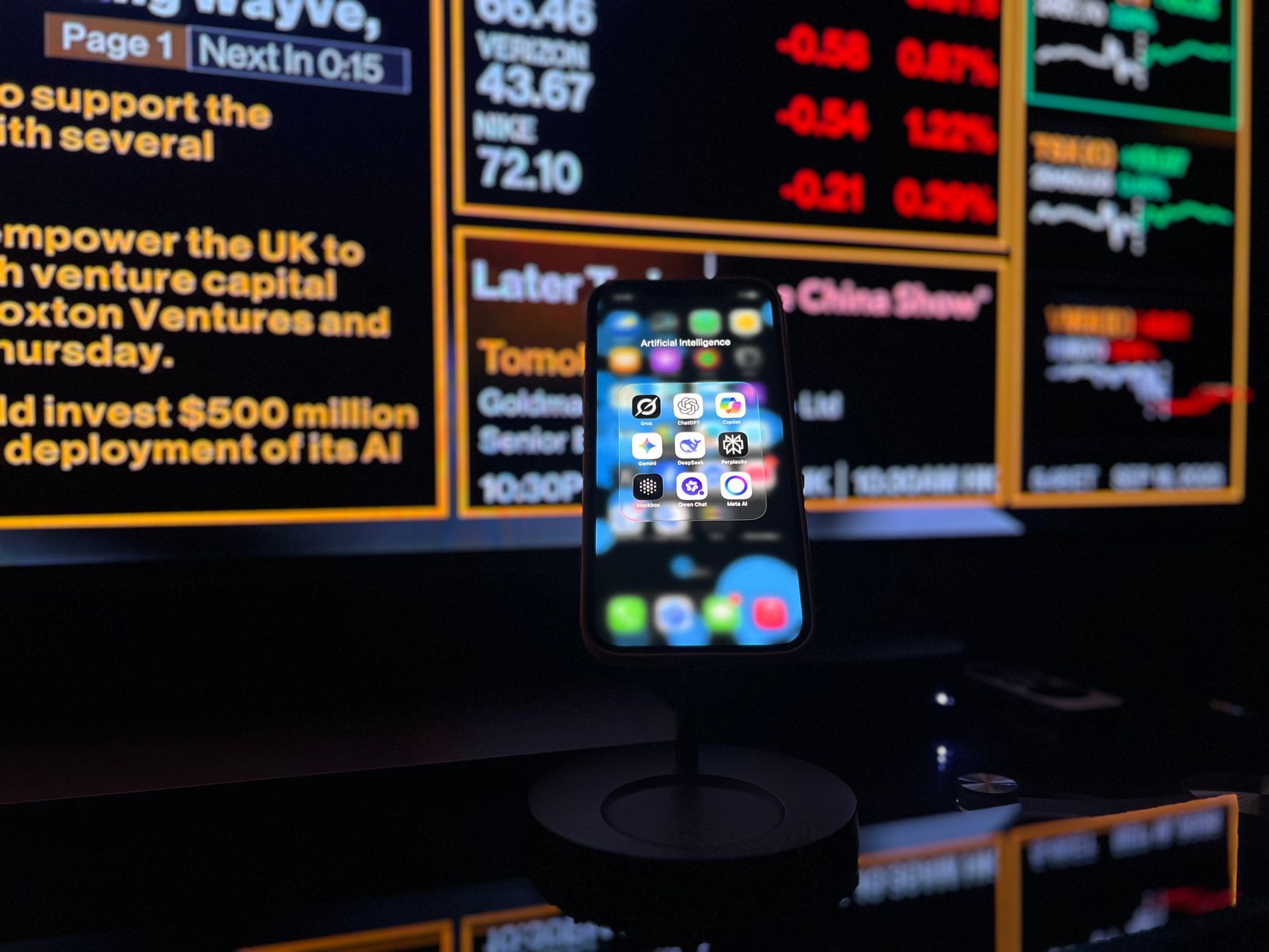
SpaceX, OpenAI and Anthropic are converging on the public market within months of one another, turning the AI listing wave into a Wall Street capacity test rather than a simple valuation contest. According to Reuters, SpaceX has confidentially filed and is targeting a roughly $75 billion raise at about a $1.75 trillion valuation, while OpenAI is preparing an IPO from an $852 billion private mark and Anthropic is weighing fundraising that could push it near $1 trillion. Should all three ask investors for cash in the same window, the question is not whether the stories are large enough. The question is whether the order books are.
That concern helps explain why Reuters’ April framing of a possible $3 trillion wave matters more than any single headline valuation. On paper, a $70 trillion US stock market can absorb a lot. In practice, IPO demand comes from finite pools: long-only growth funds, crossover investors, hedge funds running event books and retail allocations that still need a clearing price and aftermarket support. Cash committed to one mega-float is cash not committed somewhere else.
Long before the first trade, roadshow calendars, research coverage and aftermarket support are already rationed. That is why bankers care about the distinction. One blockbuster float can deepen the market’s story about AI and still narrow the practical room for everyone else on the calendar.
Skeptics raise the point before the roadshows begin. In CNBC’s reporting on the IPO flurry, John Blank, chief equity strategist at Zacks Investment Research, called the timing a possible sign of overheating rather than healthy reopening.
“I see it as a market top,”
John Blank, speaking to CNBC
Blank may overstate it, but the quote frames the real debate. CNBC Markets reported that traders think the trio could leapfrog Berkshire Hathaway on their first day of trading, a comparison that captures both the excitement and the distortion. Market value is not the same thing as fresh capital demand because only a slice of each company will trade. Even so, a smaller free float can still pull heavily from the same institutions, especially if index funds, hedge funds and wealth platforms decide they cannot afford to miss the first large AI listings of the cycle.
Recent listings offer a guide. Once The New York Times’ reporting on SpaceX’s filing exposed the numbers, the conversation shifted from private-market mythology to public-market scrutiny. Financial Times reporting on Cerebras’ recent success pointed to appetite for big tech paper. Still, one strong deal does not create infinite capacity for the next three. As the 2026 calendar turns into an AI referendum, less oxygen remains for ordinary software, health-tech and industrial issuers still waiting for a clean window.
Why SpaceX sets the clearing price
SpaceX’s confidential filing arrives first, making it the market’s first real pricing test. Bankers and institutional investors will treat it that way. If the book builds quickly, prices tightly and trades higher without wild stabilisation, OpenAI and Anthropic can argue that the market has already accepted extreme AI scale. Should it stumble, the rest of the stack loses its clean comp before it even launches.

CNBC’s report on Goldman’s lead role pointed the same way. In a cycle like this, the scarce commodity is not hype but underwriting capacity: analysts selling the story, syndicate desks placing stock and buy-side accounts willing to concentrate risk in one theme at one moment. For other desks, SpaceX is the deal that shows how much valuation discipline investors still have.
OpenAI’s IPO path and CNBC’s reporting on Anthropic’s revenue run rate strengthen the case that the second and third issuers will come with real operating momentum, not just narrative. Even so, momentum does not remove the need for a clearing price. William de Gale, chairman and chief investment officer at BlueBox Asset Management, put the fragility plainly in CNBC’s analysis.
“If OpenAI and Anthropic can’t make money, this whole thing falls apart,”
William de Gale, speaking to CNBC
Put plainly, the first deal resets the discount rate for the whole AI complex. A soft SpaceX aftermarket would force harder questions about margin durability at OpenAI, the cost base behind Anthropic’s growth and whether public investors want to fund the next leg of model spending at private-market terms. A strong debut would not answer those questions, but it would buy time.
Scale is the counterpoint. CNBC Markets quoted Adrian Cox arguing that even several hundred billion dollars of issuance would still be entering a market worth about $70 trillion overall.
“While there may be concerns about the capacity of the market to absorb a number of IPOs valued at several hundred billion dollars this year, they would slot into an US stock market worth about $70trn overall,”
Adrian Cox, speaking to CNBC
Arithmetic backs that view, but market plumbing is less forgiving. Issuance lands in a narrow slice of the equity market: growth funds, technology specialists, thematic ETFs, hedge funds and brokerage platforms already crowded into the AI trade. CNBC reported retail investors are being given direct access to SpaceX through major brokerages, but broader access does not create fresh balance-sheet capacity by itself. Mostly, it changes who gets the allocation.
Who gets crowded out
Smaller issuers, not retail traders chasing the opening print, sit on the user-affected side of this story. Many have already spent a year waiting for the window to reopen. If three mega-floats dominate research coverage, sales calls and capital commitments, the rest of the queue risks being pushed into late 2026 or 2027 even if market sentiment stays constructive.
Biotech groups, fintech issuers and industrial automation names that delayed offerings in 2024 and 2025 still need sales coverage and aftermarket support. If they have to widen discounts or postpone again, the AI boom will have reopened the IPO window only for the largest names.
Both FT analysis on the post-Cerebras pipeline and CNBC’s reporting on how SpaceX could squeeze Europe’s IPO market matter beyond colour. Taken together, they suggest the same thing from different angles. Once the calendar clusters, investors do not assess deals in isolation. They rank them. In that ranked market, the largest AI names are likely to pull money and attention from smaller US technology listings first, then from weaker cross-border candidates that cannot match the brand power or liquidity promise.
Pressure is already visible outside equities. Bloomberg’s reporting on a hyperscaler debt flood showed how the AI build-out is straining adjacent credit markets, while CNBC’s reporting on cheap AI highlighted the pricing pressure that could undermine public-market enthusiasm if model economics weaken. Put together, those pressures matter. When one theme pulls on equity issuance, debt financing and operating margins at once, Wall Street stops treating it as a single hot sector and starts treating it as a system-wide capital allocation problem.
The clearer reading is simpler. SpaceX, OpenAI and Anthropic are not too large for the market. They are arriving close enough together to test who gets funded first, at what price and at whose expense. If SpaceX clears well, Wall Street can claim the AI boom still has room for new paper. Failure would not stop with one deal. It would tell every company behind it that the IPO window is open only in theory.
Naomi Voss
Banks and deals reporter covering bank earnings, fintech, M&A and IPOs. Reports from New York.