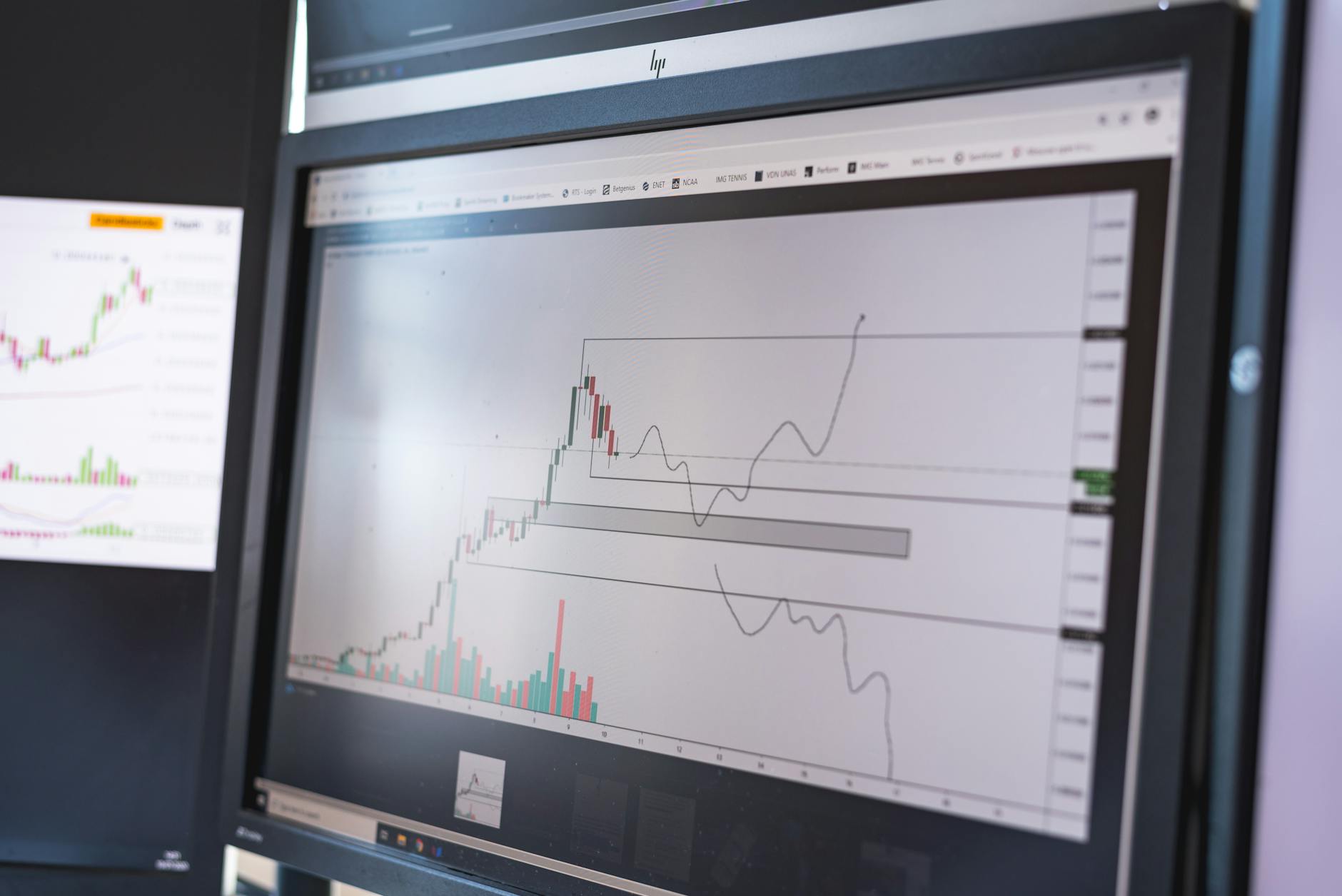
Anthropic's $30 billion round tests the AI IPO endgame
Anthropic's $30 billion round at a valuation above $900 billion shows AI financing is still setting IPO-scale prices before any listing.
Anthropic is poised to raise more than $30 billion at a valuation above $900 billion, according to Bloomberg’s report on the round. To markets analysts, the headline is less the size of the cheque than what it implies: late-stage investors still look willing to pay IPO-scale prices for an AI company that has not yet handed public shareholders a prospectus. If the deal closes next week, OpenAI would lose the private-market crown before either company has even tested public demand.
The round matters because it does two jobs at once. It gives Anthropic more money for compute, chips and enterprise sales. It also resets the reference price for the whole 2026 AI listing queue. Scramnews has already tracked the confidential filing window around OpenAI and the way private traders have started to price a backlog that also includes SpaceX and Databricks. Anthropic’s new price drops into the same debate: whether private capital is still front-running the IPO market, or simply inflating it.
Skeptics reach a different conclusion almost immediately. The same $900 billion figure that looks like validation to growth investors can also look like the top tick of a crowded trade, especially when cheaper AI models and open-source alternatives are already putting pressure on what frontier labs can charge. A round that large is a vote of confidence. It is also a test of how much confidence survives once the valuation has to be defended in public filings rather than in a private term sheet.
Supporters of the deal have an easier case to pitch. CNBC reported that the company is on track for a $10.9 billion second-quarter revenue run rate, a pace that helps explain why investors may still pay up for an enterprise-heavy AI business even as the broader software market gets tougher on multiples. Anthropic co-founder and chief executive Dario Amodei has kept the company framed less as a consumer chatbot bet and more as a supplier of high-end models to businesses that can absorb large contracts. That is not the whole story, but it is the part late-stage investors most want to underwrite.
At this size, mega-rounds stop looking like simple venture financings. They start to function like shadow IPOs: price-setting exercises conducted with a smaller audience and far less mandatory disclosure. In that sense, Anthropic’s raise is not just a referendum on its models. It is a referendum on whether late-stage money managers still believe they can buy the public-market upside privately, before a prospectus and before retail investors have a seat at the table.
Why the price can still clear
Scarcity is the first part of the capital-markets case. Only a handful of private companies can plausibly list at the top end of the 2026 cycle, and Anthropic is one of them. The Bloomberg report on the planned round does not just describe fresh money coming in; it sketches a company using private markets to lock in an IPO-adjacent valuation before the wider market gets a clean look at margins, customer concentration or stock-based compensation.
Analysts keep circling the same question. How much of the price is company-specific, and how much is simply a wager on the AI IPO window? The honest answer is both. Anthropic has real momentum. Timing helps as well, because CNBC’s reporting on the AI IPO race has already made clear that investors care about who reaches public markets first and at what scale. Price discovery is happening before discovery documents exist.
Dan Ives of Wedbush Securities told CNBC why the clock matters:
“Getting to public markets first is very important, given this arms race going on.”
Dan Ives, Wedbush Securities
Comparison now does more of the work than it did a few months ago. Anthropic’s previous valuation was reported at $380 billion in February. OpenAI’s latest valuation was put at $852 billion at the end of March. A Sherwood report on OpenAI’s $5.7 billion first-quarter revenue beating Anthropic showed how tightly the market is already scoring the rivalry before either company has listed. Anthropic is not merely raising more money. It is repricing the leaderboard, and doing so with a primary round rather than with a thin secondary trade. For late-stage investors, that is a cleaner signal. For any eventual IPO buyer, it is also a tougher benchmark.
What skeptics see in the same number
Skeptics are not arguing that Anthropic lacks demand. They are arguing that the demand may be arriving in a market already starting to question premium AI pricing. The CNBC analysis on cheaper AI captured the risk bluntly: if lower-cost models keep getting better, the richest valuations in the sector begin to rest on narrower differentiation and heavier capital spending. Put differently, the same scale that justifies a giant round can force a company to keep spending at a rate that makes public investors flinch.

More important, the skeptical case is not just a reflexive short thesis. It raises a real question about quality of revenue, not just quantity of revenue. Enterprise contracts look sturdier than consumer subscriptions, but investors will still want to know how much of Anthropic’s growth depends on cloud-partner distribution, how sticky those customers are, and whether reported sales reflect pricing power or just surging token consumption. None of those answers is fully visible yet from outside the cap table.
Elsewhere in the sector, signs of strain are already visible. In CNBC’s analysis of the pressure cheaper AI could create, Sundar Pichai summed up the demand side in a line that reads bullish and cautionary at the same time:
“many companies are already blowing through their annual token budgets, and it’s only May”
Sundar Pichai, Google
One line can support both readings. Bulls hear relentless usage. Skeptics hear future procurement teams pushing back on price. The tension matters because a $900 billion round is not really a verdict on today’s revenue. It is a judgement about whether Anthropic can keep converting expensive compute into defensible enterprise cash flow once customers become more cost-sensitive and rival models become more substitutable. That is a harder case to make in a public roadshow than in a private fundraise.
Why the IPO calendar matters more than the round
Calendar risk may prove more important than the financing itself. Anthropic’s financing only looks extraordinary in isolation. In context, it is part of a market that is already trying to digest an unusual stack of giant private companies heading toward listings. CNBC’s report on OpenAI’s expected confidential filing shifted attention from growth rates to sequencing. Its follow-up analysis of SpaceX and OpenAI valuations pushed the question further, asking how much capital public markets can absorb if several mega-listings arrive in the same window.
Adrian Cox of Deutsche Bank made the same absorption point in CNBC’s market analysis:
“While there may be concerns about the capacity of the market to absorb a number of IPOs valued at several hundred billion dollars this year, they would slot into a US stock market worth about $70trn overall.”
Adrian Cox, Deutsche Bank
From that perspective, the round buys mostly time. Time to keep training models. Time to deepen enterprise relationships. Time to arrive at an IPO with a narrative that looks less like experimental technology and more like a scaled software-and-infrastructure supplier. If Anthropic gets that time, the round will look prescient. If cheaper models compress pricing before a prospectus lands, it may look like private investors paid peak public-market prices while the window was still shut.
So the near-term message is straightforward. Anthropic’s next round suggests late-stage capital still wants AI exposure badly enough to pay up before disclosure, before roadshows and before the public market has the chance to disagree. That does not settle the argument over who deserves the richer long-term multiple, Anthropic or OpenAI. It does show that the AI financing cycle is still acting as though the listing boom has already started.
Naomi Voss
Banks and deals reporter covering bank earnings, fintech, M&A and IPOs. Reports from New York.