SEC tokenized-stock exemption excludes synthetic shares
SEC Commissioner Hester Peirce said the agency's tokenized-stock exemption would apply to equity-backed digital tokens, not synthetic products that only track share prices.
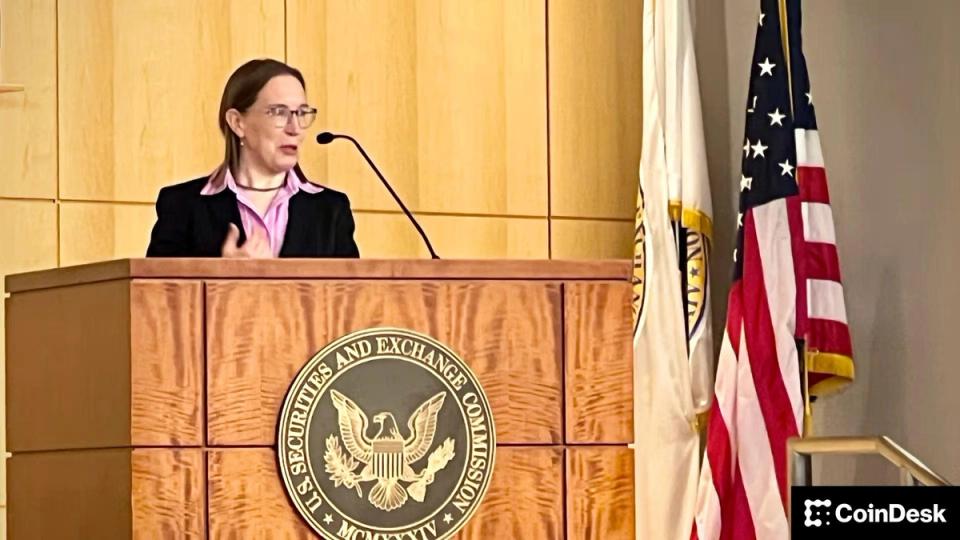
SEC Commissioner Hester Peirce said on Thursday that the agency’s planned tokenized-stock exemption would apply to digital tokens backed by actual shares, not synthetic products that only track a stock price. The clarification, first reported by CoinDesk, cuts against a view that had been building in crypto markets: that the SEC might open a broader lane for stock-linked tokens before the rule text is even out.
For exchanges, brokers and tokenization start-ups, that is a meaningful limit. Some had begun treating the exemption as a shortcut for bringing listed equities on-chain. Peirce’s point was narrower. The agency is talking about blockchain wrappers around securities investors can already buy in the secondary market, not crypto-native substitutes that mimic the economics of a share without the share sitting underneath.
That reading also fits the SEC’s earlier statement on tokenized securities. The agency described tailored relief inside existing securities law, not a separate regime for synthetic stock trackers. In other words, the question is how an existing security should travel across a different rail, not whether a new synthetic product gets its own carve-out.
Reports earlier in the week helped feed the broader interpretation because the exemption was seen as a fast route for tokenized equities into the market. Peirce stepped in before the final text arrived. She used two X posts, according to the reporting in the fact bundle, to push back on the idea that the SEC was about to legitimise synthetic stock tokens. Her clearest line was blunt:
“limited in scope & would facilitate trading only of digital representations of the same underlying equity security that an investor could purchase in the secondary market today, not synthetics.”
— Hester Peirce, via CoinDesk
The distinction goes beyond terminology. A tokenized share tied to an actual equity still raises familiar questions about custody, transfer, disclosure and investor rights. A synthetic version starts from price exposure without ownership. The legal argument comes later.
Why the limit matters
That split shapes who can move fastest if the SEC does release near-term relief. Incumbent market infrastructure groups can work within a model tied to existing shares and existing rules. Crypto venues hoping to list stock exposure under a bespoke exemption face a steeper path if the product must remain linked to “the same underlying equity security” available in today’s market.
The timing is also part of the signal. Roughly four days separated earlier reports of imminent relief from Peirce’s sharper description of the boundary, according to the fact bundle. That is enough time for expectations to run ahead of the policy. Peirce said she welcomed innovation but not the hyperbole.
The upshot is a more cautious message from Washington than some tokenization advocates had hoped for. The SEC still appears open to discussing how blockchain rails can carry securities that already trade in traditional markets, as the earlier SEC statement makes clear. What Peirce’s comments do not point to is an early federal opening for synthetic claims on listed shares. Until the exemption itself appears, the safer read is that the agency is drawing the line before the product rush begins.
Tomás Iglesias
Financial regulation and legal affairs. SEC, CFTC, FCA, market-structure and enforcement. Reports from Washington.