SEC delays tokenized stocks plan over third-party tokens
SEC delayed a proposed exemption for tokenized US stocks after market participants raised concerns about third-party tokens.

The US Securities and Exchange Commission delayed a plan to let crypto firms offer tokenized versions of US stocks on Friday after staff talks with exchanges and other market participants raised concerns about third-party tokens, slowing a proposal that could have let crypto venues test onchain versions of US stocks.
This was a pause in a market-structure project, not a fresh anti-crypto broadside. Officials had been weighing a limited exemption for conventional securities represented on blockchain rails. The Block reported that worries about third-party tokens helped stop the rollout, leaving unresolved who would issue any product and who would stand behind it.
SEC Chairman Paul Atkins had signaled more openness in February remarks when he said he wanted to consider an innovation exemption so traditional finance firms and crypto-native groups could test new market structures within existing securities law. He presented tokenization as a trial inside the rulebook, not a rewrite of it: “I would like to consider an innovation exemption to enable TradFi incumbents and crypto-native firms to experiment.”
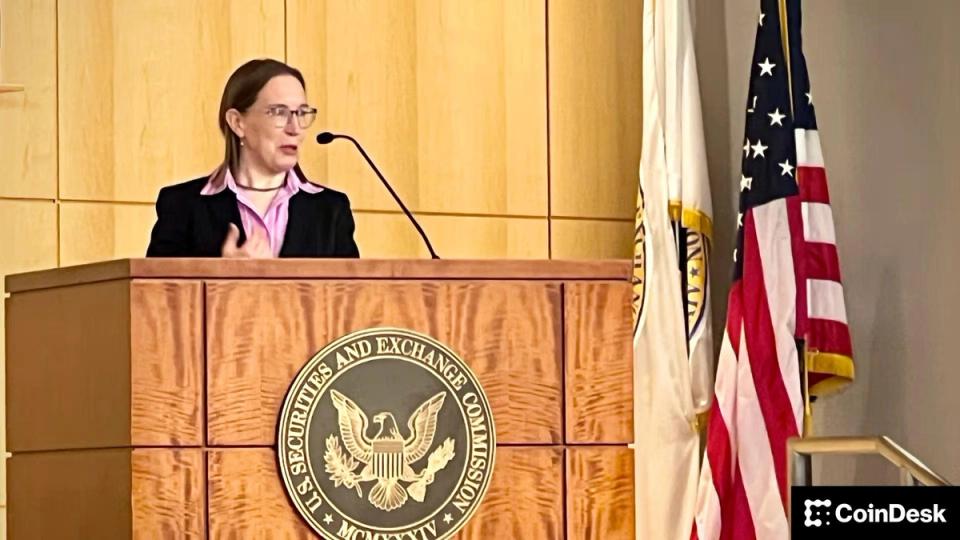
The sticking point is whether tokenized equities would be directly issued securities or wrappers built by outside firms around existing shares. CoinDesk reported that Commissioner Hester Peirce disputed the idea that a crypto-friendly exemption would automatically produce synthetic tokens. In earlier coverage, Reuters quoted her saying, “Tokenized securities are still securities.”
Bloomberg said staff discussions with exchanges and other participants contributed to the delay. If a tokenized share comes from a third party rather than the existing securities chain, regulators still have to pin down who carries the liability, where the instrument trades and which rules govern 24-hour dealing.
What the delay means
The timing matters because infrastructure groups are already preparing for tokenized markets. The Block said the Depository Trust & Clearing Corp. had been authorized under the contemplated framework to tokenize some highly liquid assets for a three-year period. The report also said the New York Stock Exchange is developing a tokenized-equities platform that could allow 24/7 trading.
That is why Friday’s decision looks more like regulatory caution than retreat. The SEC has not publicly shelved the idea of letting firms experiment. It is slowing a policy change that could blur the boundary between exchanges, broker-dealers and crypto venues before the agency is comfortable that the instrument is a security in more than name alone.
Peirce has described the integration path as gradual. In the same February remarks, she said tokenized securities would be “an important step” toward bringing those instruments into the current financial system, but “it would not change the entire financial system overnight.” For now, the contest is over who writes the terms first: crypto venues pushing for speed, or incumbent exchanges and clearing groups arguing the product should stay inside the existing investor-protection framework.
Tomás Iglesias
Financial regulation and legal affairs. SEC, CFTC, FCA, market-structure and enforcement. Reports from Washington.