AI stock-market leadership shifts to Taiwan and South Korea
AI stock-market leadership is shifting toward Taiwan and South Korea as chip demand lifts benchmark weights, while concentration risk keeps the trade narrow.
AI demand is no longer just lifting a cluster of semiconductor stocks. It is reshaping the pecking order of national equity markets, with Taiwan and South Korea climbing the global rankings as investors put a higher value on the foundry and memory capacity sitting behind the world’s AI build-out, according to CNBC.
HSBC figures cited by CNBC put Taiwan’s market at $4.7 trillion and South Korea’s at $4.4 trillion, large enough to force a rethink of where market-cap leadership now lives. The durable point is not that Asia has staged a generic comeback. It is that the countries with the deepest grip on advanced chip production are gaining relative weight while some older Western heavyweights lose it.
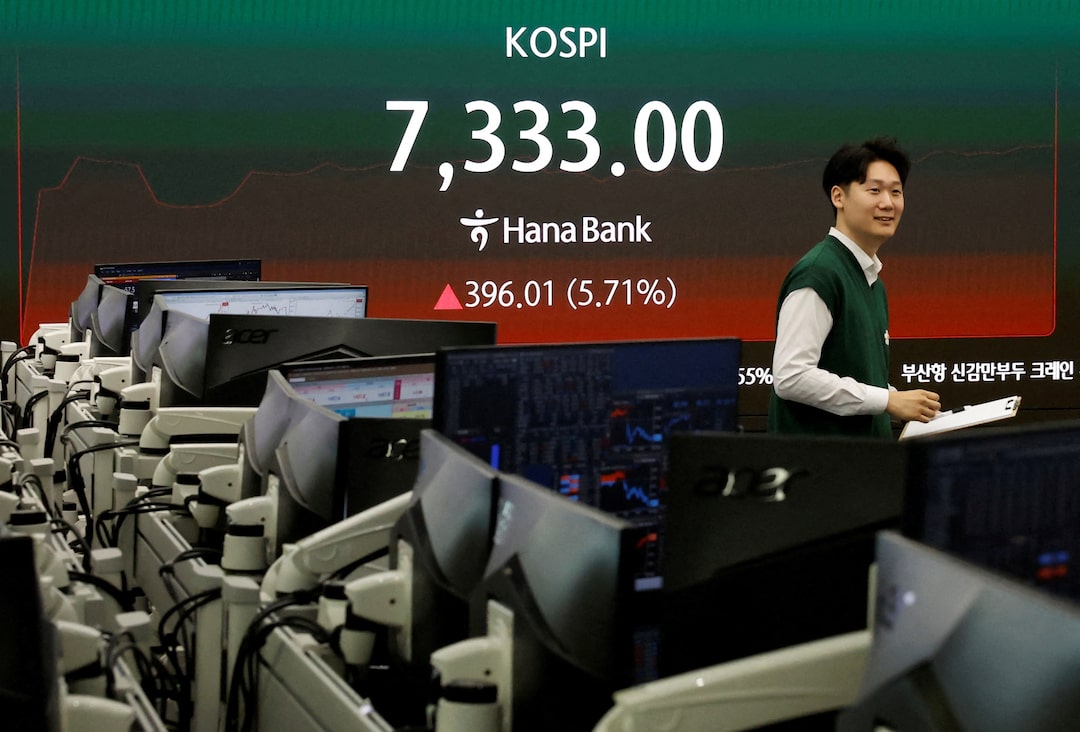
But the rerating is still narrow. Taiwan Semiconductor Manufacturing Co. now represents more than 40 per cent of Taiwan’s market capitalisation, while Samsung Electronics and SK Hynix together made up 42.2 per cent of the Kospi in May. Much of the strength is not a broad national growth story yet. It is an AI capex proxy expressed through a few chip names.
Why Asia is gaining weight
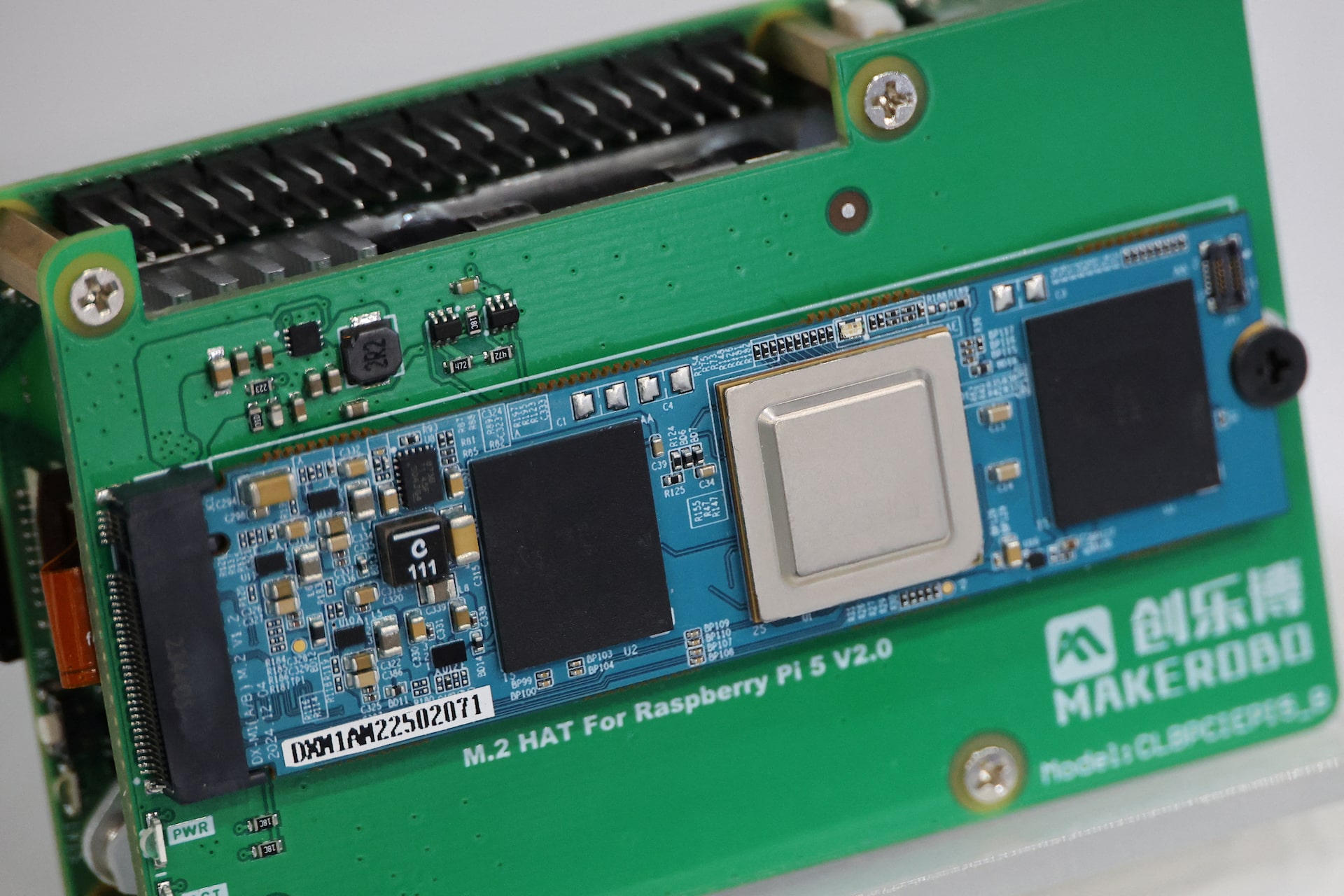
Current supply-chain economics explain the concentration. Training clusters still require the most advanced logic chips, advanced packaging and high-bandwidth memory, which keeps Taiwan and South Korea at the centre of the spend cycle. Reuters described the AI bull run as developing a new centre of gravity in Asia because the most important production bottlenecks are there, not in the end markets that buy the servers.

Inside the sector, scarcity still matters as much as end-demand. If production slots are booked well into 2027 and pricing power stays intact, national index weighting can keep rising even if the rally does not broaden much beyond the current leaders. Investors do not need every industrial or consumer stock in Taipei or Seoul to improve. They need the chip complex to keep absorbing global AI spending.
“What is unusual here is the speed and how narrow the drivers are.”
— Billy Leung, quoted by CNBC
Bloomberg and The Business Times framed the move the same way in April: the global equity tables are being redrawn not by a classic cyclical rebound but by semiconductor market value accumulating in a handful of Asian champions. Buying Taiwan or Korea is becoming a more direct wager on AI infrastructure than buying broader developed-market indices, where banks, consumer staples and utilities still dilute the theme.
“Both indices have effectively become AI and semiconductor proxies.”
— June Chua, quoted by CNBC
Why the rerating is fragile
Crowding is the price of that new hierarchy. South Korea’s market volatility moved near record highs after foreign investors sold $13 billion of local equities in a week, CNBC reported on May 18. When an index becomes a delivery vehicle for one global theme, outflows can hit with the same force that inflows arrived.

Labour and policy frictions matter more in that setup. A threatened Samsung strike involving roughly 47,000 workers has given investors another reminder that national-market leadership can hinge on operational risk inside a small group of companies, according to CNBC’s reporting on the labour dispute. Semafor’s analysis showed how quickly politics can intrude too, after a proposal for an AI dividend in South Korea unsettled investors who had treated the chip rally as a pure market story.
Skeptics focus on one question: can index-level gains survive a stumble in any one of those names? A broad market can absorb a bad quarter from one champion. A market that has turned into a semiconductor proxy has less room to hide, especially when global funds have already crowded into the same trade.
“We’re now reaching levels where many Asian portfolios are starting to face concentration risk.”
— Herald van der Linde, quoted by CNBC
Van der Linde’s warning is less a call to abandon the trade than a reminder to label it properly. Taiwan and South Korea are not being rewarded for diversified domestic breadth. They are being rewarded because AI capital spending is bottlenecked through advanced foundry capacity, memory and packaging. If that spending stays firm, the rerating can hold. If the capex cycle cools, national leadership can reverse quickly because the index arithmetic is so concentrated.
What global investors are really buying
For global investors, the deeper shift is that country allocation is starting to overlap with supply-chain allocation. Owning Taiwan or South Korea now offers more direct exposure to the AI build-out than some traditional technology-heavy Western markets, precisely because the listed heavyweights control harder-to-replace parts of the stack. The AI boom is not merely creating single-stock winners. It is changing which national exchanges command scarcity value.
Legacy Western markets remain central. The US still houses the largest platform and chip-design winners, and capital still clears through American indices first. But the middle layer of global leadership is shifting. Taiwan’s $4.7 trillion market and South Korea’s $4.4 trillion market now matter less as regional stories than as infrastructure stories, a distinction drawn in CNBC’s latest ranking snapshot and reinforced by Reuters.
Breadth is the next test. If supplier gains spread into equipment, materials, industrial automation and the banks financing the build-out, then the rerating begins to look national in a fuller sense. If it stays locked inside Taiwan Semiconductor Manufacturing Co., Samsung Electronics and SK Hynix, investors are not really buying countries. They are buying the same three balance sheets through country wrappers.
National equity leadership is being redrawn, not settled. Taiwan and South Korea have gained weight because they sit at the choke points of the cycle. Whether they keep it will depend on something more old-fashioned than narrative: how long the world keeps paying up for concentrated semiconductor capacity, and how much volatility investors will tolerate while it does.
Sloane Carrington
Markets columnist. Analytical pieces and deep-dives on monetary policy, capital flows and corporate strategy. Reports from New York.