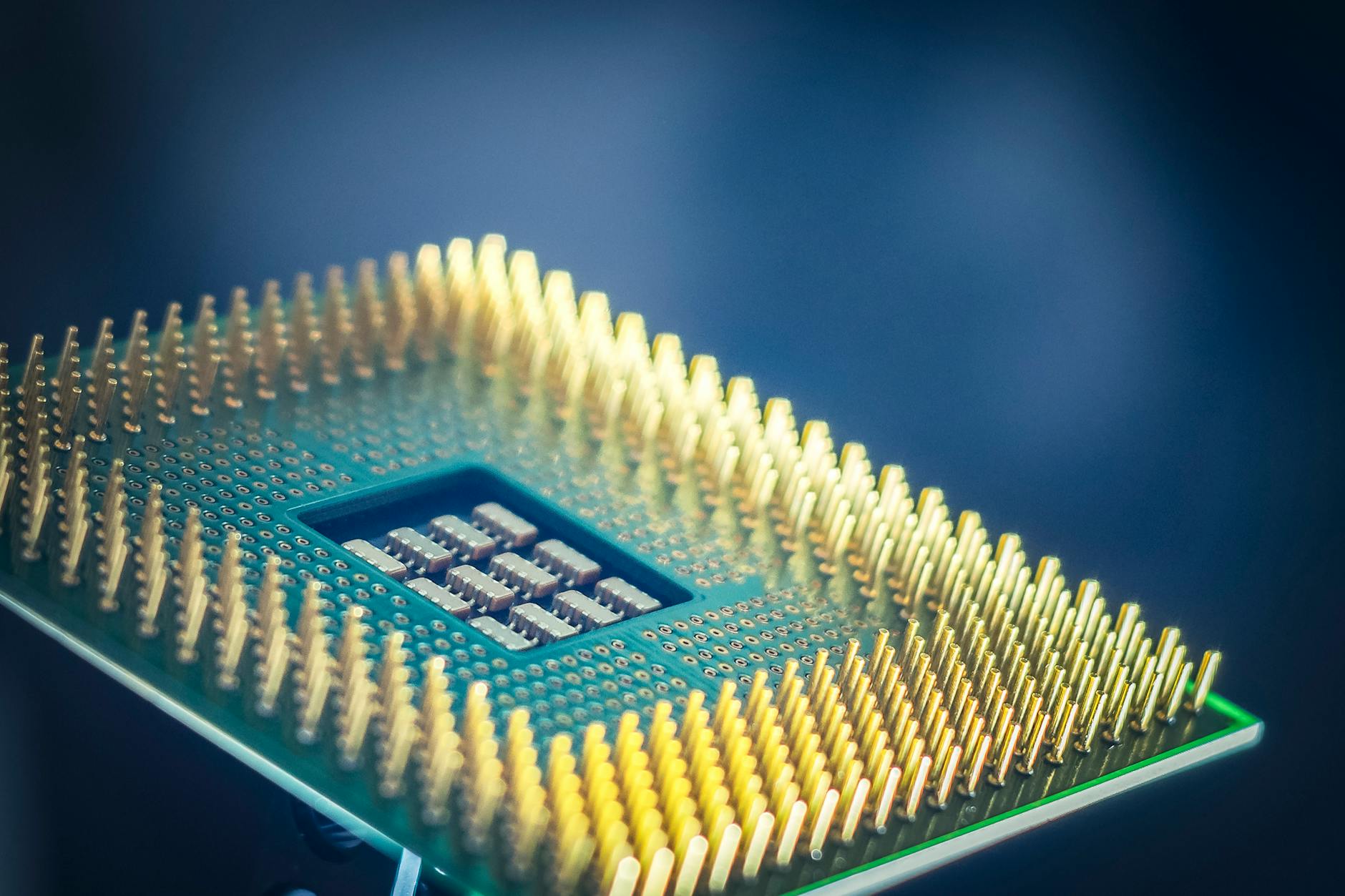
Cerebras IPO tests how far the AI IPO market can widen
Cerebras IPO shows the AI IPO market is reopening selectively, with investors backing giant hardtech names while smaller issuers still face a crowded queue.

Cerebras priced its IPO last week at $185 a share, raised $5.5 billion, and landed with a $56.4 billion fully diluted valuation — figures that would have looked absurd for a chip company five years ago. But the deal did more than add another AI ticker. It became a live test of whether public investors will fund a capital-intensive hardware business on its own operating merits, rather than chase the next trophy name in a queue that already counts SpaceX and OpenAI among the waiting.
For Andrew Feldman, Cerebras’s co-founder and chief executive, the distinction is the whole game. A hardtech company has to sell itself as a durable public-market operation — revenue, margins, contracted demand, a path to compounding — rather than a private-market thesis built on AI enthusiasm. After a week of trading, the early verdict leans selective. Cerebras found its buyers. But the same deal drew a sharper line between names that look unavoidable and everyone else still waiting for the window.
Cerebras priced at $185, raised $5.5 billion and landed at a $56.4 billion fully diluted valuation. Demand plainly exists for AI infrastructure exposure, particularly when the company is already large, scarce, and slots neatly into the narrative investors are running right now. Cerebras matters beyond its own cap table: it is a read-through on the quality of the 2026 IPO window, not just a data point that the window exists.
CNBC’s reporting on the pipeline spells out the counterpoint. Mega-listings can pull the whole market forward, but they can also soak up the capital and attention that the rest of the queue needs to price well.
“It’s very hard to care about anything other than the $3 trillion potential IPOs that, in theory, are going to happen in the next year.”
— Samuel Kerr, Mergermarket global head of equity capital markets, via CNBC
Cerebras occupies the middle of that tension. It is not a software business selling AI margins on relatively light capital. It builds hardware, sells compute, and still has to persuade investors that expensive infrastructure compounds over time. The Next Web reported that Cerebras generated $510 million in revenue in 2025 and disclosed an OpenAI compute agreement worth more than $10 billion over its term, covering up to 750 megawatts through 2028. Those numbers let investors tell themselves they are buying contracted demand.
Why Cerebras could clear the bar
Cerebras had advantages most hardtech hopefuls simply do not. It arrived as one of the few scaled public proxies for AI infrastructure outside the very largest incumbents, at a moment when private markets had already conditioned investors to sort the world into category winners and everyone else.
Scarcity value counted heavily on debut. TechCrunch reported that the stock jumped 108 per cent after pricing — a move large enough to advertise appetite across Wall Street. Even the next-day wobble, when CNBC reported shares were down 10 per cent in early Friday trading, did not blunt the larger signal. Buyers funded a business with visible capex demands because AI infrastructure has become one of the market’s cleanest ways to express the theme.
Management leaned hard on that pitch. Demand visibility reduces the usual hardtech discount. Survival matters too. TechCrunch’s profile of Feldman laid out how far the company travelled to reach an IPO that buyers could absorb.
“We were spending about $8 million a month.”
— Andrew Feldman, Cerebras co-founder and CEO, via TechCrunch
Feldman’s remark explains why public capital matters in AI hardware. A company that builds compute infrastructure cannot coast from venture round to venture round forever — not if it wants to finance manufacturing, customer deployment, and power-hungry capacity at scale. Cerebras partly answers the insider concern because it showed that public investors will tolerate intensity when a company can point to revenue, a marquee customer set, and a category narrative that already feels larger than any single quarter’s results.
There is another reason Cerebras could price this way: the market has been waiting for an AI listing large enough to serve as a sector benchmark. CNBC’s analysis of Cerebras as a booster for SpaceX and OpenAI expectations framed the offering as the first big print in what investors hope will become an AI issuance cycle, not just an isolated debut. If buyers think they are establishing valuation markers for the sector rather than underwriting one chip company, they accept a richer multiple and a bigger raise.
Why the window may stay narrow
Selectivity is still the cleaner read. Cerebras passed because it could be marketed as a near-mandatory AI name. That logic does not automatically extend to the rest of hardtech, where customer concentration, manufacturing risk, and multi-year payback periods look less elegant on a roadshow.
The analyst and skeptic perspectives converge on finite demand. Samuel Kerr flagged it plainly. Axios argued that SpaceX could upend benchmark construction and index weightings. The more the IPO calendar is dominated by companies already enormous in private hands, the more capital allocators behave as though they are positioning for inclusion trades rather than evaluating a broad class of new listings on their own merits.
“Investors want indexes to be representative of the market.”
— Jay Ritter, University of Florida IPO scholar, via Axios
Ritter’s observation responds, in part, to the complaint about a two-tier reopening. Public investors want the biggest private companies on the tape because leaving them out makes benchmark portfolios look stale. But that preference helps trophy issuers first. It says little about a smaller semiconductor tooling company, a robotics manufacturer, or a power-equipment supplier that also needs public money and cannot promise immediate index relevance.
Sam Lessin’s skepticism, relayed in CNBC’s reporting on how Cerebras may crowd out smaller players, carries weight. If investors conserve their risk budget for a handful of dominant AI stories, the practical effect is a queue in which only the names with overwhelming scale, brand recognition, or strategic symbolism move first. Everyone else competes for the capital left over after the market has funded its headline acts.
This distinction bites hardest for hardtech. Software businesses can sometimes absorb a colder window by cutting burn, slowing hiring, or leaning on recurring revenue narratives. Hardware businesses hit financing reality sooner. They need inventory, fabs, deployment capacity, networking gear, and power. When the market only opens for the most obvious winners, the rest of the sector becomes more dependent on late-stage private money, strategic investors, or delayed liquidity.
What a broader AI IPO reopening would require
A genuinely wider window would show up in second-order deals. It would mean investors are willing to sort among business models inside AI and hardtech, rather than funding only the companies whose names already dominate private-market mythology. The Financial Times argued that Cerebras’ success has helped Wall Street prepare for a boom in tech IPOs. The harder test is whether that preparation translates into pricing discipline for the next wave.
For now, Cerebras looks less like proof that the AI IPO market has broadened and more like proof that investors will stretch when a company checks enough boxes at once: real revenue, obvious category exposure, a customer story big enough to justify infrastructure spending, and a size large enough to matter to the public market’s own self-image. That is a narrower standard than the headlines imply.
Cerebras may still become the bridge that other hardtech issuers use. But bridges are only useful if more than one company can cross. Until the market shows it can finance AI-adjacent businesses that are capital-intensive without being unavoidable, Cerebras is best read as a premium clearing price for scarcity — not a blanket reopening for the sector.
Naomi Voss
Banks and deals reporter covering bank earnings, fintech, M&A and IPOs. Reports from New York.