Fed rate cuts 2026: Reuters poll points to longer hold
Fed rate cuts 2026 look less likely as a Reuters poll, firmer inflation forecasts and higher Treasury yields push markets to price a longer hold.
Traders who began the spring expecting the Federal Reserve to edge toward a late-2026 cut have reversed course. A Reuters poll of economists published Monday found the median view has shifted to no cut at all this year, with the federal funds target range seen holding at 3.50 per cent to 3.75 per cent through the third quarter. The shift arrives days before Kevin Warsh takes over from Jerome Powell, with the Treasury market already asking whether the next move is up rather than down.
Eighty-three of 101 economists told Reuters they expected no change through September. The poll, the bond market and the incoming chair transition are converging on the same conclusion: the old late-2026 easing story no longer holds. What replaces it is an assumption that inflation will stay sticky enough to pin policy at restrictive levels, even if officials still describe the latest shock as temporary.
The tension is in the details. Economists in the Reuters sample still broadly treat the latest war-driven price surge as transitory, and the same poll showed personal consumption expenditures inflation projected at 3.9 per cent in the second quarter, 3.7 per cent in the third and 3.4 per cent in the fourth. Those are difficult numbers for a central bank that had been preserving optionality for cuts. But they do not yet amount to a consensus call for a fresh tightening cycle. Bond investors have moved further. Their read: a prolonged hold itself may be evidence policy is still not restrictive enough.
Three views now compete for dominance. One prices persistence — inflation stays hot, cuts drift into 2027 and duration stays vulnerable. Another prices eventual normalization — the energy impulse fades, core components settle, the Fed waits without reversing course. Hanging over both is the Warsh handover and whether a new chair can shift the argument faster than the data.
Why the curve moved
The repricing is clearest in the bond market. A Reuters report on futures and Treasury positioning showed traders assigning roughly a 60 per cent chance of a 25 basis-point hike by January — a sharp reversal from a market that entered the year debating the timing of the first cut. The 10-year Treasury yield, above 4.6 per cent and at its highest in more than a year, says the pressure is not confined to the front end.
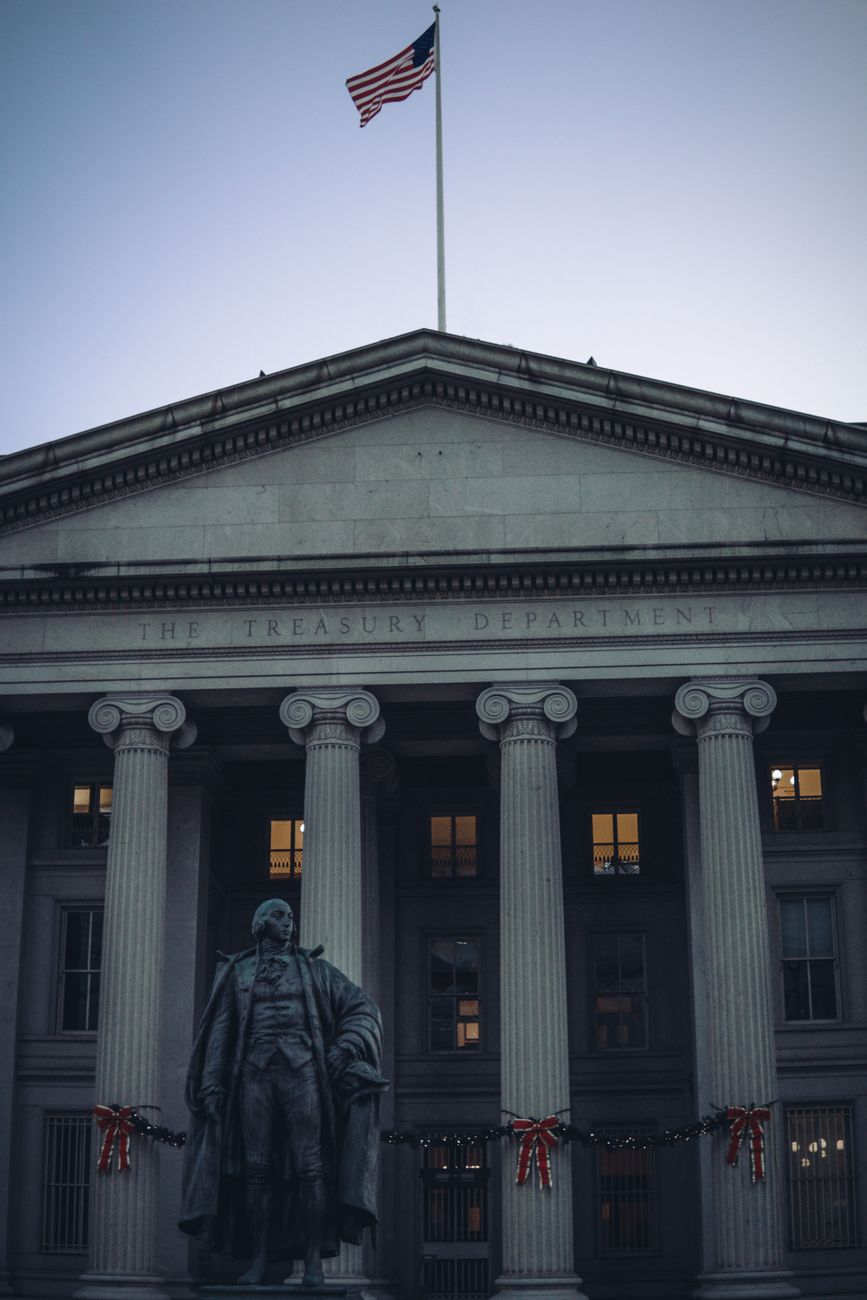
What traders are repricing is the reaction function. If oil and other war-sensitive prices lift headline inflation and keep households uneasy, policymakers can talk about patience. They cannot deliver cuts without risking a new credibility problem. CNBC’s reporting on bond-market bets captured the shift from Ed Yardeni, who argued the market is no longer assuming the current setting is restrictive enough.
“The market is signaling that the current FFR is too low to curb inflation and may have to be hiked.”
— Ed Yardeni, cited by CNBC
That does not mean the market has settled on a hike as the base case. Investors are demanding compensation for a different risk: that the inflation shock is bleeding into expectations, wages and service prices fast enough to keep the committee boxed in. For equities and credit, the distinction matters. A delayed cut is one kind of headwind. A policy regime that has to relearn how to talk tough under a new chair is another.
The skeptical economist view is more restrained. In the Reuters poll coverage, UBS chief US economist Aditya Bhave argued that both hikes and cuts remained feasible, while holding steady was the central case. It is not a forecast of calm. It describes a narrow path in which the Fed waits because every alternative carries a cost.
“Both hikes and cuts are feasible…the base case is a hold”
— Aditya Bhave, quoted by Reuters
What keeps the Fed on hold through year-end, on this view, is not hawkishness. Officials do not need to embrace the bond market’s argument to remain inactive. They only need inflation to move in the wrong direction for longer than expected. If quarterly PCE is still running materially above target into the second half, patience stops looking dovish and starts looking defensive.
What Warsh can change
Warsh’s arrival changes the politics of the hold more than the arithmetic. CNBC’s profile of the handover underscored the symbolism: Donald Trump’s preferred chair takes office just as the market begins to suspect Powell-era caution may have left policy behind the curve. Governance watchers are focused less on Warsh’s first headline and more on whether he can move the committee’s center of gravity.
There are obvious limits. The Federal Open Market Committee is not a chairman’s monarchy, and Warsh inherits a voting structure built to slow abrupt pivots. James Knightley, chief international economist at ING, made the point directly in the Reuters story.
“Warsh is just one voice and he would need to convince the committee …”
— James Knightley, quoted by Reuters
A new chair can change tone, sequencing and the balance of risks in public communication. He cannot simply decree a hike because the market wants one. The more plausible near-term shift is rhetorical. Warsh can validate the inflation concern more explicitly, tolerate a firmer yield backdrop and make it harder for investors to keep reviving a cut story each time a single data point softens.
That rhetorical change would still travel. Treasuries price language before they price votes. The equity market does too, especially when valuations rely on the assumption that the next monetary-policy move eventually eases financing conditions. A hold-through-2026 consensus under Warsh would tell investors something specific: the Fed may not be forecasting a hike, but it is no longer willing to rescue duration from every inflation scare.
The Reuters poll matters beyond the survey table. It marks a handoff between two regimes of expectation. Under Powell, the debate was how long officials could wait before cutting. Under Warsh, at least for now, the question is how long they can keep rates unchanged without the market concluding that unchanged is itself too easy. For a Treasury market already pushing yields higher, that is enough to keep the repricing alive.
Sloane Carrington
Markets columnist. Analytical pieces and deep-dives on monetary policy, capital flows and corporate strategy. Reports from New York.