Powell exits with an inflation scar as Warsh inherits a repriced Fed
Powell preserved the Fed's independence but not its inflation record. Warsh now inherits a central bank facing repriced rate expectations and less room for error.
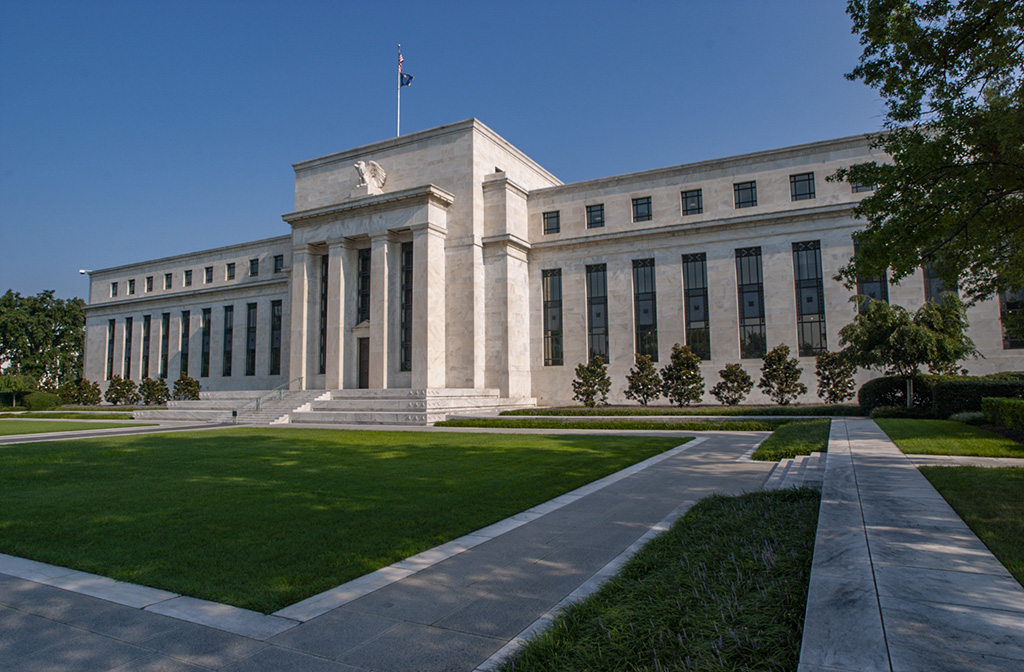
Jerome Powell exits the Federal Reserve with his independence largely intact and his inflation record still contested, handing Kevin Warsh a central bank that markets are already treating as a tougher, less forgiving institution. Powell spent much of his final months defending the principle that rate decisions stay insulated from presidential pressure. Warsh arrives promising something closer to a rethink: how the Fed communicates, how fast it moves, what kind of credibility it needs after the post-pandemic inflation shock. Whether the next era is defined by continuity after a policy error or by a deliberate break with the habits that let inflation get away in the first place — that is what the handoff turns on.
Read one way, Powell’s legacy is the inflation miss. The Chicago Tribune’s account of his exit centres it squarely: consumer-price growth crested at 9.1 per cent in June 2022 and the Fed’s preferred gauge stayed above the 2 per cent objective for more than five years. Read another way, the same late-period record includes a recovery to 2.3 per cent by September 2024 — evidence that the Fed did drag price pressure back toward target, slowly and at a steep political cost. Markets price both halves of the story. Powell did not leave a clean victory lap. He left a reminder that credibility can be rebuilt, but rarely without a permanent mark from the mistake that required the rebuilding.
The politics weigh as heavily as the arithmetic. In CBS News’ assessment of how economists are weighing his tenure, the outgoing chair cast the stakes in institutional terms: “This is about whether the Fed will be able to continue to set interest rates based on evidence and economic conditions …” That framing — not the inflation numbers, not the rate path — is likely to endure as his signature. Powell will be remembered for resisting Donald Trump’s repeated campaign to bend monetary policy to the White House’s immediate needs as much as for being late to the inflation turn. When he told the Chicago Tribune, “You want people to … set interest rates to benefit the general public … This isn’t bipartisan, this is nonpartisan,” he was arguing for a version of the Fed that survives bad forecasts better than it survives open political capture.
That context sharpens what Warsh inherits. Powell is not handing over a tranquil economy. He is handing over a central bank whose framework was stress-tested by a historic inflation spike, whose internal processes are under scrutiny, and whose independence has become part of the story investors are pricing. Even the $2.5bn renovation controversy around Fed headquarters, noted in the Chicago Tribune reporting, matters less for its dollar figure than for what it shows: every institutional choice around the central bank is now easier for critics to weaponise.
The inheritance Warsh gets
Warsh has done little to suggest he wants to be a caretaker. In CNBC’s reporting on the friction inside the Fed orbit, the incoming chair’s line was blunt: “The way they’ve been doing business is not working.” That is not the language of marginal adjustment. It is the language of regime change — or at least of wanting markets to believe one is possible. Signalling a break is easy when inflation runs hot and political backing sits behind him. Governing through that break gets harder once every tweak to communication, balance-sheet policy or rate guidance starts moving the yield curve in real time.
Markets sit at the centre of the handoff. Reuters, carried by Yahoo Finance, described Warsh as inheriting a fed funds range of 3.50%-3.75% that already sits inside a debate about renewed tightening risk, not just eventual easing. The next chair is not arriving to deliver relief. He is arriving while traders are repricing what counts as restrictive, how long policy may need to stay there and whether the Fed’s reaction function is about to harden. A chair who talks about regime change under those conditions may find that markets demand evidence of toughness before he has settled on his own vocabulary for forward guidance.
Confirmation politics reinforce the constraint. BBC News’ takeaways from Warsh’s confirmation hearing suggested the central question is not whether he can sound different from Powell but how much room he really has to redefine the Fed without unsettling the credibility he is trying to strengthen. If Warsh leans too far into break-with-the-past rhetoric, he tells investors the institution under Powell lost control of its framework. If he leans too far into continuity, he dilutes the promise that his appointment means more than a change of messenger. The tension is structural.
Why markets may care more about process than personality
Investors are likely to care most about the narrower space Powell leaves for experimentation. An inflation peak of 9.1 per cent and a glide back to 2.3 per cent on the Fed’s preferred gauge does not buy a successor much room. It buys scrutiny. The next policy error — or even the next muddled message — will be measured against the argument that the Fed should have learned more from the first one. Warsh’s critique of how the institution has been operating registers less as a personal rebuke of Powell than as a signal that the next phase of monetary policy could carry more communication risk, not less.
A balance-sheet and market-function question is also embedded in the succession. Analysts cited in the Reuters/Yahoo reporting centred on whether Warsh can press for a tougher regime, or a different mix of rate policy and quantitative tightening, without lifting term premium and unsettling risk assets in the process. That is the real inheritance. Powell spent his later years proving the Fed could defend its autonomy under pressure. Warsh now has to prove that a more muscular conception of autonomy does not become its own source of volatility.
The verdict is mixed on both men. Powell leaves with an inflation scar he could not erase and an independence legacy he probably did preserve. Warsh arrives with political backing to reset tone and perhaps framework, but he inherits a market that began repricing the Fed before his tenure had fully begun. That makes this less a ceremonial handoff than a test — whether the post-inflation Federal Reserve can change its methods without making investors question the institution all over again.
Sloane Carrington
Markets columnist. Analytical pieces and deep-dives on monetary policy, capital flows and corporate strategy. Reports from New York.