OpenAI stake talks push US AI policy into venture finance
OpenAI stake talks would shift Washington from AI oversight to state capital, raising valuation and policy risks for private labs.
A possible U.S. government stake in OpenAI would move AI policy from supervision into direct participation in the ownership structure of one of the sector’s most valuable private companies.
Talks first reported by CNBC are centred on whether the public could receive equity or a profit share while Washington shapes the next wave of AI infrastructure and commercialisation. The immediate investor question is not whether the White House favours artificial intelligence. It is whether the largest private AI valuations now come with a policy item on the cap table.
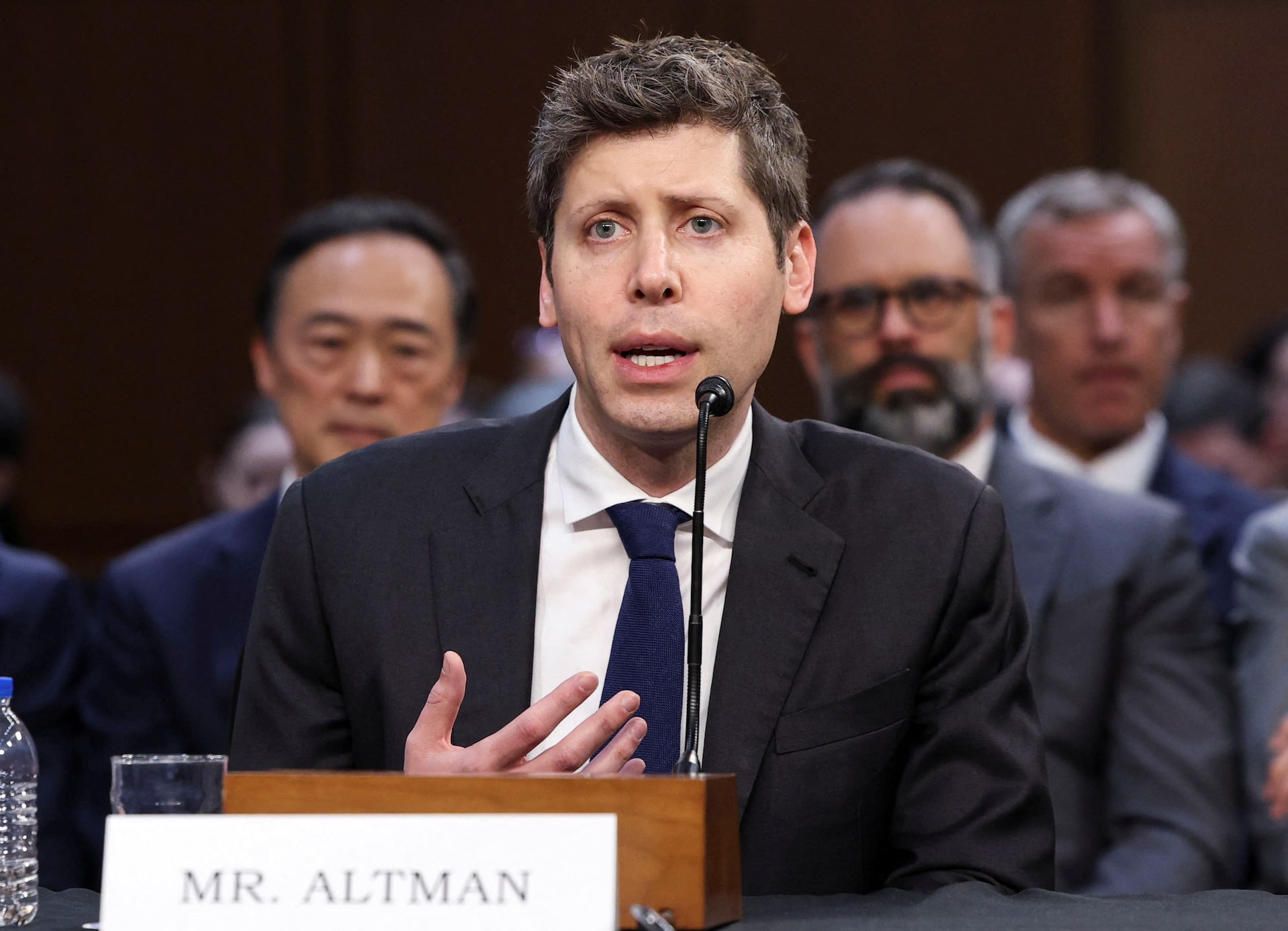
President Donald Trump said partnerships with AI executives, including OpenAI chief executive Sam Altman, could be discussed as soon as next week, Bloomberg reported. Trump described the idea as a way for taxpayers to take part in gains from companies that depend on public policy, federal procurement and infrastructure decisions.
There are concepts where pieces could be given to the American public, where the American public essentially becomes a partner with the companies.
Donald Trump, via Bloomberg
A similar playbook is already visible in chips. Bloomberg said the government has pledged to take as much as 10 per cent of Intel, placing the OpenAI discussions in a wider shift from grants and tax credits toward direct industrial-policy stakes.
Policy turns into capital
OpenAI is the obvious test case because its funding needs and prospective public-market value are so large. Politico said OpenAI and Anthropic are moving toward IPOs that could value the companies at over $1 trillion. At that scale, any government claim on upside would matter to investors and be visible to taxpayers.
For private backers, the financing consequence cuts both ways. Official support could lower some political risk if it came with help on AI infrastructure, federal contracts or energy access. It could also leave minority investors asking whether Washington expects preferential economics, board-level influence or policy concessions in return.
Altman’s role keeps the idea from reading as only presidential improvisation. CNBC reported that the OpenAI chief executive first raised the concept with the Trump administration in 2025, putting it in the same channel where AI regulation, procurement and national-security policy already overlap.
Party labels do not quite fit the debate. Bloomberg noted that Senator Bernie Sanders had proposed government ownership of half of AI-company stock; Trump is now floating a narrower public-partner model from the other side of Washington. Both versions start from the premise that frontier AI labs may generate gains large enough, and rely on public inputs enough, for the state to ask for a direct claim.
The cap-table risk
For venture funds and eventual IPO buyers, the proposal turns quickly into valuation math. A public stake can look supportive if it brings faster permitting, data-centre approvals or procurement commitments. It can look dilutive if the government receives economics without paying a market price, or if later administrations use the stake to push on pricing, safety rules or model access.
David Sacks, a prominent Trump ally on technology policy, warned against the ownership model in comments carried by Bloomberg.
Nationalization of AI will accelerate the corporate-government fusion we’re already sliding toward.
David Sacks, via Bloomberg
Trump has said he has discussed the idea with AI company leaders. Politico quoted him saying, “I have spoken to all of them,” and reported that meetings with artificial-intelligence companies could happen as soon as next week.
For OpenAI’s peers, the precedent may matter more than the first term sheet. If Washington becomes a profit-sharing partner in one major lab, Anthropic and other frontier-AI companies could face questions about whether state capital is becoming a condition of scale. That would blur venture finance and industrial policy just as the sector prepares to ask public-market investors to value private-lab growth.
Markets do not yet have a final structure to price. Until they do, the OpenAI stake discussion adds a new variable: not just how quickly AI companies grow, but how much of that upside Washington may decide belongs to the public.
Tomás Iglesias
Financial regulation and legal affairs. SEC, CFTC, FCA, market-structure and enforcement. Reports from Washington.