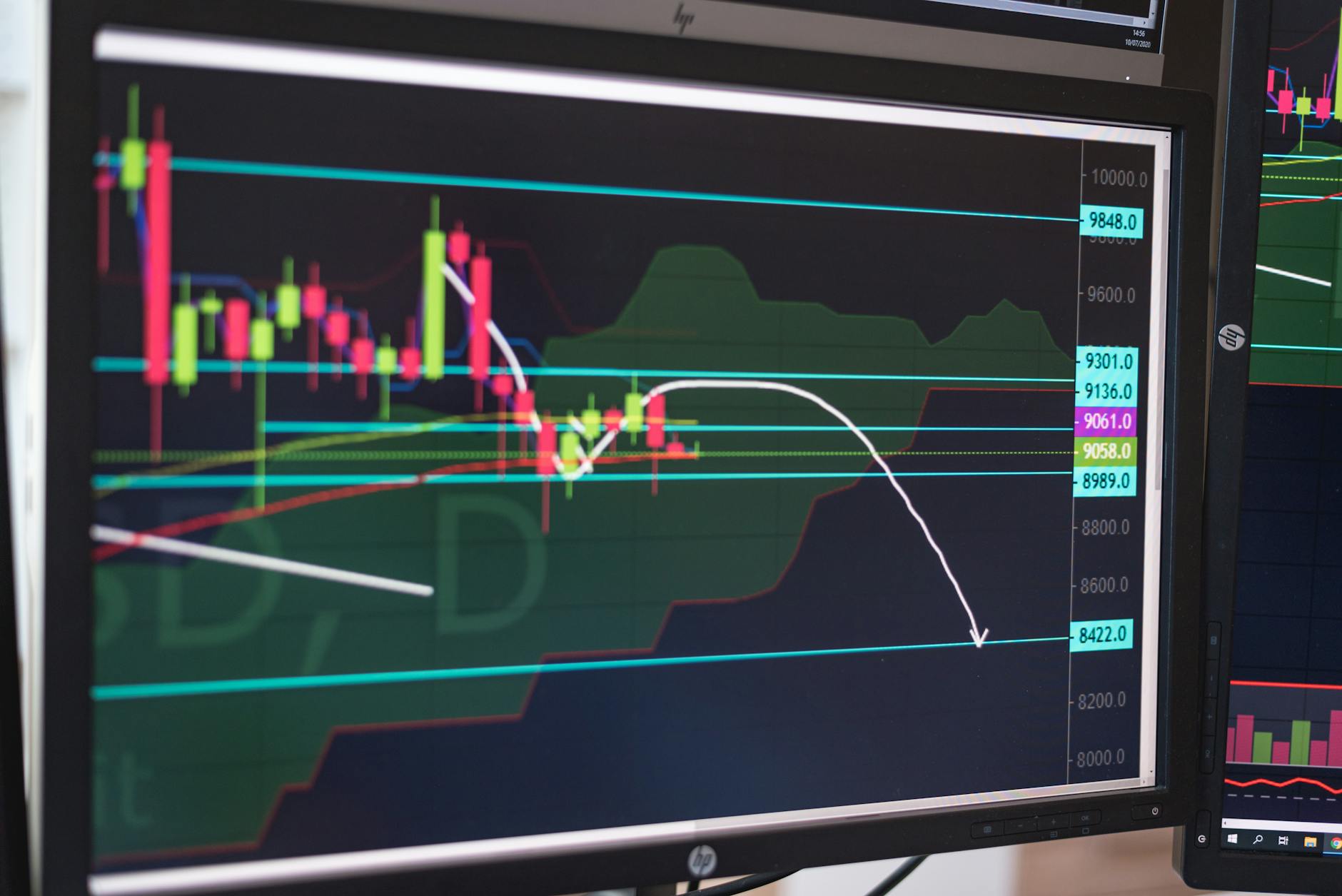
Stocks ignore the bond market as correction risk builds
Stock market correction risk is rising as 10-year Treasury yields hit 4.631 per cent, exposing small caps, housing and high-multiple tech.

Wall Street’s biggest winners are still hovering near record highs even as the bond market says money is getting more expensive. That gap is the story now. The Financial Times reported that managers who had spent much of the spring chasing index highs are starting to discuss correction risk openly — not because earnings have cracked, but because the long end of the Treasury curve has moved the wrong way for a rally priced for easy conditions.
Locating the pressure point is not hard. When the 10-year Treasury yield touched 4.631 per cent, Reuters reported, the move cut unevenly across equities. The Russell 2000 fell 2.4 per cent on Friday. The PHLX Housing index dropped 3.3 per cent. Smaller companies, homebuilders and consumer-linked shares absorb the rate reset first because their valuations lean on future cash flows and credit conditions that remain accommodative, for now.
Skeptics parse the same tape less charitably. Independent market commentator Kurt S. Altrichter has been arguing that bonds and oil are refusing to confirm the equity rally. In that reading, another record close registers as momentum holding out against tightening financial conditions, not a clean growth signal. The question shifts. Do stocks keep grinding, or does the discount rate eventually do the repricing?
Morgan Stanley strategist Mike Wilson sees a reset inside a bull market, not the end of one.
“A 10-15 percent correction in the S&P 500 is not only possible but would be normal at this stage of a new bull market.”
— Mike Wilson, Morgan Stanley
Adjusting for that lens, a correction of 10-15 per cent fits a market that is digesting higher yields rather than buckling under them. Wilson’s 12-month S&P 500 target of 8,300 keeps the upside case intact. Investors are no longer debating whether volatility returns. They are debating where it lands first.
Why bonds suddenly matter again
Higher Treasury yields raise the discount rate on long-duration assets. That is why high-multiple technology shares and speculative growth names can look sturdy one week and exposed the next. Morningstar strategist David Sekera has argued that stocks are undervalued only in the context of an especially cloudy macro outlook. A share can screen as inexpensive and still reprice lower, sometimes sharply, if investors decide the earnings trajectory deserves a steeper hurdle rate.

Sekera does not sound relaxed.
“Stocks are undervalued, but for a reason—an especially cloudy future and weakening macrodynamics are on the horizon.”
— David Sekera, Morningstar
Valuations may not be stretched everywhere. But the quality of the future cash-flow stream is becoming harder to price, and that is the variable nobody models cleanly. HSBC Asset Management’s second-quarter outlook makes a similar argument from a portfolio-construction angle. When the backdrop turns choppier, leadership narrows and investors pay closer attention to what they own beyond the headline winners. Anxiety around yields shows up first in breadth and sector rotation, not in a clean collapse of the S&P 500.
Utilities offer another clue. The sector’s 2.9 per cent dividend yield is more than twice the broader S&P 500’s payout, which means income-oriented shares become relative competition again when Treasuries move higher. The same dynamic works in reverse for growth stocks whose valuation depends on a low cost of capital. Cheap money does not need to disappear for those names to wobble. It only needs to become less cheap than the market assumed.
Where the correction would land first
Evidence of that sorting is already visible in the pockets of the market most exposed to financing costs. Reuters’ reporting on the yield spike pointed to small caps, consumer stocks and housing shares as the likely bearers of the opening salvo. That is balance-sheet arithmetic. Companies that need refinancing, households that need mortgage affordability and businesses that rely on a still-resilient consumer all become harder to underwrite when the 10-year yield is pressing above 4.6 per cent.

Joshua Barone of Savvy Advisors put the transmission chain more bluntly.
“If most of the value depends on future cash flows, cheap debt, private-market marks, or a resilient consumer, higher yields do real damage.”
— Joshua Barone, Reuters
A correction, if it comes, may not look like the all-index air pocket of earlier rate shocks. It could be selective. High-flying leaders might hold up longer than the headlines suggest. Companies with present-tense earnings and strong pricing power may still attract buyers. The lower-quality edge of the market — the companies that need the economy warm and financing available at reasonable cost — has less room for error, and less time.
The Financial Times’ reporting on the Iran war’s economic fallout points to the same inflation problem from a different angle. If geopolitical risk keeps energy pressure alive, the bond market has even less reason to ease its warning. Markets can ignore that signal for a while. They usually cannot do so indefinitely. Eventually yields ease, earnings broaden, or prices adjust.
Wilson’s 10-15 per cent correction call lands well short of panic. Altrichter’s bond-market skepticism does not read as a crash call either. Both are making the same point from different seats: the S&P 500 can trade near highs and still be vulnerable, because stress is building underneath in the rate-sensitive sectors that depend most on low yields and easy optimism.
The next few weeks hinge less on whether the tape prints another headline high than on whether participation widens while yields stay elevated. If it does not, the correction that investors are already discussing will not arrive as a mystery. The bond market filed the first warning. Maybe the equity market listens. Maybe it waits for price to do the explaining.
Sloane Carrington
Markets columnist. Analytical pieces and deep-dives on monetary policy, capital flows and corporate strategy. Reports from New York.