Kevin Warsh walks into the Fed's biggest family fight in 34 years
Kevin Warsh takes over as Fed chair with inflation at 3.8%, the FOMC split 8-4 on rate policy, and markets pricing a 51% chance of a rate hike by December.
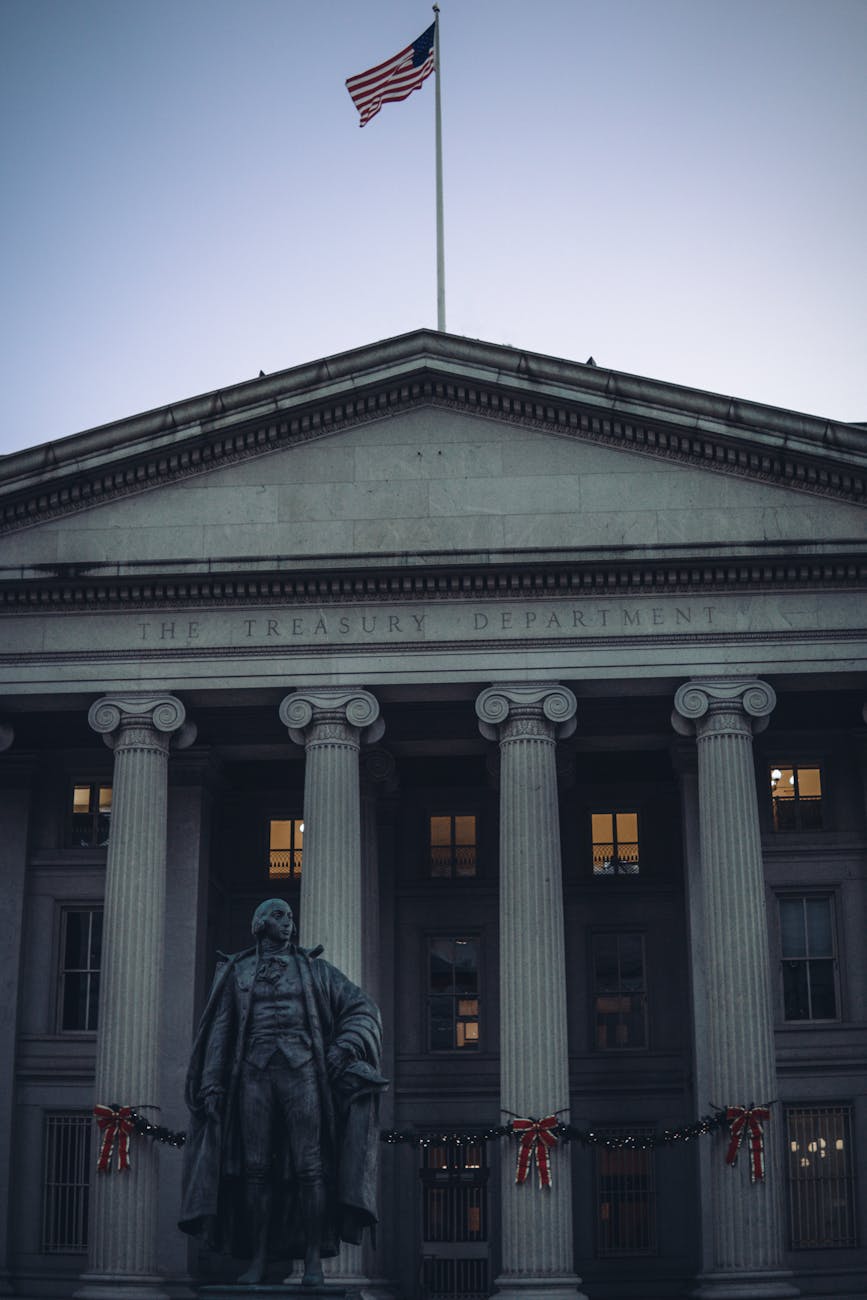
Kevin Warsh is sworn in as Federal Reserve chair on May 22 with inflation running at 3.8 per cent, an FOMC fractured by the most dissents in 34 years, and derivatives markets assigning a 51 per cent probability that the central bank’s next move is a rate hike — not the cuts President Trump demanded when he picked Warsh for the job.
It is an inheritance without a clean precedent. The April 29 FOMC vote split 8-4. Four policymakers refused to sign off on a statement that merely kept an easing bias in place — but they split in opposite directions. Stephen Miran, the outgoing governor who dissented at all six meetings since joining in September 2025, wanted cuts immediately. Cleveland’s Beth Hammack, Minneapolis’s Neel Kashkari and Dallas’s Lorie Logan dissented because even the hint of future easing looked reckless with inflation accelerating.
That asymmetry is the coordination problem Warsh inherits. It is not a clean hawk-versus-dove forecast fight, as Convex Trade noted after the vote. It is a committee whose members cannot agree on the directional premise of the next sentence in the statement, never mind the rate decision itself.

The data behind the hawkish dissent is unambiguous. April CPI printed at 3.8 per cent, the highest since 2023. The Fed’s preferred gauge, core PCE, sat at 3.2 per cent in March — more than a full percentage point above the 2 per cent target. Brent crude has surged to roughly $100 a barrel since the Iran conflict closed the Strait of Hormuz, and the Survey of Professional Forecasters projects second-quarter inflation at 6 per cent annualised.
Goldman Sachs has already pushed its first rate-cut call from September to December 2026. CME FedWatch shows a December hike at 51 per cent probability, rising above 70 per cent by March 2027. The fed funds rate has been parked at 3.50 to 3.75 per cent since January.
Warsh himself has framed the dissent as healthy. “If the central bank has that good family fight, I think they’re going to make better decisions,” he told CNBC. “If they happen to make mistakes, they’ll correct them sooner.”
“If the central bank has that good family fight, I think they’re going to make better decisions. If they happen to make mistakes, they’ll correct them sooner.”
— Kevin Warsh, incoming Fed chair, to CNBC
Former Cleveland Fed president Loretta Mester is not convinced the data leaves room for that argument. “I just don’t think right now he can make those arguments in a credible way, because we have an inflation problem,” Mester told CNBC. Bill English, the former head of monetary affairs at the Fed and now a Yale professor, expects Warsh to try to build consensus the old-fashioned way. “My guess is he’s going to want to continue to be a chair who’s going to try to find consensus and move the committee over time with arguments and with data,” English said.
That is the political bet.

Trump nominated Warsh expecting a different outcome. In December he said his pick would “believe in lower interest rates, by a lot,” and in April he signalled he would be disappointed if cuts did not come immediately after Warsh took office. He softened last week, telling reporters he would let Warsh “do what he wants to do” on rates.
Few Fed watchers take that at face value. Tim Mahedy of Access/Macro captured the dynamic in a note to Semafor: “There is no world” in which, absent a cut by September, “the president’s going to be like, ‘That’s cool — going into election with inflation at 3.5, 4%, borrowing costs high, and consumer spending basically bottoming out.’”
Compounding the external pressure is an internal one without modern precedent. Jerome Powell is staying on as a Board governor — the first Fed chair in nearly 80 years to do so, with two years left on his term. The last former chair who remained on the board was Marriner Eccles, who stepped down as chair in 1948 and stayed as a governor until 1951.
Warsh now chairs a committee whose most influential voice is the man he replaces, sitting at the same table. Governance analysts have flagged the risk of a de facto two-centre power structure — the outgoing chair shaping norms and signalling preferences while the incoming one tries to establish authority over both the statement and the dot plot.
The bond market has already cast its own verdict. Ed Yardeni of Yardeni Research wrote this week that “the market is signalling that the current FFR is too low to curb inflation and may have to be hiked,” adding that “a simple removal of the easing bias may not be enough.” The 10-year Treasury yield has climbed in response, widening the term premium that reflects uncertainty about the reaction function of a Fed chaired by someone who has been outside the building for 15 years.
The institutional backdrop sharpens every one of these tensions. Warsh will be sworn in at the White House, not at the Eccles Building — the first such ceremony since Reagan hosted Alan Greenspan in 1987. Trump’s Justice Department has an open investigation into Powell’s tenure. The Supreme Court is weighing a case on whether the president can fire Fed board members at will. The symbolism stacks in one direction, and it is not the direction of independence.
Warsh’s first FOMC meeting as chair convenes June 17-18. The immediate question is whether the post-meeting statement retains the easing bias that four policymakers already rejected. Removing it would be read by markets as hawkish even with the rate unchanged. Keeping it would signal business as usual in a committee where business as usual has already broken down. Warsh gets roughly four weeks to find out whether the family fight he says he welcomes is one he can win.
Sloane Carrington
Markets columnist. Analytical pieces and deep-dives on monetary policy, capital flows and corporate strategy. Reports from New York.