CME, ICE press Washington to tighten oversight of Hyperliquid
CME Group and ICE are pressing U.S. regulators to scrutinize Hyperliquid after a surge in oil-linked trading sharpened concerns over manipulation and sanctions risk.
$700 million of oil-linked contracts changed hands each day on Hyperliquid in April, according to Bloomberg’s report on the lobbying campaign. The surge is giving CME Group and Intercontinental Exchange, the parent of the New York Stock Exchange, a fresh argument for U.S. regulators to tighten oversight of the crypto venue.
The push turns a fast-growing perpetuals market into a live test of how far Washington is prepared to police offshore-style crypto market structure. Trading outside the U.S. rulebook can still wash back into regulated markets — that is the core of the fight. Incumbent exchanges say unregistered liquidity can distort price discovery and create sanctions gaps. Hyperliquid says its market design carries fewer risks than the centralized venues regulators already know.
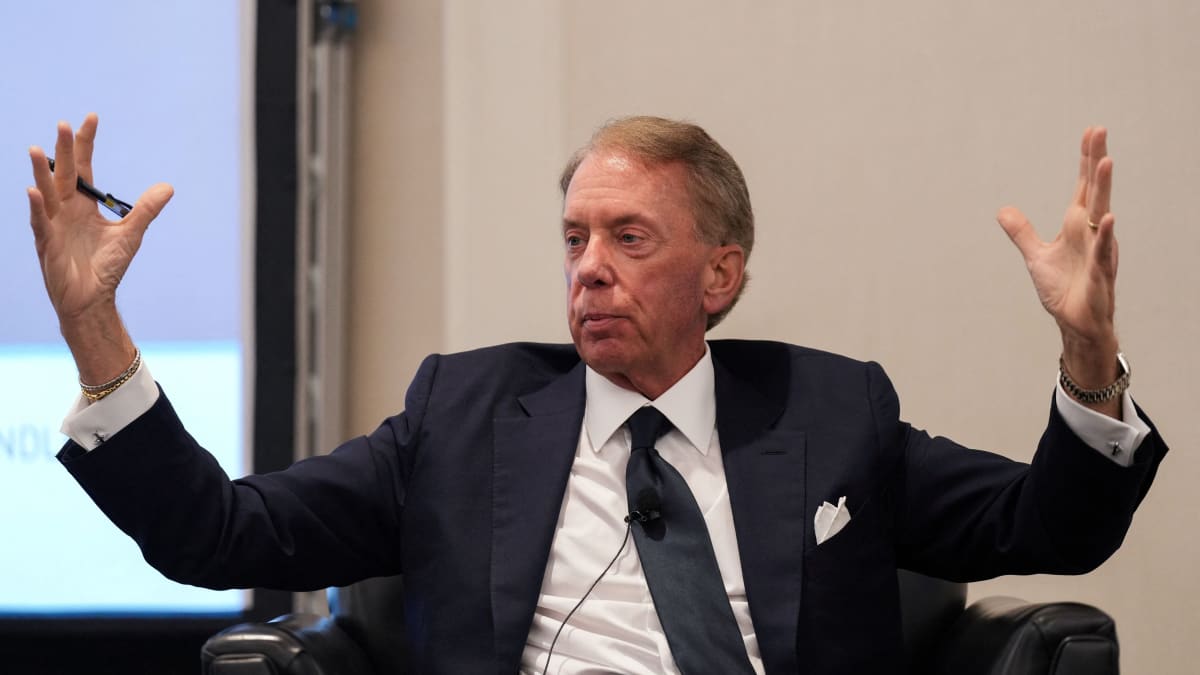
Trabue Bland, ICE’s senior vice-president for futures exchanges, told Bloomberg that regulators should worry when activity on a market beyond formal oversight can affect benchmark pricing. “If there’s something that could impact that, completely outside of anyone’s oversight, I think that’s problematic,” Bland said.
The numbers are not hypothetical. Bloomberg said Hyperliquid’s oil-linked volume averaged about $700 million a day in April, up from only a few million dollars before the Iran war. That spike helps explain why a venue launched in 2023 has drawn the attention of the parent companies of the New York Stock Exchange and one of the biggest U.S. futures exchanges. Bloomberg added that ICE and CME each collected more than $5 billion of annual revenue last year, a reminder of how much business is at stake when price formation shifts elsewhere.
Commodity-linked contracts have usually been the home turf of regulated futures exchanges, complete with clearing rules, position limits and surveillance systems. A crypto-native venue winning order flow in that corner of the market sharpens the argument from incumbents that the federal framework is being tested by products that look familiar to traders but sit on different plumbing.
Michael Selig, the CFTC chairman, put the regulatory theory more plainly. Activity on Hyperliquid “could end up influencing the spot market price or the futures market price on our registered platforms,” Bloomberg reported.
That means officials do not need to supervise every offshore venue directly for spillovers to become a policy problem. They only need to conclude that price discovery on those venues is bleeding into contracts already inside the federal perimeter.
The reports flag two distinct concerns. One is manipulation: thin or loosely supervised liquidity can pull benchmark prices around. The other is sanctions and compliance. If a venue can attract global flow without the same customer-screening obligations as a U.S. exchange, policymakers have to decide whether indirect exposure through price formation is already enough to justify a response.
Why the fight matters
Hyperliquid’s camp is pushing back. Bridgett Frey, a spokesperson for the Hyperliquid Policy Center, told Crypto Briefing that the platform’s markets “provide greater benefits and pose lesser risks than traditional centralized exchanges.” The argument is a familiar one from crypto: open, on-chain venues say transparency and collateral visibility reduce some of the opaque counterparty risks that regulators associate with conventional exchanges and brokers.
Still, the lobbying campaign, described separately by The Defiant, is less about one venue’s public relations than about whether U.S. oversight can stop at the water’s edge when liquidity does not. Hyperliquid does not fit neatly into the mould of a registered U.S. futures bourse, yet the contracts traded there can shape expectations, hedging costs and eventually pricing on platforms that do answer to Washington.
For CME and ICE, tighter oversight would protect more than principle. Both groups have spent years selling regulation as part of the product, especially in futures and clearing. An offshore venue that can scale quickly without the same burdens challenges that pitch as much as it challenges market share. For policymakers, the risk runs the opposite way: move too slowly and manipulation or sanctions gaps harden into market plumbing. Move too aggressively and Washington is seen to be extending its reach without a clear statutory map.
Neither the Bloomberg report nor the follow-on coverage pointed to an immediate rule proposal or enforcement action on Thursday. But the dispute already shows where the next U.S. crypto market-structure battle may sit. It is no longer only about token classifications or exchange registration. It is about whether a fast-growing derivatives venue can remain functionally outside the federal fence once its prices start to matter inside it.
Tomás Iglesias
Financial regulation and legal affairs. SEC, CFTC, FCA, market-structure and enforcement. Reports from Washington.