TPG buys ECHO Realty in $2bn grocery-retail property deal
TPG buys ECHO Realty in a $2 billion grocery-retail deal that tests private capital's appetite for necessity retail.
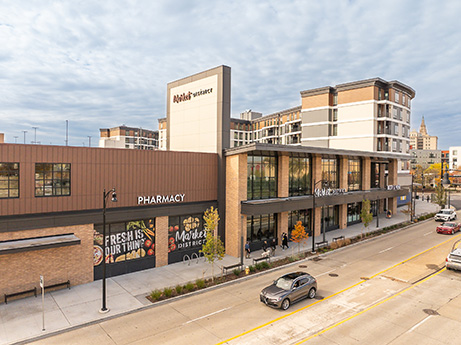
TPG Real Estate led a roughly $2 billion acquisition of ECHO Realty on Friday, giving the firm and three large institutional partners a grocery-anchored shopping-center portfolio at a time when private buyers are still picking through retail property.
PSP Investments, La Caisse and Norges Bank Investment Management are joining TPG in the buyer group, according to Shopping Center Business, which reported the transaction valuation and portfolio details. ECHO Realty owns and operates approximately 230 retail centers across the Midwest and Southeast.
The price is not the whole story.
Centers built around supermarkets have drawn more interest than malls or offices because daily errands can keep tenant sales and foot traffic steadier. TPG is betting that neighborhood retail close to homes can deliver institutional-scale returns while financing markets remain selective.
A related Securities and Exchange Commission filing tied to the transaction was posted Friday. The buyer roster puts ECHO alongside Canadian pension capital and Norway’s sovereign wealth manager, a sign that long-horizon investors still want real assets with predictable income.
Shopping Center Business quoted Thomas Karet, ECHO Realty’s founder and chief executive, saying the company was built around necessity-based retail rather than more discretionary shopping patterns.
“Our more than two decades of building and operating neighborhood, necessity-based shopping destinations demonstrate the enduring demand for grocery-anchored retail close to home.”
Thomas Karet, ECHO Realty founder and CEO
Karet also said TPG’s capital and operating resources should help ECHO expand in what he called “key, high-performing markets.” Since inception, ECHO has acquired and developed more than 16 million square feet of neighborhood and regional centers, Shopping Center Business reported.
That track record gives the purchase a narrower logic than many commercial real estate deals. The $2 billion valuation is not built around a single trophy asset or a bet on a dramatic rate cut. It rests on hundreds of properties whose tenants sell groceries, pharmacy items and other repeat-purchase goods near where households live.
Why grocery anchors matter
For commercial real estate buyers, the grocery anchor is a defensive feature. Supermarkets and other daily-needs tenants draw repeat visits, supporting smaller service retailers in the same center, from restaurants to medical offices. That traffic helps explain why grocery-linked retail has continued to attract institutional buyers while office assets remain harder to finance and value.
Pittsburgh Business Times reported the transaction from ECHO’s home market, giving the deal a local Pittsburgh frame even though the holdings reach well beyond western Pennsylvania. With TPG, sovereign and pension-backed partners give the purchase more scale than a single-sponsor real estate buyout.
For the new owners, roughly 230 centers leave room to improve leasing, reinvest in individual sites and pursue redevelopment where local demand warrants it. The portfolio does not require a speculative retail recovery to make sense. Store closures, regional tenant weakness or soft consumer spending can still pressure rent growth one property at a time.
At market level, the valuation points to a narrow but active lane in property dealmaking. Buyers remain cautious on leverage, and sellers in many real estate categories have resisted resetting prices. Grocery-anchored retail offers a simpler pitch: predictable foot traffic, diversified tenants and assets that can be explained to long-term capital committees without assuming a sharp turn in interest rates.
What investors will watch
Execution comes next. TPG and its partners will have to show that a portfolio of roughly 230 centers can produce enough rent growth and occupancy stability to justify the $2 billion price.
ECHO’s regional footprint gives the group breadth, but the economics will still depend on local grocery demand, tenant retention and redevelopment opportunities at individual centers. For the broader deals market, the transaction is a signal rather than a reopening. Large checks remain available for property types with clear cash-flow durability; more cyclical real estate may not get the same bid.
That is why the ECHO sale landed as a grocery-retail deal first and a commercial-property deal second. TPG is not buying a blanket rebound in real estate. The group is buying a slice of the sector where daily shopping trips still give landlords something lenders and pension funds can underwrite.
Naomi Voss
Banks and deals reporter covering bank earnings, fintech, M&A and IPOs. Reports from New York.