CFTC Issues Blanket No-Action Letter on Prediction Market Data Reporting
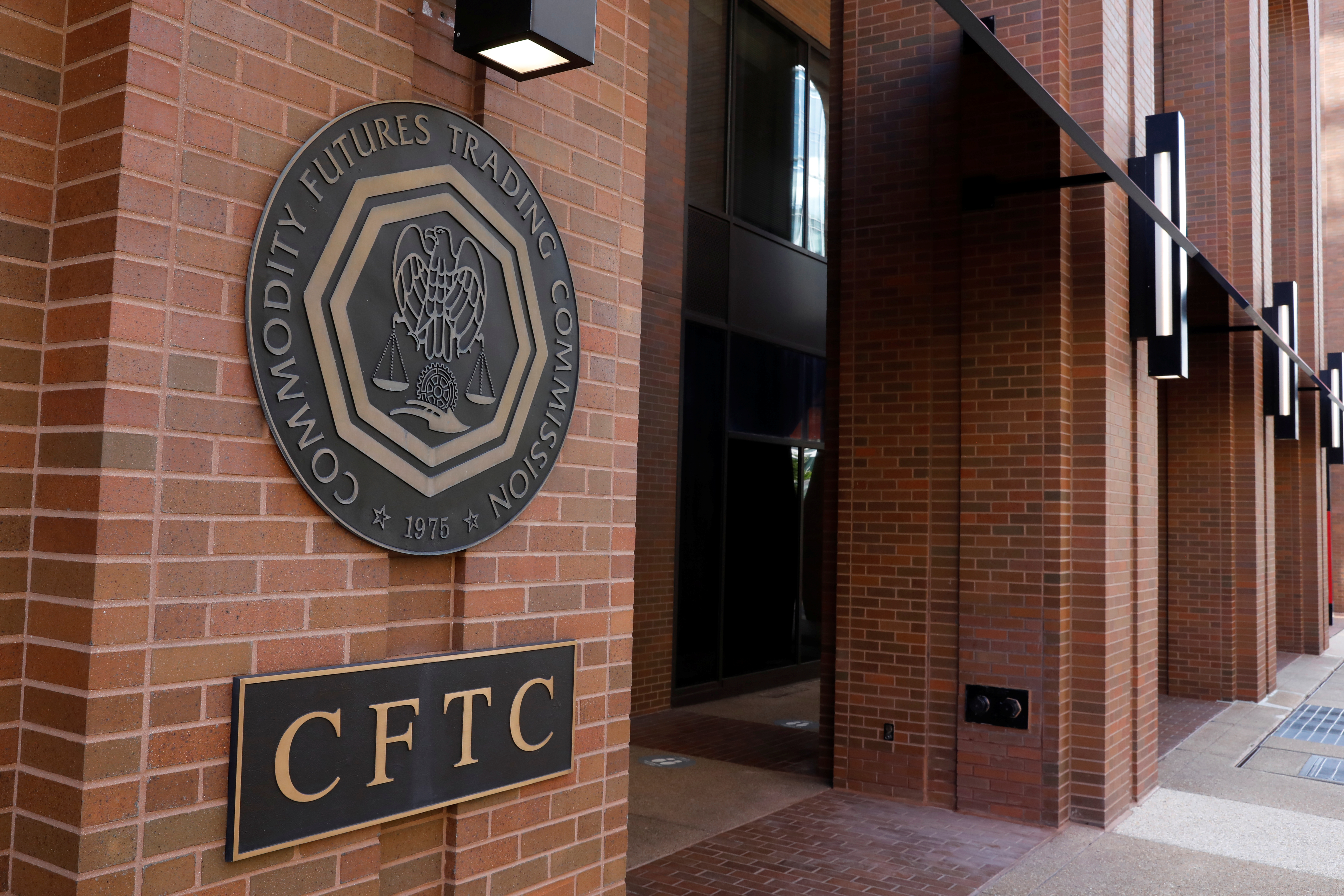
The CFTC issued Letter No. 26-14 on Tuesday, granting 19 prediction market platforms — including Polymarket US and Kalshi — relief from swap data reporting obligations, as the agency presses its jurisdictional claim against five state-level gambling regulators.
CFTC Issues Blanket No-Action Letter on Prediction Market Data Reporting
The Commodity Futures Trading Commission on Tuesday issued a blanket no-action letter that frees 19 prediction market platforms from swap data reporting and recordkeeping obligations, the latest move in the agency’s escalating campaign to assert exclusive federal jurisdiction over event contracts.
Letter No. 26-14, signed jointly by the Division of Market Oversight and the Division of Clearing and Risk, applies to platforms that list fully collateralised event contracts on a designated contract market, or DCM. Polymarket US, Kalshi, Gemini Titan and Bitnomial are among those named. Between them they run most of a sector that now sees billions of dollars in notional volume each year.
The relief replaces a slower, case-by-case process that had forced each platform to apply individually. “The divisions intend for today’s no-action position to streamline the process for addressing such requests and to ensure uniform treatment of market participants,” the CFTC said in a statement.
At issue is whether event contracts — bets on the outcome of elections, sporting fixtures, economic releases and similar one-off events — count as swaps under the Commodity Exchange Act. Staff conceded the ambiguity. “Such contracts may meet the ‘swap’ definition, but are listed for trade by DCMs (rather than swap execution facilities) and have similar characteristics as futures and options on futures,” the CFTC wrote.
By treating the products as futures-like, the letter sidesteps the costly machinery of swap data repositories. The 19 platforms now avoid SDR transaction reporting, Part 45 recordkeeping and registration as swap dealers. That cuts compliance overhead at a point when contract volumes are running at records.
The five-state fight
The reporting carve-out lands in the middle of a broader jurisdictional brawl. Under Chair Michael Selig the CFTC has sued Wisconsin, New York, Arizona, Connecticut and Illinois, all of which had moved to regulate or shut down prediction markets under their gambling statutes.
“As I’ve said repeatedly, the CFTC will not allow overzealous state governments to undermine the agency’s longstanding authority over these markets,” Selig said, in remarks reported by The Block.
The federal pre-emption case is straightforward enough. If event contracts sit inside the Commodity Exchange Act, federal law occupies the field; conflicting state rules fall away. Letter No. 26-14 helps that argument by treating the contracts as derivatives subject to CFTC oversight, not gambling instruments left to state police powers.
Industry has been quick to take the win. Bitnomial chief executive Luke Hoersten called an earlier, firm-specific no-action letter “a win for American innovation,” and operators that had watched the state-court fights with growing unease have welcomed the blanket version.
What the letter does not do
The carve-out is narrow by design. It covers only fully collateralised event contracts listed on a CFTC-registered DCM. Bilateral and over-the-counter event contracts get nothing. Nor does the letter speak to whether the contracts are lawful at all — it only addresses what would otherwise be required of them if classified as swaps.
A wider rulemaking has been under way for months. The CFTC published a proposed rule on event contract regulation in March 2026 and received over 1,500 responses from platforms, traders, academics and state officials, a volume unusual even for a contested rulemaking and a measure of how much is at stake.
The letter carries no expiry date. Staff said they would monitor developments and revisit if conditions changed. Until then, the 19 named venues can operate without swap-level reporting obligations while the bigger rule is worked out.
A widening grey zone
Prediction markets have moved from academic curiosity to genuine financial infrastructure, and regulation has struggled to keep up. Polymarket alone cleared more than $3.7bn in election-related contracts over the 2024 US presidential cycle, according to on-chain data. Kalshi, the only CFTC-regulated exchange in the segment, has pushed beyond elections into weather, macro releases and cultural events.
Congress has shown little appetite for stepping in, leaving the CFTC and the federal courts to draw the line between a derivative and a wager. The five-state litigation, with Tuesday’s no-action letter alongside it, is the agency’s bid to draw that line before more states pile in.
For the platforms, the immediate read is lower legal risk and lower running costs. For the states, it is a clear signal that the CFTC intends to hold the ground — and that prediction markets, for better or worse, are being absorbed into the federal derivatives perimeter. Whether the courts back the agency is a question the five-state docket will start to answer in the coming months.
Tomás Iglesias
Financial regulation and legal affairs. SEC, CFTC, FCA, market-structure and enforcement. Reports from Washington.