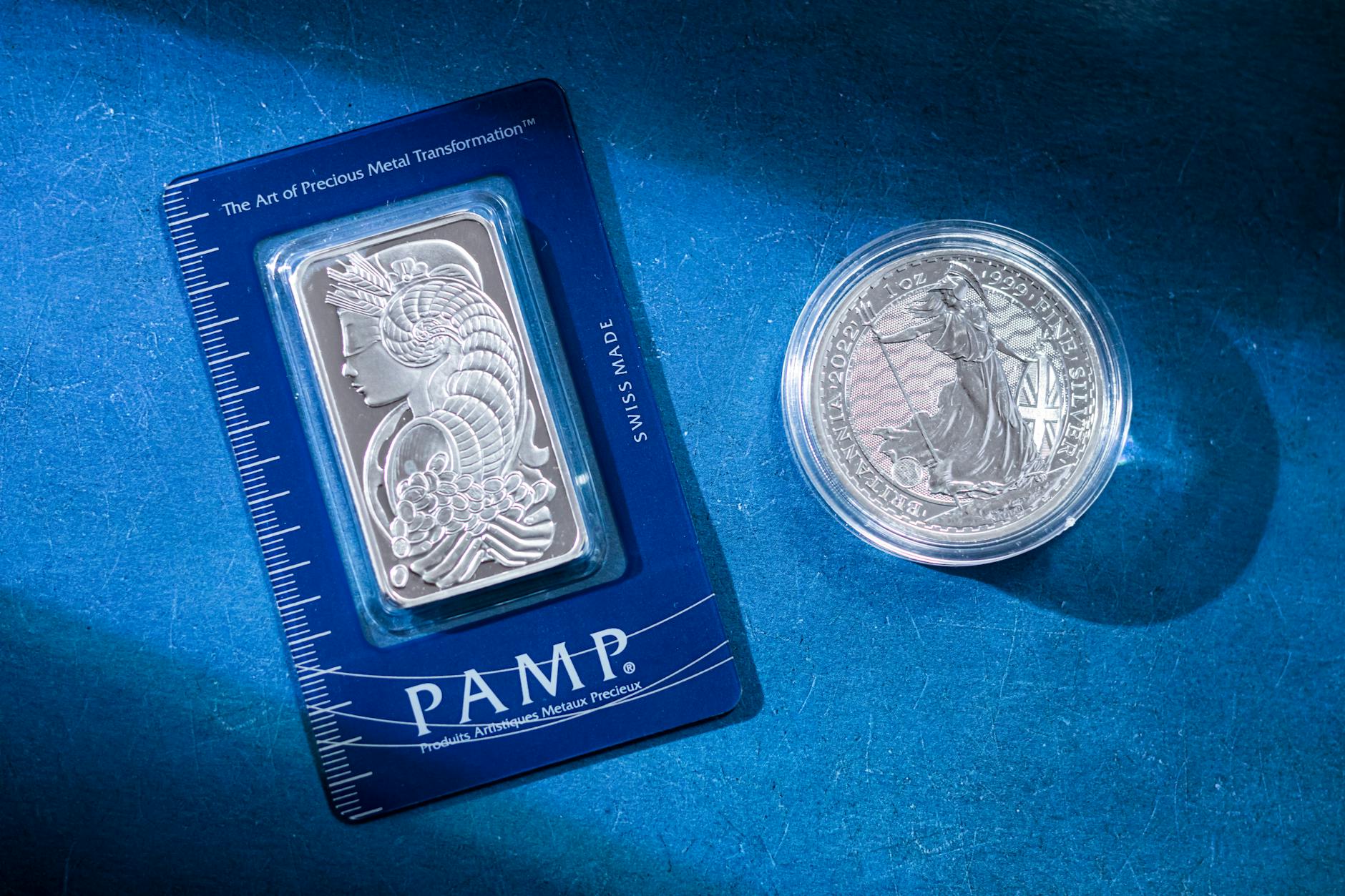
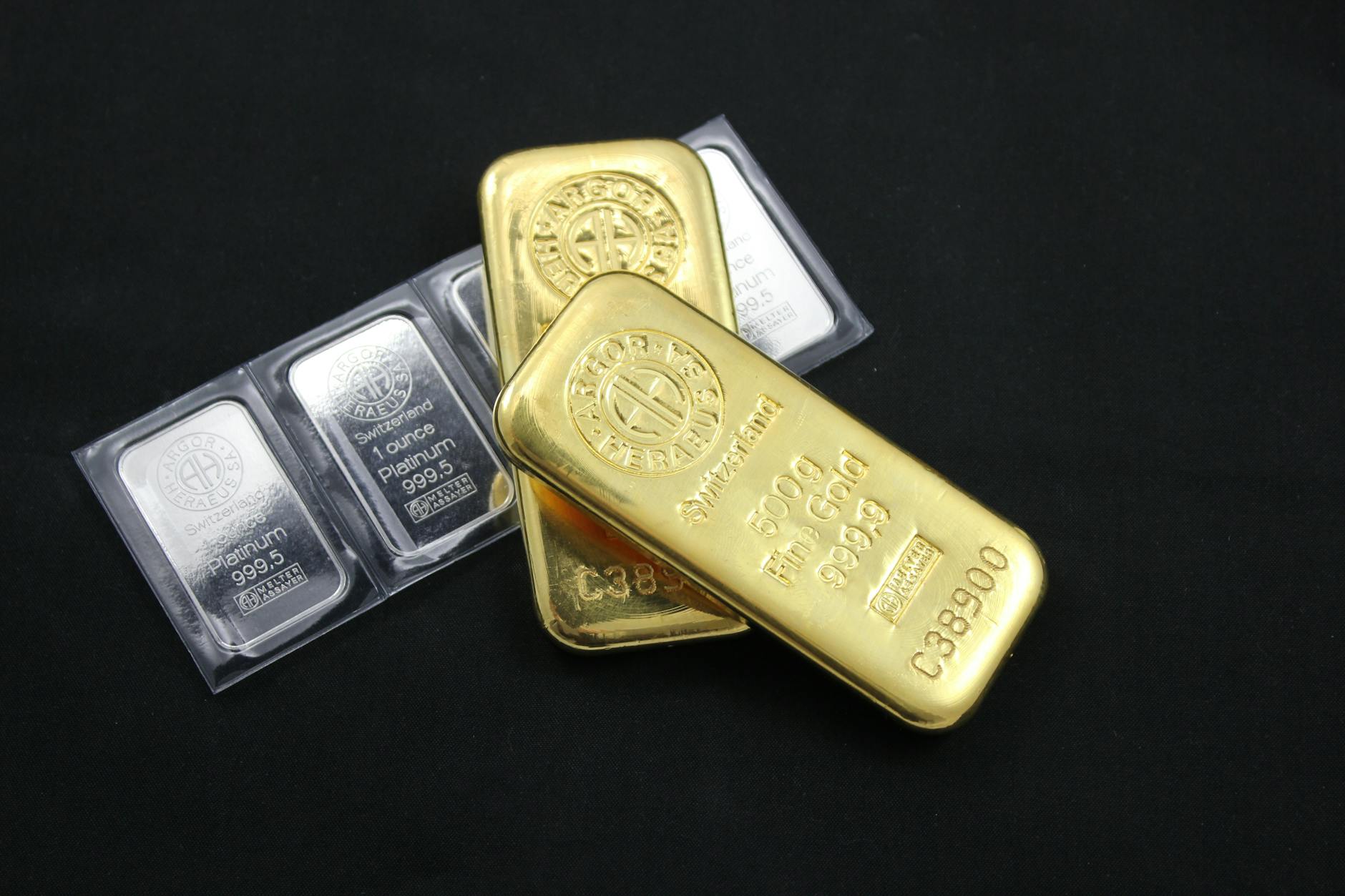
Gold was supposed to rally on war. It fell 12 percent instead.
Since Iran's military escalation began in March 2026, gold has fallen 12% — defying every historical crisis playbook. The mechanism that broke the trade isn't a mystery, but it rewrites the outlook for the world's oldest safe haven.
Gold was supposed to rally on war. It’s down 12 percent instead.
Since Iran’s military escalation began in March 2026, the metal that has anchored crisis portfolios for centuries has done the opposite of what every historical playbook predicted. January’s all-time high of $5,589 an ounce looks less like a launching pad and more like a crest — gold has shed roughly a quarter of its value from that peak even as geopolitical risk intensified.
What broke the trade is not a mystery, but it is a rewrite. “Gold’s safe-haven appeal tends to perform best in a financial crisis or growth shock — when real yields fall and the dollar weakens,” Ewa Manthey, ING’s commodities strategist, wrote in a note that has become the reference point for the market’s rethink. “A supply-driven energy shock does the opposite.”
That distinction — financial crisis versus energy-supply shock — is the spine of the new gold calculus. When oil prices spike on disrupted Strait of Hormuz transit rather than on demand growth, the result is higher inflation and higher real yields, because central banks cannot cut into a supply-side price impulse. Meanwhile, the dollar strengthens on safe-haven flows. Gold, priced in dollars and offering no yield, gets squeezed from both sides. This is not the 2008 playbook or the 2020 playbook. It is closer to 1973.
But the real-yield explanation, on its own, would have produced a correction. Not a rout. What turned it into one was already beneath the surface.
The momentum trade that inverted
Mark Malek, chief investment officer at Siebert, frames the unwind in terms that cut through the macro abstraction. His read: “Momentum, fear, and the expectation of Fed rate cuts are kind of all working in reverse right now.” By late February, gold had become the most crowded trade on the street — 35 percent of fund managers flagged it as the market’s most over-owned position in Bank of America’s global survey.
That positioning creates mechanical fragility. Leveraged gold ETFs, structured to rebalance daily, become forced sellers on down days, amplifying moves that would otherwise stay contained. In its March 2026 quarterly review, the Bank for International Settlements flagged this exact dynamic, noting that levered ETF rebalancing had turned what looked like orderly selling into something closer to a cascade. Retail momentum, the same force that carried gold to $5,589, has spent the last eight weeks carrying it in the other direction.
Amy Gower, Morgan Stanley’s metals and mining strategist, puts the structural shift plainly: “Gold’s sensitivity to monetary policy has taken over as the key price driver. This has overshadowed its safe-haven status and reduced its effectiveness as a hedge against both geopolitical and inflation risks.”
So the old framework — war good for gold, rate cuts good for gold — has fractured in two places at once. One channel is blocked by the nature of the shock. And the monetary-policy channel, which might have offset it, is blocked by the same shock’s inflationary consequence. Gold finds itself without either of its traditional engines.
Central banks: the bid that won’t walk away
Something is holding a floor.
Central banks have bought more than 1,000 tonnes of gold annually for three consecutive years through 2025, according to London Gold Exchange data. Across the reserve management community, the 2026 Central Banking survey found that 38.5 percent of reserve managers plan to increase their gold exposure over the next 12 months — a number that has risen in each of the last three annual surveys. Poland and India have led the visible buying, joined in recent quarters by China. Nearly 60 nations have added to reserves in the past two years. It is a structural de-dollarization trade dressed as prudent reserve management. And the World Gold Council’s 2026 outlook calls it a regime change, not a cycle — a distinction that matters because regimes persist.
Central bank buying, in this analysis, is not tactical. It responds to the fragmentation of the global reserve system that sanctions and frozen assets have accelerated. When the Reserve Bank of India added gold at a pace that implied a deliberate shift in reserve composition, it was signaling something that transcends the month-to-month price chart. Every dip becomes an accumulation opportunity for buyers who measure horizons in decades.
Whether this structural bid can hold if the momentum unwind deepens is the question the market is now pricing. That bid is real. But it is also slow — reserve managers buy on scale, not on speed, and they buy dips, not rips. If leveraged retail positions unwind far enough, the question is whether the dip-buying arrives before the margin calls do.
The portfolio case that outlasts the cycle
Beyond the tactical picture, a longer argument for gold is quietly accumulating — and it does not depend on geopolitics or the Fed.
Aviva Investors and State Street have both published research in recent quarters arguing that gold’s role as a non-correlated portfolio diversifier has become more valuable in a regime where equities and bonds increasingly move together. In the old 60-40 framework, bonds offset equities when growth faltered. That relationship has broken: the stock-bond correlation turned positive in 2022 and stayed there. Gold, which has held a near-zero correlation to both, fills the gap that bonds vacated.
MetalsAlpha’s modeling suggests that if institutional investors were to shift toward a 60-20-20 allocation — 60 percent equities, 20 percent bonds, 20 percent alternatives including gold — the demand impulse would be measured in thousands of tonnes. Currently, less than 1 percent of global ETF and mutual fund assets are allocated to gold. A normalization to even 3 or 4 percent would represent a structural demand shift that central bank buying alone cannot match.
This is the bull case, and it is not trivial. But it is also not imminent. Institutional asset allocation moves in years, not weeks. That argument is a 2027-2030 story. The next six months belong to rates and positioning. And the identity of the next Fed chair adds a third variable.
What the Warsh Fed means for a gold market priced for cuts
Kevin Warsh, widely expected to be the next Federal Reserve chair if the administration makes a change, has been explicit about his framework. He wants to front-load rate credibility. He is willing to accept near-term economic pain to re-anchor inflation expectations. And he has warned against repeating the 2019 insurance-cut mistake. His published analysis suggests he views the Fed’s credibility on inflation as the asset that matters most — and that asset, in his view, has been depleted.
For gold, this is the opposite of what the January rally was pricing. January’s $5,589 peak was built on an assumption of imminent Fed easing. A Warsh-led FOMC that keeps rates higher for longer — or even hikes into a supply-shock inflation print — would compress gold through the real-yield channel that already dominates price action. Wall Street’s consensus year-end target of roughly $5,000 an ounce from ING, Goldman Sachs, Bank of America, HSBC, and Morgan Stanley assumes rate cuts resume. If they don’t, those targets need to be rewritten.
Manthey and Gower agree on the diagnosis even if they differ on magnitude: policy, not geopolitics, is the driver now. A market that spent 2024 and early 2025 treating gold as a one-way bet on chaos has been forced to relearn an older lesson. Gold is a real-yield asset first and a crisis hedge second. When those two roles conflict — as they do when a war drives oil prices up and rate-cut expectations down — the real-yield asset wins.
None of the underlying pressures have gone away. Central banks are still buying. And the structural case for gold in portfolios is probably stronger than it was two years ago. But the price of gold in the second half of 2026 will not be decided in Tehran. It will be decided at the Federal Reserve, by the real yield on the 10-year Treasury, and by whether the leveraged positions that amplified the rally can be unwound without amplifying the fall.
Reza Najjar
Commodities desk covering oil, natural gas, gold and base metals. Reports from London.