Crypto perpetual futures draw US retail into leverage
Crypto perpetual futures are pulling US retail traders into a 24/7 leveraged market, testing whether regulated venues can contain liquidation shocks.
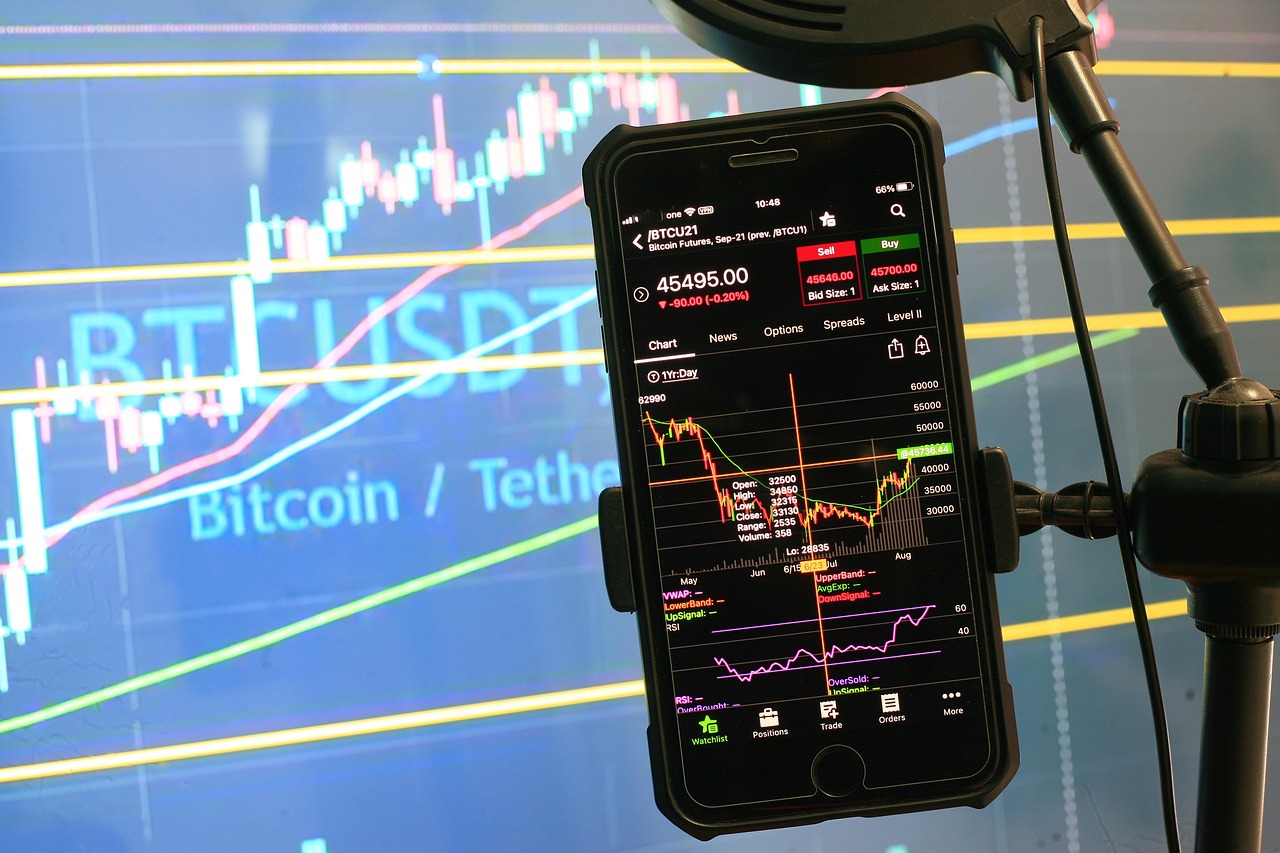
U.S. retail traders pushed more than $1bn through Kalshi crypto perpetual futures in less than a week after the Commodity Futures Trading Commission’s new framework for crypto asset perpetual contracts opened a domestic path for the 24/7 derivatives, according to Financial Times reporting. The first-week burst matters less as a volume milestone than as a market-structure signal. For years, perpetual futures belonged mostly to offshore exchanges and onchain venues, where traders used borrowed exposure to chase bitcoin and ether around the clock and accepted that margin calls could arrive at 3 a.m. Regulators have now decided the same product can sit on U.S. rails. The hard question is no longer whether Americans would trade perps. A regulated venue must prove it can make one of crypto’s fastest products look ordinary without removing the features that made traders want it.
Better Markets and other critics read the same decision differently. To them, domestic approval does not civilise the product; it domesticates the risk. Retail traders who understand spot bitcoin but not liquidation waterfalls are being invited into a contract that never expires, constantly resets its price through funding payments and can force positions out in seconds when collateral thins. The story therefore sits beyond a bitcoin-access piece or another Kalshi growth recap. It is a live test of the Trump-era U.S. push to bring crypto activity onshore: keep price discovery, clearing and trading fees inside American supervision, while betting that risk controls and margin rules can absorb volatility that offshore venues treated as routine. If that bet holds, regulators can say they pulled business out of the shadows. Failure would mean importing crypto’s most abrupt feedback loop straight into the retail market.
Why traders want it
Perpetual futures became crypto’s dominant trading lane because they solve a real problem for active traders: the underlying market never shuts. The Financial Times reported that global crypto perpetual volume reached about $90tn in 2025, up from roughly $30tn in 2023, a scale that conventional U.S. futures exchanges never ceded to retail investors. A perp lets traders keep directional exposure without rolling an expiry date every month, while the funding-rate mechanism nudges the contract back toward the spot market. Technical as that sounds, the commercial appeal is plain. When equities are closed on a Saturday and Treasury futures are hours away from reopening on Sunday night, crypto perps keep trading and offer an early read on risk appetite. For firms such as Kalshi Pro, that constant tape is a product feature as much as borrowed exposure is. It gives the venue a reason to court serious day traders rather than just casual punters clicking on event contracts.

Mansour’s insider case is about bringing the business home. In Financial Times reporting, Kalshi chief executive Tarek Mansour argued that the instrument appeals because it strips trading down to a pure price view rather than a dated bet that has to be rolled and repriced every few weeks.
“perps are ‘the purest form of trading’”
Tarek Mansour, Financial Times
The analyst case is slightly different. U.S. traders did not desperately need more borrowed exposure; offshore venues already supplied that. Onshore perps could instead make weekend price discovery, margining and customer protection happen where U.S. regulators can actually inspect them. That logic runs through the CoinDesk essay on what American crypto asset perpetuals mean and through The Block’s analysis of the regulated evolution from perpetual swaps to perpetual CFDs. The product does not disappear because Washington dislikes it. It either sits offshore, where U.S. regulators see less, or it migrates onto supervised books that might at least cap excesses. What remains unanswered is whether the supervised version can keep enough depth and tight enough spreads to compete once the novelty wears off.
Where the blowups come from
The sceptic case starts with history, not theory. The Financial Times said that on October 10 last year, after Donald Trump threatened a new tariff regime, about 1.5mn crypto traders were liquidated in 24 hours and the market shed roughly $1.2tn over the next six weeks. Perps did not cause that shock on their own, but they are built to accelerate forced selling once prices start running through margin thresholds. A trader with spot bitcoin can sit on losses. Someone in a perpetual contract often cannot. If the collateral buffer narrows fast enough, the position is cut automatically, and that sale can help push the market into the next trader’s liquidation level. Offshore crypto has treated that sequence as part of the landscape. Washington’s decision matters because it brings the same reflexive mechanism to a much broader U.S. retail audience, including traders who may know the chart but not the plumbing behind it.

The warnings are blunt for that reason. In the same Financial Times report, FalconX executive Shikhar Sehgal said perps were “100 per cent riskier than spot [trading].” James Davies, founder of Derivatives Clearing Network, put the structural problem in harsher terms:
“The design of perpetual futures provides no buffer when there is a crisis. It’s just a hot potato.”
James Davies, Financial Times
Benjamin Schiffrin of Better Markets made a similar point in Reuters’ report on U.S. exchanges preparing for perpetual futures: the danger is not only that traders can borrow more, but that the contract’s mechanics compress decision time right when retail investors are least equipped to react. The product trades through weekends, through overnight headlines and through the quiet hours when traditional risk desks are thin. Regulated venues can lower borrowing caps, tighten margin rules and improve disclosures. They cannot change the fact that a perpetual contract is designed to transmit stress continuously rather than pause for the next session open.
What regulation has not solved
The regulatory argument still looks more like a wager than a settlement. The CFTC’s emerging framework appears to reflect a view that if Americans are going to trade crypto perps anyway, it is better to pull the activity onto venues with surveillance, clearing and rulebooks than leave it entirely to offshore exchanges or onchain protocols such as those The Block has tracked in Hyperliquid’s growing perp market. Yet the same U.S. policy turn is already stretching the definition of what domestic platforms are becoming. CNBC has reported on widening questions over who will police new contracts on prediction-market venues, and NPR has noted how Kalshi’s product expansion is feeding a broader fight over whether the platform looks more like a derivatives exchange, a sportsbook or something in between. Perps sit inside that same dispute. They promise legitimate price discovery and onshore oversight. They also broaden the audience for a contract that has historically rewarded speed, discipline and tolerance for violent mark-to-market swings.
The most important number in Kalshi’s first week may not be the $1bn turnover at all. The time stamp matters more: Americans are now being invited into a 24/7 crypto market on U.S. terms, with regulators effectively arguing that the answer to offshore risk is not prohibition but domestication. That may prove right if regulated books keep liquidity deep, margin calls orderly and forced selling contained when the next macro shock hits. It may prove badly optimistic if domestic traders discover that a safer wrapper does not make perpetual futures safe. Washington has not eliminated one of crypto’s most volatile products. It has moved it closer to Main Street and closer to its own balance of political risk.
Caleb Mwangi
Crypto correspondent covering bitcoin, ether, altcoins and on-chain markets. Reports from Singapore.