Banks are hiring chief AI officers before the job settles
Chief AI officer roles at banks are spreading fast, but $3.5 million pay packages and fuzzy mandates show the title is still experimental.

Banks from Sydney to London are scrambling to install chief AI officers, turning what barely existed a year ago into a live contest over talent, pay and internal control of a technology banks now treat as core infrastructure rather than an experiment. Bloomberg reporting put top-end annual pay for the role near $3.5 million, while JPMorgan’s hire of Nomura’s international AI strategy chief showed the title has already become part governance post, part recruiting weapon.
Speed is the point. IBM’s May survey of 2,000 CEOs across 33 countries and 21 industries found 76 per cent of organisations now had a chief AI officer, up from 26 per cent in 2025. For lenders, that jump says less about a settled corporate model than about a board-level fear of being late: someone has to decide where AI sits, who gets trained first, which models can touch customer data and how far automation can move into compliance, service and trading without creating a new control problem.
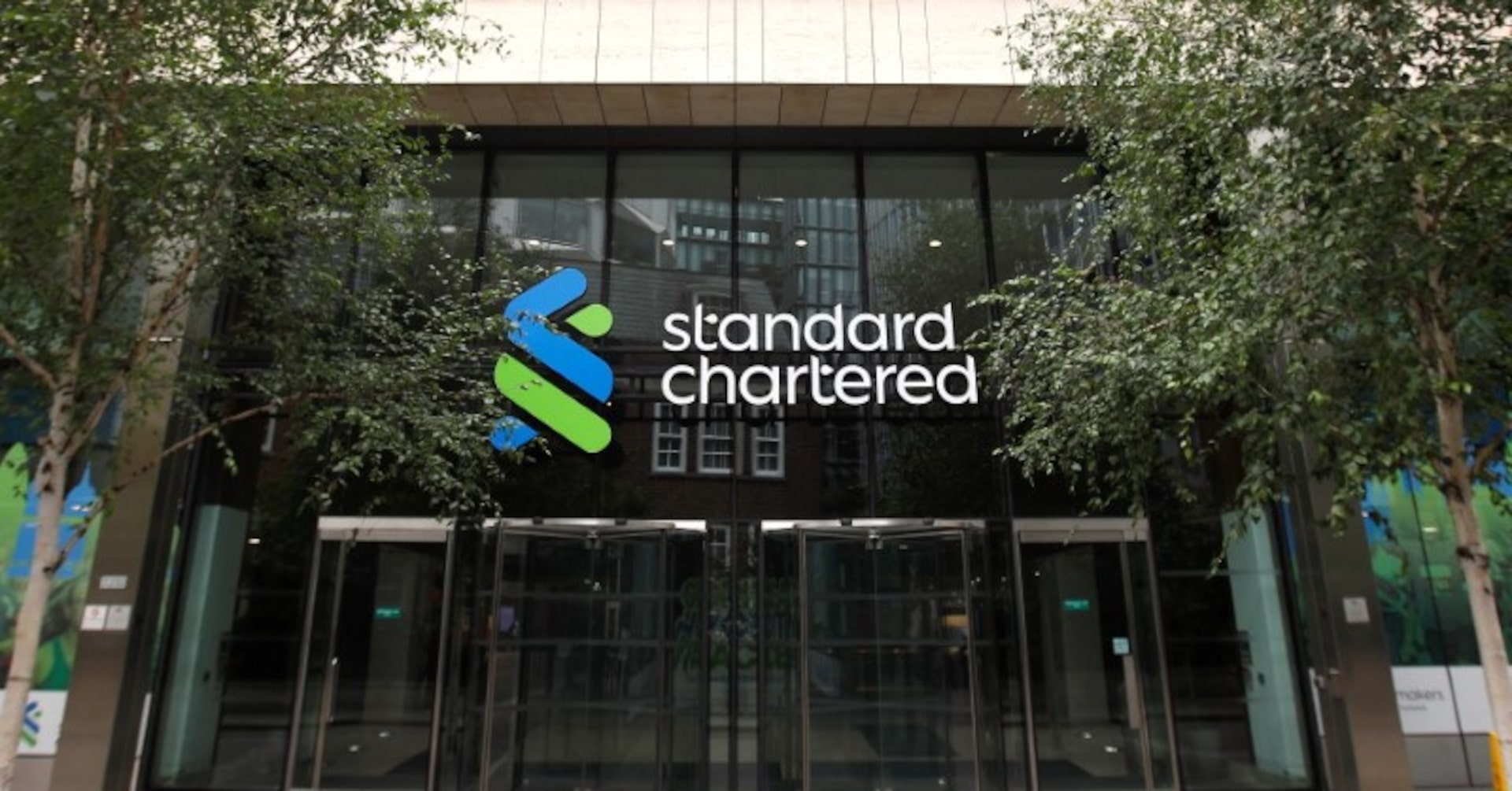
The same evidence looks different from the sceptic’s chair. David Hardoon, the former global head of AI enablement at Standard Chartered, argued that a permanent chief AI title would mean the technology had failed to spread far enough through the business.
“Any chief AI officer should operate on the premise that they should not have a role in the future.”
Source: David Hardoon, in Bloomberg’s report
That tension, between urgency now and redundancy later, is the clearest sign that banks are still inventing the job while they fill it.
Why banks want the title
Management has a practical reason to want the role. Lenders do not need another executive to proclaim that AI matters; they need someone who can force a common plan across business lines that usually guard their own systems, budgets and risk controls. LinkedIn’s head economist for Asia-Pacific, Pei Ying Chua, described the first task as making sense of the company’s AI strategy, which is a more operational brief than the evangelist job description the title can sometimes imply.

“The first is someone to actually make sense of what your company’s AI strategy is.”
Source: Pei Ying Chua, head economist for Asia-Pacific at LinkedIn, in Bloomberg’s report
Inside a bank, that strategy question runs through almost every function. One model might summarise call-centre notes; another might screen suspicious transactions, support underwriting or help traders sift flows. Appointing a chief AI officer is a bet that one senior executive can connect the technology agenda to the control agenda before each desk starts building its own tool stack and calling it transformation.
Commonwealth Bank of Australia offers the cleaner version of that argument. Ranil Boteju, its chief AI officer, has framed the job less as a separate empire than as a way to push the bank towards AI that disappears into ordinary work. In that insider view, a central office sets guardrails, pushes adoption and then hands day-to-day ownership back to business units once the machinery is stable.
Compensation and recruiting patterns suggest banks are paying for exactly that bridge function. Bloomberg’s reporting on packages near $3.5 million made the headline, but the more revealing datapoint was the willingness of lenders to pull talent from rivals. JPMorgan’s recent move for Nomura’s international AI strategy chief was not just another senior hire. It signalled that banks now think AI leadership can be bought, and lost, like rainmakers in investment banking or star engineers in fintech.
Boards form the second constituency for the title. Directors asked to approve AI spending without a settled way to measure returns at least get one accountable name. Semafor argued earlier this month that many companies are still struggling to prove AI’s return on investment to their boards. In banking, where the technology case often blends cost savings, revenue hopes and risk reduction, the temptation to appoint a single owner is even stronger. The title becomes a governance shortcut for institutions that know AI is important but cannot yet price its value with much confidence.
Why the role looks temporary
Bridge roles, though, often disappear once the bridge is built. Boteju has been unusually direct about that possibility, arguing in Commonwealth Bank’s own account of the role that successful AI eventually blends into the background.

“AI will be invisible. We won’t even know it’s there.”
Source: Ranil Boteju, chief AI officer at Commonwealth Bank of Australia
The argument sounds counterintuitive in a market now paying millions for the title, but it is probably the right way to read the economics. In the end, banks do not want a stand-alone AI fiefdom any more than they want a permanent chief spreadsheet officer or chief cloud officer. They want lending, markets, fraud, servicing and finance teams to use AI as normal infrastructure, with model risk, security and compliance folded into ordinary management. If that integration happens, the title either shrinks or mutates.
Turnover already hints at how unstable the role can look once experimentation gives way to harder questions about reporting lines and authority. Bloomberg’s reporting on Hardoon’s exit from Standard Chartered showed the issue in practice. Does the AI chief sit with technology, operations, risk or the chief executive? Does the job control a real budget, or only advise? Overlap with the chief data officer, chief technology officer and chief risk officer is not a footnote; it is where the politics start.
Such questions are not abstract org-chart points. Authority decides whether the chief AI officer can do more than coordinate pilots and presentations. A bank that wants faster coding tools, better client service assistants and stronger compliance screening may need central standards at first. It may not need a permanent C-suite layer once those standards are written and the business lines know how to run them.
Hardoon’s sceptical question is fair: what proof exists that the role improves outcomes rather than adding overhead? Public evidence remains thin. Hiring, spending and executive titles are easier to show than incremental returns from AI across the franchise. Until that proof gets clearer, the compensation race looks less like the arrival of a settled profession and more like the price institutions pay when they are afraid to be under-managed in a new technology cycle.
What the market is really pricing
A better reading of the hiring wave is not that every large bank needs a permanent chief AI officer. Each one wants a credible transition manager while the technology is still crossing from pilot to production. The title concentrates responsibility at the moment when boards want speed without chaos.
Poaching therefore matters more than the nomenclature. Lenders are not just buying technical expertise. Senior AI heads have to translate between engineers, risk committees, product heads and senior management, and stop AI from fragmenting into disconnected tools with no common standards. In other words, the market is valuing political range as much as model fluency.
The pattern has moved beyond pure technology companies. Public-sector organisations in Australia have also been pushed towards chief AI officer-style oversight, a reminder that the title is emerging wherever institutions think AI has moved beyond side-project status but has not yet found a durable administrative home. Banking is simply the richest, most competitive version of the same pattern.
For investors and bank executives, the message is less futuristic than it sounds. The chief AI officer boom is a sign that lenders have entered the expensive middle stage of adoption: they know the technology must be embedded, they do not yet agree on who should own it, and they are willing to pay up while they work that out. If the role thrives, it will probably be because AI remains politically difficult to distribute. If it disappears, that will be a sign of success rather than failure.
Put bluntly, banks are hiring chief AI officers faster than they can define the job. The scramble itself says the sector believes AI is now strategic. Uncertainty around the title says the real race is not to create a new executive aristocracy, but to make the role unnecessary before a rival does it first.
Naomi Voss
Banks and deals reporter covering bank earnings, fintech, M&A and IPOs. Reports from New York.