Warsh Fed hires signal policy-shop shift for rates
Warsh Fed hires, including a Project 2025 author, show how the new chair may reshape policy work as inflation keeps rate cuts distant.
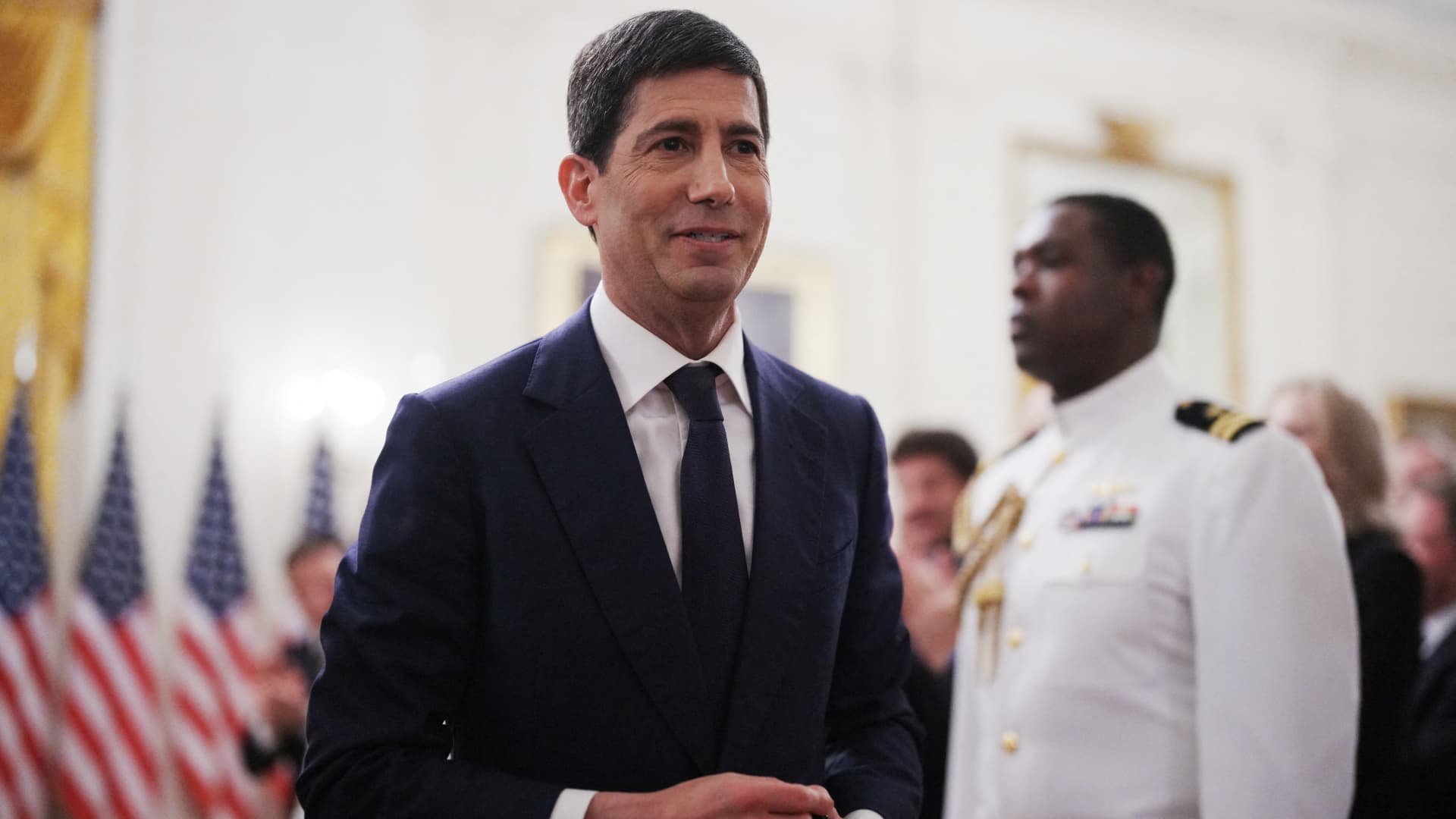
Kevin Warsh’s first two Federal Reserve hires arrived Wednesday as a small personnel announcement with a larger policy signal. Two temporary advisers, one of them a Project 2025 contributor, will sit close to the new chair’s policy work before his first rate-setting meeting.
Start with the plain facts. CNBC reported that Warsh hired Paul Winfree, who wrote the Fed chapter in Project 2025, and Daniel Heil, a Hoover Institution fellow, as interim advisers. Neither is a governor, regional bank president or Senate-confirmed official. Both are being described as temporary contractors.
Central-bank staffing rarely stays clerical for long, though. Access shapes the information flow. Models, memos and old institutional instincts all compete for a chair’s attention before investors ever see a statement. With Warsh, the first read is a Fed that may draw more heavily on an outside policy shop while still depending on the career staff already in place.
This is the hinge in the story, not the partisan label. Warsh is taking over with the benchmark range at 3.50 per cent to 3.75 per cent, inflation warnings coming from inside the system and traders searching for clues on whether the June 16-17 meeting becomes a communications reset. The hires matter because they landed before Warsh has publicly defined how much change he wants.
The policy shop signal
Every Fed chair blends staff research with personal judgment. Briefings from board economists, regional input and market intelligence all feed the same process before each meeting. For Warsh, the question is whether these first hires merely add trusted capacity for special projects, or whether they become the core of a chair-driven policy unit with more say over the argument the Federal Open Market Committee hears.

A person familiar with the matter told CNBC the two advisers are:
working as temporary contractors to support Warsh in his policy analysis and planning on special projects in the areas in which they have worked with him over time
Source: person familiar with the matter, CNBC
The wording is cautious. It points to a bounded remit. Even so, “policy analysis and planning” will not sound neutral to bond desks or Fed watchers, especially when one adviser is tied to a document that challenged the central bank’s current mandate framework.
Winfree’s Project 2025 role matters because the Fed chapter he wrote discussed ending the dual mandate, according to CNBC. Maximum employment and stable prices are not merely an internal preference; they are the legal north star for the institution. A chair can lean harder toward one side in speeches and meetings. Changing the mandate itself would be a political act, not an FOMC housekeeping item.
Warsh has tried to keep the public frame wider. In an opening message to more than 20,000 Fed employees, Reuters reported that he pledged to follow the best of the Fed’s traditions while also asking what could be done differently. That is reform phrased for an institution that prizes continuity. It reassures staff while leaving room to review communications, governance and the balance between board leadership and regional voices.
Two questions now sit next to each other. Inside the transition, the operational issue is how many permanent hires come from the Fed itself and how many come from think tanks, universities or Warsh’s prior networks. For independence watchers, the harder question is how far a chair can move on process before Congress, markets or other policymakers read it as political pressure.
Why markets care now
Warsh is not being repriced from a blank slate. Markets were already dealing with a more hawkish macro backdrop, and the hires land inside that shift. Reuters reported that Cleveland Fed President Beth Hammack said rates may need to rise if inflation does not abate, a warning that cuts against any assumption that a new chair automatically means faster easing.

Based on the data, I’m more concerned about the growing risks of persistently elevated inflation than the risks to full employment
Source: Beth Hammack, Reuters
That line gives the personnel news its market bite. If hawks inside the system are already arguing that inflation risk dominates labor-market risk, Warsh’s choice of advisers becomes part of a wider read on the reaction function. Traders do not need him to abandon the dual mandate; they only need him to sound less willing to validate rate-cut bets.
Hammack’s second point was just as important because it left the door open without forcing it.
it’s reasonable to keep rates steady given the uncertainties around the economic outlook. But if recent trends continue, it may soon be appropriate to act
Source: Beth Hammack, Reuters
Call it a holding pattern with a hawkish bias. The June meeting can matter even if the Fed leaves the target range unchanged. Statement language, Warsh’s press conference and any shift in how he describes inflation persistence may carry more market information than the decision itself.
Foreign-exchange desks are treating the debut as a risk event already. Bloomberg reported that Morgan Stanley sees Warsh’s first Fed meeting as a possible jolt for currency markets and carry trades. Winfree and Heil will not set rates. Their appointments still feed the market’s model of how the chair will weigh inflation, employment and political pressure.
Borrowers experience that debate later and more bluntly. A higher-for-longer Fed hits mortgages, credit-card balances and corporate refinancing before it settles into a clean macro narrative. Businesses rolling over debt care less about who wrote a policy chapter than about whether the central bank is prepared to tolerate tight financial conditions for longer.
Independence is the test
Warsh was confirmed by a 54-45 Senate vote and begins a four-year term under unusually close political scrutiny. The first staffing move therefore carries more weight than it might have under a quieter transition. A chair can hire ideological allies and still defend Fed independence. A chair who appears to import a political mandate into monetary policy will find that argument much harder.
Competence, rather than rupture, is Warsh’s strongest institutional case. Reuters described his opening message as a promise that the Fed’s traditions remain intact even as he reviews what should change. There is a plausible path there: preserve the mandate, tighten communications, sharpen the board’s research process and let incoming inflation data do most of the work.
Compression is the risk. Markets simplify. A Project 2025 author, hawkish inflation rhetoric and a new chair aligned with a rate-cutting administration can quickly become one tradeable story, even if the internal reality is more complicated. Warsh has little room for sloppy signals.
His first practical answer can be narrow. Are Winfree and Heil temporary specialists for bounded projects, or the first layer of a new chair’s policy brain trust? In the first case, the impact may fade after the June meeting. In the second, the Fed’s internal balance between staff consensus and chair-led reform could change more than the contractor label suggests.
Communications may be the harder problem. Warsh must show that looking differently at the Fed does not mean looking away from the Fed’s mandate. He can emphasize inflation risk when the data justify it, ask whether forecasts and minutes should work differently, and bring in outside thinkers to challenge stale assumptions. A first-month impression that economic analysis is being subordinated to a prewritten policy agenda would be far more damaging.
That is why the hires matter. They do not determine the next rate move, and they do not rewrite the dual mandate by themselves. They do show where Warsh is looking for advice as he tries to establish control over the central bank’s message.
For markets, the first test is whether Warsh’s June debut sounds like continuity with a firmer inflation bias or the start of a broader governance reset. Those two readings can coexist for a while. They cannot remain indistinguishable forever.
Helena Brandt
Macro reporter covering the Federal Reserve, ECB, inflation prints and jobs data. Reports from Washington.