Korea's 100% stock rally is now testing the dotcom analogy
Korean stocks have doubled in 2026, but the Kospi's AI-fuelled surge now hinges on two chip names, labour tensions and a fragile memory cycle.
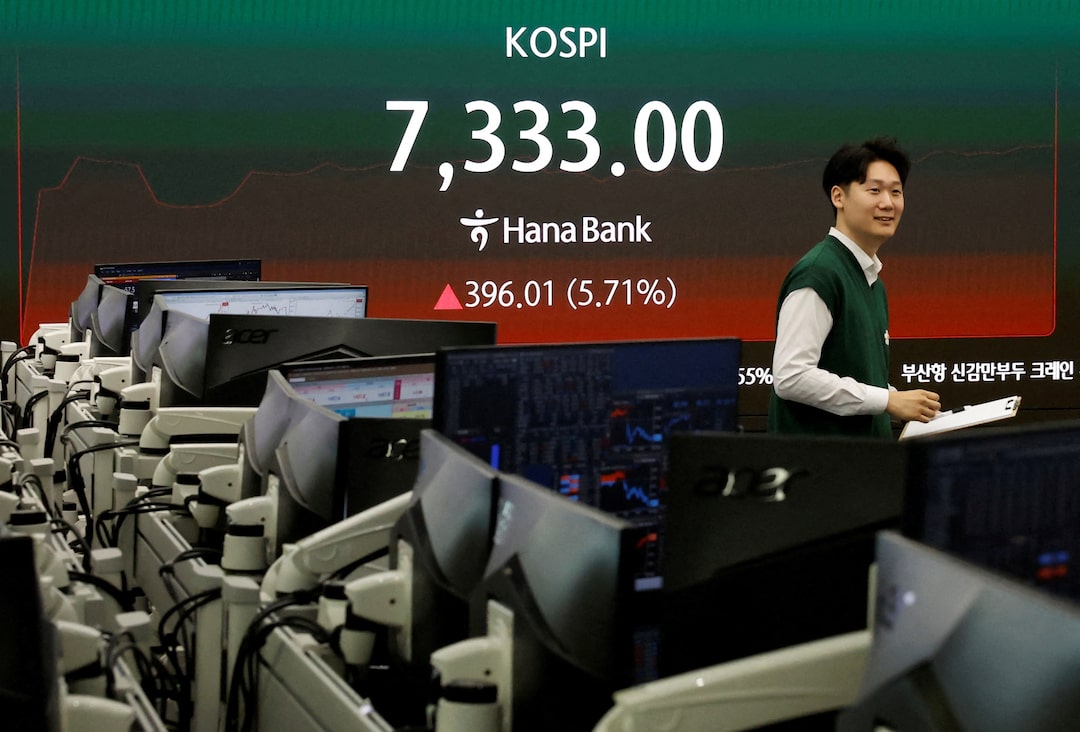
South Korean stocks have doubled in 2026, outpacing the market’s dotcom-era pace and turning one of Asia’s strongest rallies into a sharper question: has the Kospi entered a new regime, or is it staging the kind of late-cycle blow-off that only looks durable at the top. Bulls point to a real AI hardware bottleneck and a real earnings engine in memory chips. Bears see an index that can vault from 5,000 to 8,000 in months and conclude the cycle may already be saying something else.
The analyst’s case starts with concentration. Samsung Electronics and SK Hynix together make up a record 42.2 per cent of the Kospi, according to CNBC, while Reuters reported that the index had already climbed 76 per cent in 2025 before this year’s additional surge. This is no longer a clean read on domestic reform, consumer demand or export breadth. It is an AI-memory trade wearing the mask of a national benchmark.
But skeptics read the same tape differently. Bloomberg’s comparison with the Nasdaq 100’s 102 per cent surge in 1999 captures the speed, yet the sharper warning is narrower: when two companies pull an index this hard, the market can mistake a concentrated earnings story for a permanent rerating. CNBC’s warning on the memory boom-bust cycle is not a side argument. It is the rally’s main counterweight.
A rally in two names
The most important fact in the Korean story is not simply that stocks are up 100 per cent this year. It is that two chipmakers are doing an outsize share of the lifting. Samsung Electronics and SK Hynix together make up a record 42.2 per cent of the Kospi, which means every fresh leg higher in high-bandwidth memory demand now pulls the national benchmark with it.

The move is narrower than the old bubble analogy suggests. Reuters’ report on the Kospi breaking 7,000 and The Guardian’s reporting on Samsung’s AI-linked bonus pool both tie it to a shortage in memory chips needed to store and move the data that AI systems consume. Investors are paying for scarce components, backlog visibility and the belief that hyperscaler spending still has distance to run.
What is unusual here is the speed and how narrow the drivers are.
— Billy Leung, CNBC
Leung’s remark, from CNBC’s broader look at the AI-led reshuffling of global equity markets, explains why the rally feels strong and brittle at the same time. Narrow leadership can run longer than bears expect when earnings validate it. It can also leave an index looking healthy until one supply-chain assumption stops holding.
CNBC reported that SK Hynix briefly crossed the $1 trillion valuation mark after a year in which its shares had risen about 250 per cent, a sign that investors are looking beyond graphics processors toward the rest of the AI hardware stack. If AI infrastructure spending is still early, memory may deserve a rerating rather than a fleeting cyclical premium.
Why the dotcom test matters
The dotcom bubble was defined by a rush to capitalise future network effects before much of the revenue base existed. Korea’s current boom is tied to companies already at the centre of data-centre spending and already large enough to bend the index on delivery numbers alone.
Yet the distinction does not remove the late-cycle smell. Once a benchmark becomes shorthand for one supply bottleneck, the market stops asking whether the companies are good businesses and starts asking whether the shortage can stay scarce enough to support the multiple. That is a harsher test, especially when Bloomberg’s 5,000-to-8,000 framing now sits on top of Reuters’ reminder that the Kospi had already surged 76 per cent in 2025. A 100 per cent gain is not arriving from a washed-out base. It is landing on an already extended move.
In the long run it’s a pretty dreadful industry.
— William de Gale, BlueBox Asset Management, via CNBC
De Gale’s warning, quoted in CNBC’s analysis of the memory trade, is the sort of line bulls dismiss too early and revisit too late. It means memory becomes most dangerous when investors stop treating it as cyclical and start describing it as infrastructural, because that is usually when new capacity, better yields or customer inventory adjustments can cool the pricing backdrop faster than consensus expects.
The dotcom parallel is useful because both episodes show what happens when the market confuses a genuine technology shift with immunity from cycle dynamics. The internet was real. The valuations attached to it were not all durable. AI memory demand may prove equally real. The harder question is whether today’s index level already assumes too much of tomorrow’s tightness.
When profits become politics
Another reason this does not look like a routine export-cycle rally is that the gains are already leaking out of the tape and into labour politics. The New York Times reported that Samsung moved to avert a walkout with big bonuses, while The Guardian said employees in the memory-chip division were in line for payouts averaging about £310,000 each. When workers begin bargaining against a market narrative, investors get a second signal about how far profits have travelled and how contested they may become.

Labour peace, retention, bonus formulas and the politics of sharing AI gains can all affect how easily a company converts a shortage into sustained margins. A cycle that begins as an earnings story can end partly as an industrial-relations story, especially when national champions dominate the benchmark.
In the US, investors have spent much of the past year debating whether a handful of mega-cap names are distorting the signal from broad indices. Korea offers a purer version of the same problem. When benchmark leadership is this concentrated, the distinction between a country call and a sector call starts to disappear.
What would make this a new regime
For optimists to win from here, they need more than another few months of price momentum. They need evidence that memory scarcity lasts long enough to look less like a spike and more like a new base state for AI infrastructure. That means continued supply discipline, continued hyperscaler appetite and no sharp reversal in foreign flows or customer inventory behaviour.
For skeptics, the trigger may be smaller than the headline move suggests. It does not require a collapse in AI demand. It could be improved yields, a less frenzied pricing environment, a hint that customers are double-ordering, or profit-taking after a rally that has already outgrown the old bubble benchmark it was supposed merely to echo. CNBC’s market-reordering piece noted how narrow the leadership had become; its separate report on SK Hynix’s climb to $1 trillion showed how quickly that narrowness can compound.
The cleanest answer is that South Korea’s stock surge is neither a simple replay of the dotcom era nor proof of a permanently higher market regime. It is something harder to price and easier to overprice: a real earnings and scarcity story that has become concentrated enough to look like a macro market call. That is why the dotcom analogy keeps returning, as investors try to decide whether a genuine technological shift can also be the point at which discipline disappears.
Sloane Carrington
Markets columnist. Analytical pieces and deep-dives on monetary policy, capital flows and corporate strategy. Reports from New York.