Digital euro rift slows Europe's break from Visa, Mastercard
Digital euro politics are colliding with bank funding and fee economics, slowing Europe's push to cut reliance on Visa and Mastercard.
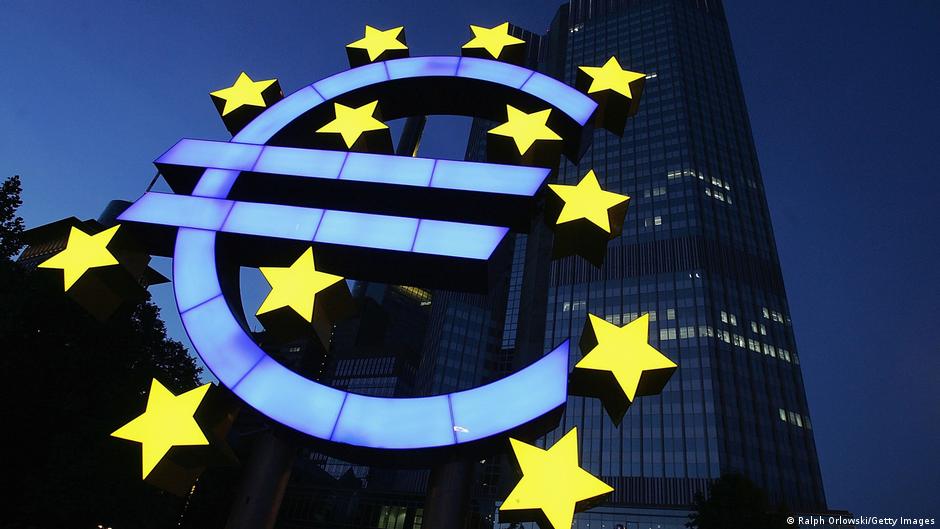
A widening split between the European Central Bank and Europe’s banks is slowing the euro zone’s push to build more autonomous payments rails. What Brussels and Frankfurt present as a sovereignty project looks different inside bank treasuries: a possible hit to deposit funding, a forced repricing of card economics and a public wallet that still lacks a settled business model. That matters because Visa and Mastercard still handle nearly two thirds of the euro zone’s €3.4 trillion in annual card payments, according to Reuters.
Europe’s problem is not a lack of ideas. It already has the digital euro, bank-led projects, national champions such as Wero, Bizum and Bancomat, and a fast-growing private stablecoin lobby. Its problem is that each track solves a different piece of the sovereignty question. The ECB wants resilience, reach and a backstop under public control. Commercial lenders want any new rail to preserve deposits and fee income. Merchants want low costs and easy acceptance. Those goals can coexist in theory. They rarely do in the same product.
Fernando Navarrete, the EU lawmaker overseeing the legislation, argued in Reuters’ reporting that the public case remains straightforward:
Europe is moving toward payment sovereignty … without imposing additional costs on citizens.
— Fernando Navarrete, EU lawmaker
But Europe’s banks read the same file differently. If merchant fees are capped and customers gain a new ECB-linked wallet, a sovereignty gain for policymakers can land as an earnings problem for lenders. Reuters said banks estimate the proposed merchant-fee cap alone could strip €8 billion to €9 billion a year from the private payments system. That turns the debate from abstract autonomy into a harder question: who absorbs the lost economics when the region tries to unseat incumbents it has relied on for decades?
Paolo Gusmerini of PwC captured the mismatch neatly in Reuters:
Public and private actors are moving in the same strategic direction, but with misaligned incentives and timelines.
— Paolo Gusmerini, director for digital banking at PwC
At root, that mismatch is the story. The ECB is trying to design infrastructure the way a central bank does, slowly, defensively and with attention to systemic risk. Banks are behaving like distributors with balance sheets to protect. The market, meanwhile, is moving faster than either side would prefer. A bank that sees no obvious upside in subsidising a public rail today can still decide it needs a private euro token tomorrow if dollar stablecoins or U.S. card networks keep taking share.
Why the banks are balking
The most immediate bank concern is deposit migration. The ECB’s own digital euro FAQ points to an expected holding limit of about €3,000 and says a first issuance could come only in 2029, assuming legislation is agreed in 2026. The cap is supposed to answer the regulator-policy question at the centre of the project: how does Europe create central-bank digital money for retail payments without turning it into a mass drain on commercial bank deposits?

A €3,000 ceiling is a real design answer, but only a partial one. It limits the amount any one user can park in the instrument, which should restrain sudden migration. It does not remove the signalling problem for banks. Once the ECB offers a public payments option, however bounded, it changes the hierarchy of trust inside the retail system. Ulrich Bindseil, a former ECB official, made that point sharply in Reuters’ account:
We would expect commercial bank money to be junior to central bank money, not the opposite.
— Ulrich Bindseil, former ECB senior official
Fee pressure is only part of the dispute. Banks are not simply defending interchange or merchant-service revenue. They are defending the distribution model that lets them bundle deposits, cards, settlement and consumer relationships on one balance sheet. Break that bundle, even gently, and the economics change. A digital euro with capped fees may be politically saleable. It is harder to make it attractive to the institutions expected to distribute it.
Timing makes the gap wider. Public infrastructure is being planned on a 2029 horizon. Private alternatives are being built now. Reuters reported on May 20 that a euro stablecoin project added 25 new banks, while The Block reported that the Qivalis consortium has grown to 37 lenders. Those numbers do not mean bank-backed stablecoins will displace cards across Europe. They do show where urgency sits. Lenders are more willing to fund a private rail they can influence directly than a public one that may compress fees and re-order funding priorities.
National schemes point the same way. Wero, Bizum and Bancomat address pieces of the payments stack without forcing a single continental rewrite. They are messier than a one-rail solution, but they fit the European pattern: incremental integration, local incumbents preserved, sovereignty improved at the margin rather than achieved in one stroke. For investors and bank analysts, that makes coexistence the more credible base case than displacement.
Why stablecoins sharpen the clock
Stablecoins are the pressure point because they compress the timetable. The ECB has already pitched the digital euro as part of Europe’s answer to dollar-denominated digital money, not merely as a consumer-payments upgrade. That framing matters. If the strategic issue were only whether merchants should pay less to accept cards, Europe could afford to move slowly. If the issue is whether U.S. networks dominate cards while dollar stablecoins become the next digital settlement layer, delay looks more expensive.

Taken together, the rift may produce the opposite of what policymakers first envisioned. Instead of one clear sovereign replacement rail, Europe is drifting toward parallel tracks: a public digital-euro proposal, national account-to-account schemes, and bank-sponsored stablecoin efforts. Reuters reported that the ECB has rebuffed proposals to ease the path for euro stablecoins, warning that looser treatment could weaken lending and monetary-policy transmission. That is a defensible central-bank position. It is also a sign that the public and private camps are not converging on a common architecture yet.
Ironically, banks are not rejecting sovereignty as such. Many are pursuing it through a different vehicle. A private euro stablecoin backed by a consortium of lenders still serves the goal of reducing reliance on dollar digital money. It may even expand faster if distributors keep the economics. But it shifts control away from the public centre of the system and toward a negotiated club model. That suits bank incentives. It does not fully answer the ECB’s concern about resilience, universal acceptance or what happens in stress.
A recent de-pegging episode involving StablR’s EURR and USDR is a reminder that private digital-money experiments carry their own operational and governance risks. Europe therefore faces a narrow path. Move too slowly, and the market keeps defaulting to Visa, Mastercard and dollar-linked instruments. Move too aggressively, and policymakers risk provoking the banks whose balance sheets and customer bases are still needed to distribute any new rail at scale.
Europe may get de-risking, not independence
More plausible is a layered market rather than a clean break from U.S. payments giants. Europe can reduce concentration risk without fully replacing the incumbents. Visa and Mastercard remain embedded because acceptance, fraud tooling and merchant integration are already deep. A digital euro, if it arrives on the ECB’s timetable, would look more like a public anchor inside the system than a commercial winner-take-all product. Bank-led stablecoins and domestic schemes would do the rest, unevenly and by country.
Politically, that outcome may disappoint those who want a simple sovereignty story. It is probably closer to Europe’s institutional reality. The region rarely builds single champions by decree when it can instead stitch together compromise layers. Payments are likely to follow the same pattern. The question is not whether Europe can remove U.S. rails overnight; it cannot. The question is whether it can build enough public and private redundancy that reliance on any one external network stops being strategic vulnerability.
For the moment, the answer is only partial. The ECB has a policy argument and a long runway. Banks have the distribution muscle and the faster clock. Merchants still want lower costs without new complexity. Until those incentives line up, Europe’s payments-sovereignty push will keep looking less like a decisive launch and more like a slow bargaining process over who gets to own the next layer of money.
Naomi Voss
Banks and deals reporter covering bank earnings, fintech, M&A and IPOs. Reports from New York.