Gulf AI data-center bets face a war-risk repricing
Gulf AI data-center economics are being repriced as war risk, higher power costs and redundancy demands raise the hurdle rate for new campuses.
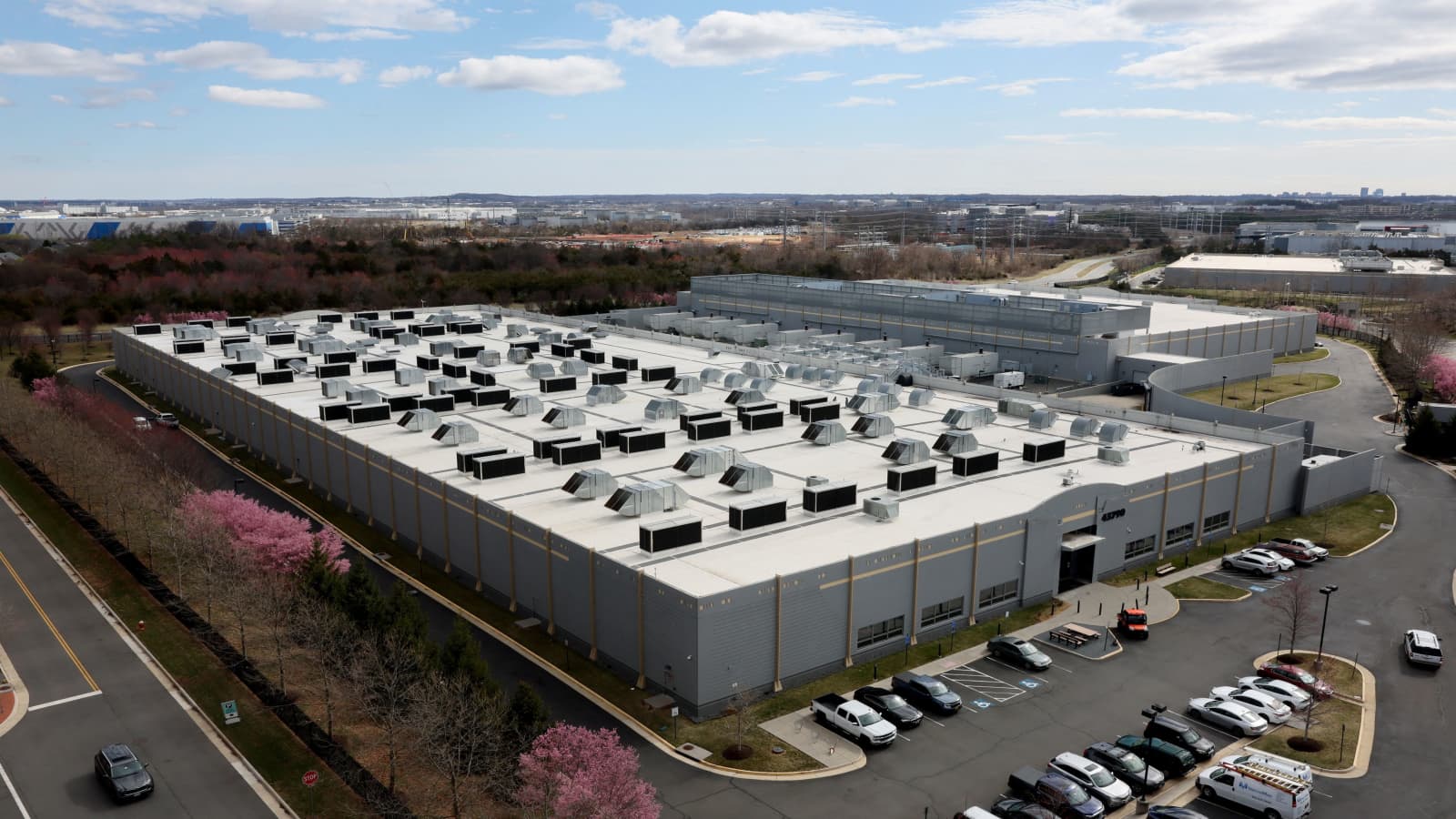
Investors are revisiting whether the Gulf can still serve as the AI boom’s next major infrastructure zone after attacks on Middle Eastern data centers and a period of stubbornly high power costs. For lenders and listed tech partners, the region’s pitch was simple: sovereign capital, fast build timelines and industrial electricity around $0.11 per kilowatt-hour, far below the $0.25 to $0.40 seen in parts of Europe, according to CNBC. That pitch now comes with a war-risk premium.
Even before insurers and lenders add that premium, the spending curve is daunting. Foreign Policy estimated that building 1 gigawatt of compute can cost $30 billion to $50 billion before the added expense of hardening sites, duplicating capacity or insuring against disruption. When the capital stack is that large, even a small rise in financing, security and delay assumptions can move the hurdle rate more than a cheap-power story can offset.
Gulf officials are not treating the region’s AI buildout as a trade that can be switched off at the first shock, The National reported. Abu Dhabi’s Stargate UAE campus and Saudi Arabia’s HUMAIN platform are being pitched as sovereign infrastructure, not as discretionary tech capex. The tension is plain: analysts are starting to reprice the region while Gulf insiders insist the answer is thicker buffers, not smaller ambitions.
The National’s reporting captured that stance in unusually blunt terms from UAE ambassador Yousef Al Otaiba:
“The UAE is all in on American tech. We are not hedging, we are not diversifying, we’re doubling down on it”
— Yousef Al Otaiba, UAE ambassador to the US
To markets, that line matters less as diplomacy than as capital-markets signalling. Sponsor strength can keep projects alive. It does not freeze the economics that outside lenders, insurers and public-market partners will use.
Skeptics read the same evidence differently. CNBC quoted Atlantic Council Geotech Center fellow Trisha Ray saying the original risk model has been overtaken by events:
“This has changed with the drone strikes”
— Trisha Ray, Atlantic Council Geotech Center
Cheap power is no longer the only variable. Investors now have to decide whether giant, target-rich campuses deserve the same valuation once physical attack, project interruption and costlier contingency planning enter the model.
Cheap power now carries a security premium
CNBC’s reporting captured the shift in adviser mood through Mark Richards, a BCLP partner who works on large-scale data-center projects:
“Investment decisions are taking longer because of the nature of the risks associated with effectively being in a region that has some serious threats”
— Mark Richards, BCLP partner advising large-scale data-center projects
In project finance, delay is its own cost. A slower close can mean pricier debt, more conservative draw schedules and tougher assumptions on when a campus reaches utilisation. For assets that already consume extraordinary amounts of power and cooling infrastructure, time itself becomes an extra line item.
The broader backdrop is already hostile. Reuters reported in March that Big Tech’s $635 billion AI spending wave was facing an energy-shock test even before the latest attacks raised the physical-risk question more directly. CNBC’s earlier reporting on May 19 argued that the Iran war was already pushing up pressure on AI chip supply chains, shipping lanes and data-center profitability. Add a security layer on top, and the old spread between Gulf electricity and European power prices stops looking like a decisive edge.
The arithmetic changes quickly once investors price in all of that. If 1 gigawatt of compute already costs $30 billion to $50 billion, then an extra few percentage points for hardening, insurance, perimeter security and delay can erase a large share of the advantage that came from cheaper power. Cheap electrons still matter. They just no longer arrive alone.
What financiers seem to want first is the layer around the servers. The emerging evidence points to protection and redundancy moving up the queue ahead of new compute. Security perimeter, backup power and duplicated network paths increasingly look like prerequisites for financing, not optional extras that can be layered on later.
Distributed design replaces one-campus bravado
Retreat is not the base case. Dispersion is. A Middle East Institute analysis cited in the research bundle put planned Gulf AI capacity at 8 to 10 gigawatts, including a 1.9 gigawatt Saudi compute target by 2030. The same growth story now looks less like one triumphant mega-campus and more like a network of separated sites, extra backup systems and more expensive redundancy.
Concentration was the original financial appeal of the Gulf model: gather sovereign capital, imported chips, energy supply and regulatory support in a handful of very large campuses, then scale quickly. Distributed architecture is safer, but it is also less elegant financially. Multiple sites require more land, more interconnection, more spare capacity and more duplication of staff and equipment. They can preserve availability, but they dilute some of the cost and latency advantages that made concentration attractive in the first place.
Critics say this was always the missing variable. Cyber risk had a budget. Drone and missile risk did not. Rest of World’s reporting and an Ars Technica report on undersea cable pressure around the Strait of Hormuz point to the same structural concern: resilience in the Gulf can no longer be measured only inside the server hall. It has to include cable routes, power delivery, physical standoff and recovery time after disruption.
Customers feel the premium sooner or later. Once redundancy becomes mandatory, somebody pays for it. Rest of World’s reporting on Gulf data-center risks framed the issue through enterprise customers and local buyers who ultimately absorb war-risk premiums through higher cloud bills, stricter service architecture or both. The question is not whether sovereign funds can write the first cheque. It is whether the end customer still likes the price of resilience once the bill moves down the chain.
Sovereign money can wait. Public partners cannot
Governments in the Gulf may still decide that the strategic value of owning sovereign AI capacity outweighs a weaker near-term return. That remains the strongest insider argument. State-backed investors can tolerate decade-long payback periods more easily than listed hyperscalers or private lenders who have to defend quarterly spending and tighter covenant math.
Yet these projects are not financed by patriotic intent alone. The Gulf still needs chips, networking gear, operating partners, cloud customers, insurers and outside technical credibility. Public partners will ask whether a region once sold as the low-cost frontier for AI infrastructure now deserves a frontier-risk discount instead. They may still participate, but on slower schedules, in smaller tranches or with higher required returns.
The repricing does not kill the Gulf’s AI ambitions. It changes the narrative around them. A few weeks ago, the story was that sovereign capital plus cheap power gave Abu Dhabi and Riyadh an opening to leapfrog Europe in the next generation of compute. After the attacks and the persistence of higher energy costs, the better description is that the Gulf is trying to build strategic AI infrastructure in full view of the market’s new risk premium.
For investors, that shift matters because the AI boom has become one of the most capital-intensive trades in the world. When Reuters writes about a $635 billion spending cycle and CNBC reports on war-driven pressure across the supply chain, investors stop asking only where demand will land. They start asking which geographies can still convert demand into returns without a fresh layer of geopolitical insurance.
Capital, political will and a real power advantage still give the Gulf an answer. What the region no longer has is the luxury of being priced as if resilience were free. For its AI campuses, the next phase of the boom looks less like cheap-power arbitrage and more like a test of who is willing to subsidise security long enough for the strategic case to win.
Sloane Carrington
Markets columnist. Analytical pieces and deep-dives on monetary policy, capital flows and corporate strategy. Reports from New York.