Consumer sentiment hits record low as Dow hits record high
The University of Michigan consumer sentiment index plunged to an all-time low of 44.8 in May 2026 even as the Dow Jones Industrial Average closed at a record 51,032, exposing a historic divergence between Wall Street optimism and household financial distress driven by war-fuelled inflation.
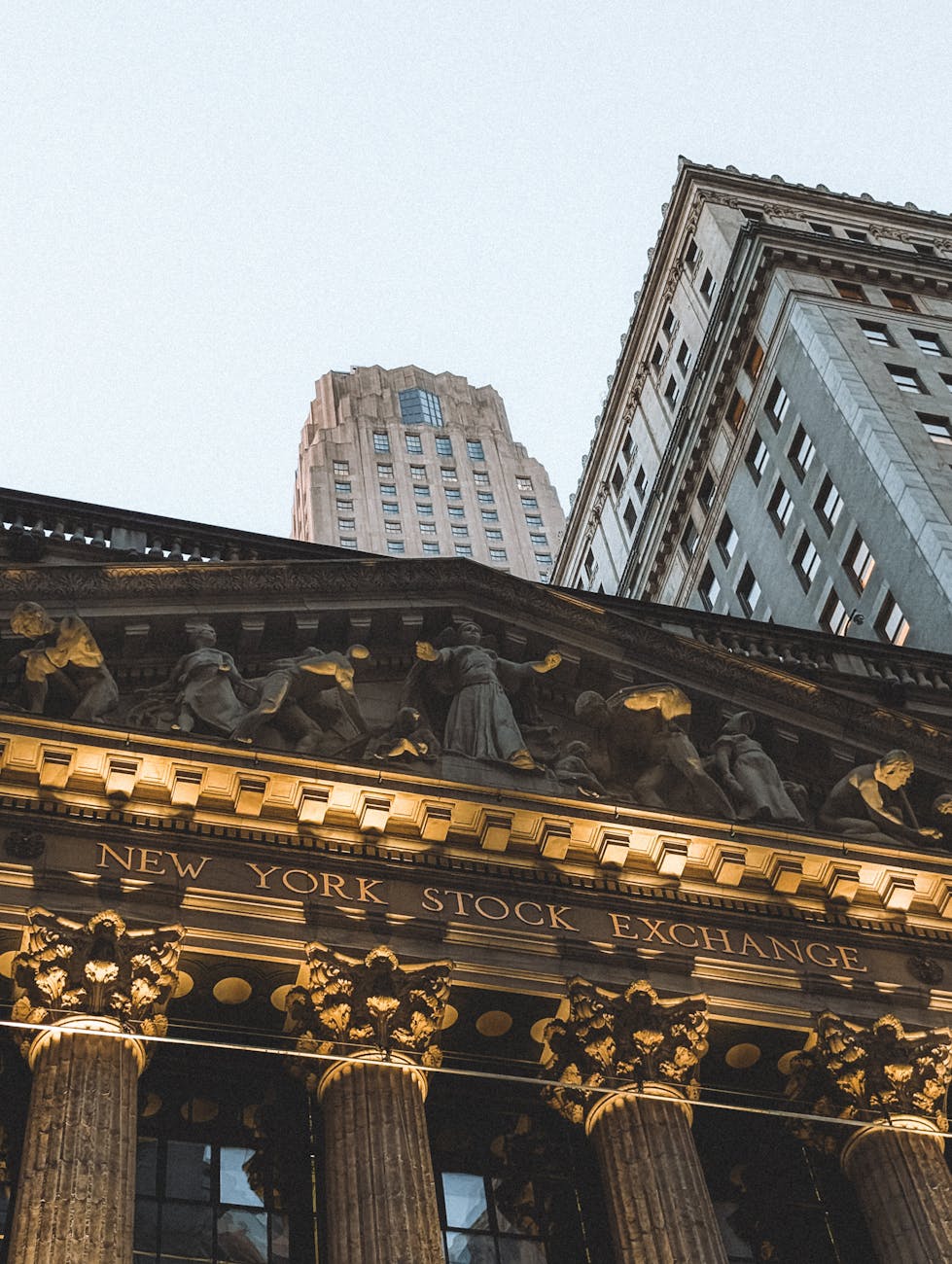
American consumers have never been this pessimistic, and the stock market has never been this expensive. On Friday 23 May, the University of Michigan’s consumer sentiment index fell to 44.8, the lowest reading since the survey began in 1952. Hours later, the Dow Jones Industrial Average closed at a record 51,032. The two data points, arriving on the same afternoon, exposed a widening fracture that neither Wall Street nor Washington has fully priced in. Financial markets are discounting an AI-fuelled productivity boom and a potential diplomatic off-ramp in Iran. Households are absorbing the steepest cost-of-living squeeze in a generation.
Prices drove the 5-point drop from April’s already-weak 49.8 almost single-handedly. Fifty-seven per cent of consumers spontaneously cited high costs as eroding their personal finances, up from 50 per cent a month earlier, according to Joanne Hsu, director of the Michigan survey.
The cost of living continues to be a first-order concern, with 57% of consumers spontaneously mentioning that high prices were eroding their personal finances, up from 50% last month.
— Joanne Hsu, Director, University of Michigan Surveys of Consumers
None of this is theoretical. The national average for a gallon of regular gasoline stood at $4.552 in late May, up more than 50 per cent since the Iran conflict began, according to the Reuters report. Food-at-home costs have risen at a compound annual rate above 5 per cent through the first five months of 2026. For a household earning the median US income, the combined energy and grocery squeeze now absorbs roughly $450 more per month than it did before the war, according to CNBC estimates.
The equity market, meanwhile, has looked straight through it. The Dow’s rally to 51,032, and the S&P 500’s parallel climb, rests on a straightforward thesis. Corporate earnings have held up. The AI capital-expenditure cycle shows no sign of slowing. Any Iran settlement that eases crude supply disruption would remove the single largest input-cost headwind in one stroke. Large-cap balance sheets are insulated from the consumer in ways the corner gas station is not.
What the sentiment survey showed
Every sub-index beneath the headline 44.8 print was bleak. The current economic conditions component fell to its lowest since the financial crisis. The expectations index, which measures how consumers see the economy six and twelve months ahead, dropped sharply, dragged lower by a collapse in confidence among Republicans and Independents. Sentiment among Republican respondents slid to the lowest level of Donald Trump’s second term.
The inflation expectations data were arguably more alarming than the headline sentiment number. One-year inflation expectations rose to 4.8 per cent, up from 4.7 per cent in April. What rattled bond markets was the jump in five-year expectations: 3.9 per cent, up from 3.5 per cent in April. The five-year measure is the Federal Reserve’s preferred gauge of whether long-term inflation psychology is becoming unmoored.

University of Michigan researchers described “sizable jumps among independents and Republicans” in long-run inflation expectations. The Wall Street Journal noted that the historic correlation between high stock prices and high consumer sentiment has now broken. In previous cycles, record equity markets and record-low sentiment simply did not coexist.
The Federal Reserve’s new problem
The expectations data land at an especially awkward moment for Kevin Warsh, who was sworn in as Federal Reserve chair in late May after winning the role partly on a promise to chart a path toward lower rates. Bloomberg reported that Warsh now faces an intensifying challenge from the hawkish wing of the Federal Open Market Committee, which reads the Michigan data as evidence that inflation psychology has already begun to shift.
John Ryding, chief economic adviser at Brean Capital, captured the tension directly: “Fed officials have claimed that long-term inflation expectations remain anchored but this report sorely tests that claim.” Should the next consumer price index print corroborate the Michigan survey’s signal, the case for holding rates at current levels, or even resuming hikes, strengthens considerably.
The bond market has begun to reflect this risk. Yields on the 10-year Treasury note have pushed above 4.5 per cent, and the breakeven inflation rate implied by Treasury Inflation-Protected Securities has widened. Markets that were pricing two rate cuts before year-end two weeks ago are now pricing one at most.
Two Americas, one economy
The wealth effect that has historically linked rising equity prices to rising consumer confidence is breaking because the beneficiaries are not the same people absorbing the costs. Stock ownership in the United States remains heavily concentrated: the top 10 per cent of households by wealth hold roughly 87 per cent of equities and mutual fund shares. For those households, the Dow at 51,032 means 401(k) balances are swelling and the outlook feels expansive.
For the bottom 50 per cent, the households whose consumption drives roughly a third of US GDP, the calculation is simpler. Gasoline costs more. Groceries cost more. Wages, while rising, are not keeping pace. Heather Long, chief economist at Navy Federal Credit Union, put it bluntly.
American consumers are angry about the economy. They don’t like high costs for so many basics of life.
— Heather Long, Chief Economist, Navy Federal Credit Union
When, not whether, that anger translates into a spending pullback is the question that now matters. The evidence so far is mixed. Retail sales data for April held up better than expected, and credit card spending trackers from the major banks show consumers continuing to swipe. But economists caution that tax refunds, which arrived earlier and larger than in 2025, have been masking the underlying strain.
The personal savings rate fell to 2.6 per cent in April, its lowest since mid-2022, according to Bureau of Economic Analysis data cited by CNBC. Outside of a recessionary trough, American households have never operated with a thinner cushion.
Christopher Rupkey, chief economist at FWDBONDS, warned that the reprieve may be temporary.
Consumers are still spending, but the cost of living crisis means that every last dollar in their wallets is getting paid out for life’s bare necessities without any money leftover for entertainment or holidays.
— Christopher Rupkey, Chief Economist, FWDBONDS
The political overhang
The Michigan survey carries an unavoidable political signal with midterm elections five months away. Sentiment among Republican respondents fell to the lowest since November 2024. Independents, the swing bloc that delivered Trump his margin two years ago, are reporting confidence levels consistent with recessionary readings. The Washington Post reported that Trump’s approval rating among white working-class voters has eroded sharply, a constituency whose economic discontent was central to his coalition.
A White House push to secure funding for a new White House ballroom landed poorly against the backdrop of $4.55 gasoline and rising grocery bills, CNBC noted. The administration has cycled through arguments: blaming the Iran war’s effect on energy markets, pointing to strong GDP growth, arguing that deregulation will eventually bring prices down. None has yet broken through to voters who see the cost of a tank of petrol every week.

For markets, the political dimension cuts both ways. A Republican-controlled Congress that loses seats in November could complicate the administration’s deregulation agenda, which has been a tailwind for financials and energy stocks. But the same midterm pressure could also force a more aggressive push for an Iran settlement, the single event that would most quickly reverse the energy-cost impulse behind the sentiment collapse.
The divergence will not close because markets fall to meet Main Street or because Main Street’s mood suddenly lifts. It will close when gasoline prices fall far enough that the 57 per cent of consumers citing high costs as their primary concern begin to cite something else instead. Or when the savings buffer runs out and the spending data turns, forcing markets to reconcile the two realities they have so far treated as separate economies.
Sloane Carrington
Markets columnist. Analytical pieces and deep-dives on monetary policy, capital flows and corporate strategy. Reports from New York.