SpaceX and OpenAI mega-IPOs flash a market-top warning
Mega-IPOs in 2026 are becoming a sentiment test as SpaceX, OpenAI and Anthropic challenge how much valuation and supply markets can absorb.
As SpaceX and OpenAI push toward record-sized debuts, strategists are starting to read the 2026 mega-IPO queue less as proof of healthy risk appetite than as a warning that investor enthusiasm is getting crowded into a narrow set of stories. CNBC reported that analysts are increasingly treating the cluster of giant floats as a sentiment gauge in its own right, with the debate now shifting from whether the deals can get done to what their timing says about the broader tape.
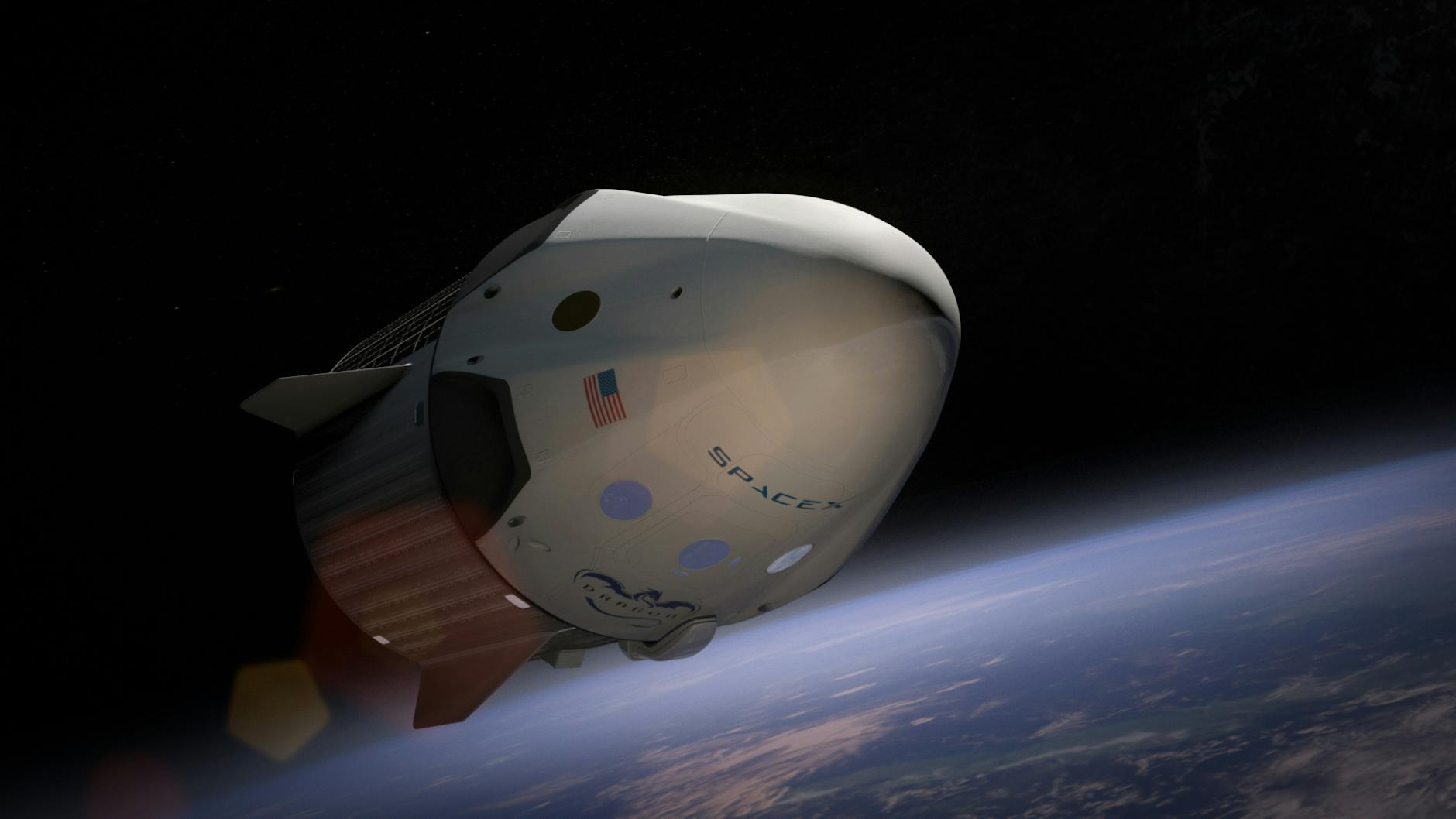
On that measure, the listing window is not reopening in any ordinary way. SpaceX is targeting a valuation of $1.75 trillion and a raise of as much as $75 billion ahead of a planned June 12 listing, while OpenAI’s confidential filing and Anthropic’s revenue surge toward an expected IPO are creating an AI valuation race behind it. The question for markets is no longer just whether buyers want growth. It is whether public markets can absorb several narrative-heavy, trillion-dollar candidates at once without forcing a repricing elsewhere.
Yet the skeptic’s read arrives almost immediately. Private rounds can carry a story for longer than public filings can. Once quarterly disclosures, free-float math and index mechanics replace scarcity value, investors have to decide how much of a name like SpaceX is current cash generation and how much is optionality around satellites, launch and AI. Bloomberg’s reporting on the filing showed why that tension matters: the company paired a huge valuation ask with a latest-quarter net loss of $4.28 billion, even as Starlink generated $3.26 billion of revenue.
One strategist’s takeaway is blunt. In CNBC’s reporting, Zacks chief equity strategist John Blank said the setup looked less like a clean bull-market broadening and more like a late-cycle tell.
“I see it as a market top.”
— John Blank, chief equity strategist at Zacks, as quoted by CNBC
A sentiment gauge, not a reopening
Size alone is not the point. Giant listings tend to appear when private capital has pushed valuations high enough that public liquidity becomes the next logical exit. Business Insider’s interview with Michael Burry and a Guardian analysis of the current rally both revived dot-com comparisons for that reason: the market keeps rewarding future-dominant narratives even when the earnings path is unresolved. The Guardian piece cited investor Paul Kedrosky’s warning that just three planned offerings would be larger than the whole dot-com bubble, a dramatic formulation, but one that captures how concentrated the current enthusiasm has become.
In that reading, SpaceX matters because it is legible to almost every risk constituency at once. Growth managers can pitch Starlink scale. Thematic AI investors can focus on compute and optionality. Retail traders can treat Elon Musk’s brand as momentum fuel. Bankers see fee pools. That breadth is supportive for bookbuilding, but it also means one deal can become a referendum on the market’s tolerance for story stocks.
Valuation sharpens the point. AJ Bell’s Dan Coatsworth told CNBC that a $1.75 trillion SpaceX valuation would place the company on 67 times sales, the sort of multiple that invites less comparison with a routine IPO reopening and more with prior periods when investors paid upfront for years of assumed dominance.
“A $1.75 trillion valuation would put SpaceX on 67 times sales.”
— Dan Coatsworth, head of markets at AJ Bell, as quoted by CNBC
The supply problem
Inside the syndicate, the central issue is less whether demand exists than how the aftermarket is engineered. Marketplace’s overview of the 2026 wave captured the industry assumption that several of these names can clear because public-market branding is strong. That is precisely why insiders worry about structure. When every order book is stuffed with the same mega-cap buyers, a successful launch can still crowd out other deals waiting behind it.

Beneath the excitement, the mechanical version of the market-top argument is more interesting than the emotional one. State Street Global Advisors has argued that mega-cap IPOs with limited free float can create forced-buying pressure for index managers, especially if inclusion comes quickly and benchmark providers treat the stocks as unavoidable. MarketScreener’s analysis makes the same point more bluntly: a huge listing can pull liquidity toward the new issue without proving that the rest of the IPO market has recovered.
Passive funds do not summon fresh cash on command. If a new company enters benchmarks at scale, managers often trim existing leaders to make room. On a market already dominated by a handful of mega caps, that means the IPO rush can become a redistribution event rather than a broad vote of confidence. Even a strong first print can mask pressure elsewhere, particularly if retail demand chases a small float and turns the aftermarket into a scarcity trade.
Together, those mechanics partly answer the insider question about liquidity. A trillion-dollar listing does not have to crash the market to send a warning. It only has to reveal that fresh demand is narrower than the headline valuation suggests. A deal that prices well because everyone feels compelled to own it can still be evidence of concentration, not health.
The AI benchmark
OpenAI and Anthropic complicate the picture because they are not simply large technology IPOs. They are about to become public markers for how much investors will pay for rapid revenue growth before durable margin structure appears. CNBC reported that bankers and traders already see the first filer as setting the ceiling for the second. If OpenAI prices hard and trades cleanly, Anthropic can push. If it stumbles, the read-through will be instant.
For skeptics, the question here is the simplest one in the bundle: where does profitability actually come from once public investors stop rewarding pure scale. Anthropic’s expected $10.9 billion second-quarter revenue and first profitable quarter give it a cleaner current answer than many AI peers. OpenAI still has brand power and distribution, but its eventual multiple will rest on whether recurring enterprise demand looks durable enough to offset the capital intensity of compute. That is why the next AI IPO will not be judged only against Nvidia-like enthusiasm. It will also be judged against software-style margin expectations that the sector has not yet cleanly met.
From BlueBox Asset Management, William de Gale framed the risk in CNBC’s reporting as a test of the whole AI premium, not just of any single company.
“If OpenAI and Anthropic can’t make money, this whole thing falls apart.”
— William de Gale, portfolio manager at BlueBox Asset Management, as quoted by CNBC
SpaceX is the hardest case in the pack because it asks investors to price three businesses at once: launch, broadband and an AI-adjacent optionality story layered on top. Bloomberg’s analysis of the filing and The Star’s readout pointed to the same conclusion. Public buyers are being asked to underwrite a hybrid conglomerate whose most mature cash engine is Starlink, while the headline multiple reflects what the rest of the platform might become. That is a much tougher public-market ask than the mystique of a private unicorn suggests.
What the warning would look like
Importantly, a market-top warning does not mean these deals fail. In fact, the sharper signal may be the opposite: heavily oversubscribed offerings, immediate index-inclusion chatter and a scramble to justify ever higher comparables could show that the market still prefers scarcity and narrative to breadth. That would fit the late-cycle pattern analysts are circling. New supply arrives, but instead of broadening participation it reinforces dependence on a handful of symbols that everyone feels compelled to own.
Only the first pricing will settle the insider question on liquidity. If SpaceX can raise close to $75 billion, hold its valuation and avoid destabilising the rest of the large-cap complex, the market-top argument weakens. If the deal needs a discount, if passive funds have to reshuffle aggressively, or if OpenAI and Anthropic end up pricing off a lower bar than private investors expected, the IPO calendar will have served as a warning long before any benchmark rolled over.
Right now, the important change is interpretive. A year ago, a reopened IPO window would have been read as evidence that risk capital was broadening again. In 2026, with SpaceX, OpenAI and Anthropic crowding the queue, the same window is being read as a measure of how much speculative demand is left at the very top of the market. That is a more fragile kind of optimism, and it is why the biggest deals on the calendar are starting to look like macro signals.
Sloane Carrington
Markets columnist. Analytical pieces and deep-dives on monetary policy, capital flows and corporate strategy. Reports from New York.