SpaceX S-1 analysis: Starlink funds xAI and Starship
SpaceX S-1 analysis shows Starlink generating $4.423 billion of operating income in 2025 while xAI and Starship absorb the execution risk.
SpaceX’s S-1 filing on Tuesday did two things at once: it showed a company large enough to produce $18.674 billion of revenue in 2025, and a capital machine still spending heavily enough to post a $2.589 billion operating loss. For public-market investors, that tension sits at the centre of the deal.
The bullish camp reads it cleanly: Starlink is already the economic engine, while xAI and Starship are why the float still supports a record story. Connectivity generated $11.387 billion of revenue and $4.423 billion of operating income last year, the filing shows — roughly 61 per cent of group sales and the most mature numbers anywhere in the prospectus.
Paragraph three, though, invites a harder reading. The company asking for public money is not a simple launch champion coming to market after its hardest spending years. It is a bundle of businesses with very different payback periods, and Elon Musk will still control how cash moves between them.
CNBC’s comparison with past mega-debuts and Reuters’s account of the road to the float both frame this as a listing that could reset the size of the US IPO market. Whether investors will buy the story is not the deeper question. Which story they are buying is: a profitable broadband network, an AI infrastructure wager, or Musk’s ability to keep all of it moving at once.
Earlier reporting had primed the market for a more familiar SpaceX pitch. Business Insider’s first read of the paperwork and The Verge’s early take on the filing showed the surprise was not just the top-line size. It was how decisively the prospectus recast the company as a two-speed balance sheet — Starlink cash generation on one side, capital-hungry AI on the other.
Starlink is doing the funding
The headline-grabbing total addressable market claim is not the most important disclosure in the prospectus. The segment split is. Connectivity throws off real money. AI does not — at least not yet. SpaceX reported $3.201 billion of AI revenue in 2025 and a $6.355 billion operating loss, a hole that more than consumed the profit generated by Starlink.

Capital expenditure tells the same story. SpaceX booked $20.737 billion in 2025, with $12.727 billion — about 61 per cent — tied to AI. The company reaching the public market is not a rocket operator with a satellite side business. It is a subscription-funded infrastructure platform using broadband cash flows to bankroll compute capacity at industrial scale.
For valuation, that distinction matters. Subscriber economics, network utilisation and capital intensity can be modelled with some discipline. Orbital AI compute cannot, at least not with the same confidence — the service, the customer mix and the margin profile are all still being sold as direction, not settled operating history.
The prospectus itself does not hide the scale of that ambition:
We believe we have identified the largest actionable total addressable market in human history.
— SpaceX prospectus
Venture capital language. Not late-cycle public-market caution. At the same time, it helps explain why WIRED reported that Anthropic has agreed to pay SpaceX $1.25 billion a month through May 2029 for data-centre capacity. If that figure holds, the AI segment gets a clearer commercial bridge than many investors expected. The present-tense arithmetic does not change: Starlink is paying the bills now.
The prospectus also looks heavier than the pre-S-1 picture some investors had been working with. In January, Reuters reported that SpaceX had generated about $8 billion of profit on $15 billion to $16 billion of revenue the year before. What arrived in May is broader, more capex-intensive and more exposed to AI execution — that business is no longer adjacent to the pitch. It sits inside the consolidated math.
The valuation case depends on a very specific chain of events
Analysts have an upside case that is straightforward enough. A connectivity business with recurring revenue finances the infrastructure for larger adjacent markets — satellite-to-mobile, compute, the works. The filing suggests public investors get both the cash engine and the option value.
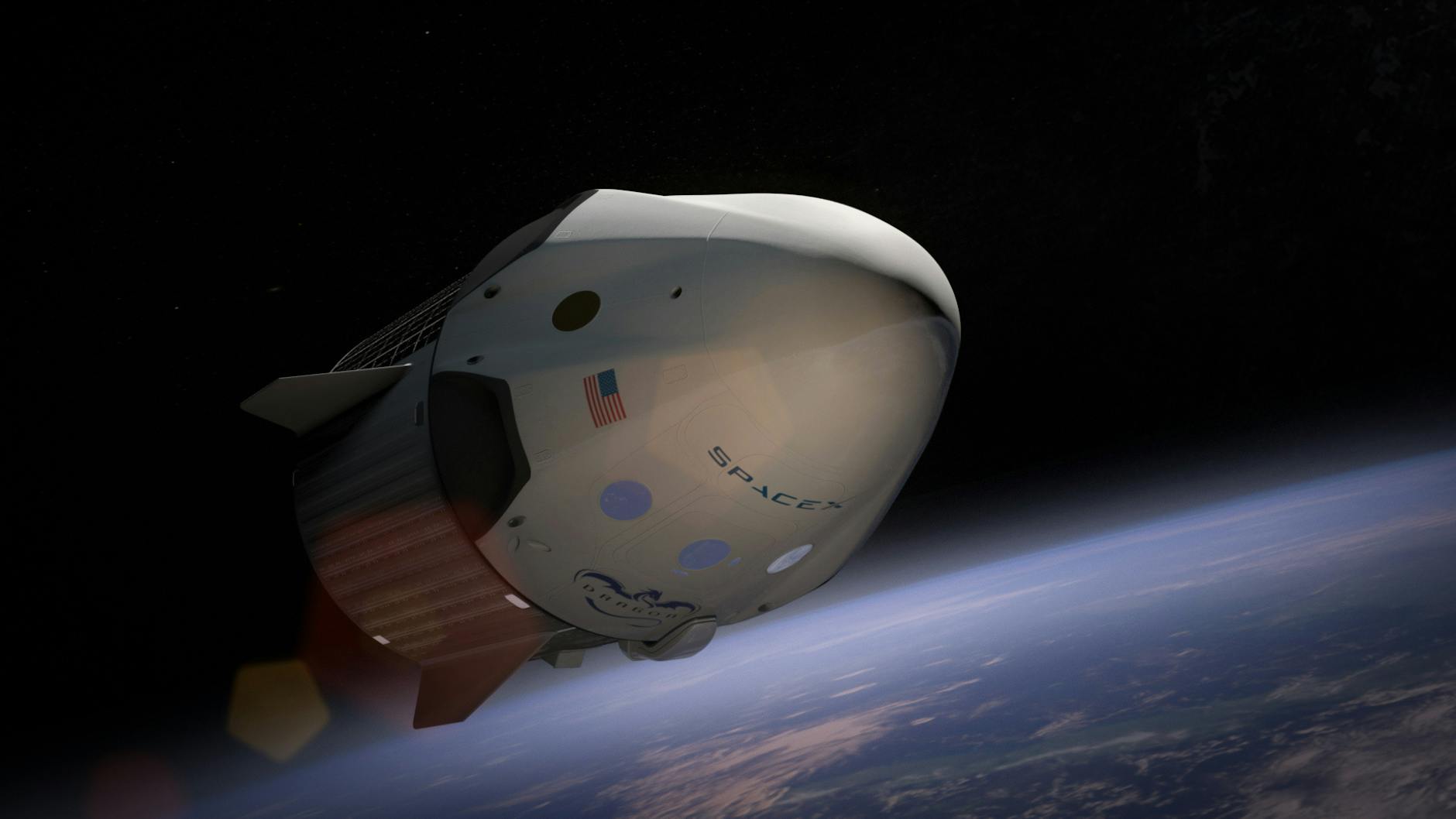
Much of that next chapter, however, is tied to one program — on SpaceX’s own telling. In its Starship risk disclosure, the company says:
Any failure or delay in the development of Starship at scale or in achieving the required launch cadence, reusability and capabilities thereafter would delay or limit our ability to execute our growth strategy, including the deployment of next-generation satellites, global satellite-to-mobile connectivity, and orbital AI compute.
— SpaceX prospectus
This passage offers a partial answer to the skeptic’s question. Can SpaceX grow into the orbital-AI and next-generation satellite story without Starship working at scale? Not on the company’s own telling. Bigger satellites, wider coverage, the orbital compute thesis — all of it is linked to launch cadence, reusability and refuelling that still have to be proven in volume. That is the bind.
Context from this month makes the dependence more than theoretical. Scientific American’s report on Starship delays and a worker-death investigation and Reuters’s earlier reporting on the IPO build-up show how closely the market story and the operating story now sit together. If Starship slips, the damage extends beyond mission schedules — it pushes out the assets meant to justify the next leg of the valuation.
Elsewhere in the filing, SpaceX makes that leap explicit:
We believe we are the only company with a commercially viable path to building orbital AI compute at scale.
— SpaceX prospectus
That is the dream inside the prospectus. It is also the section of the story still asking investors for the most faith.
Control is part of the valuation
Governance is not a footnote. It sits inside the deal from day one. Reviews of the share structure, including TechCrunch’s breakdown of the filing, put Musk’s post-IPO voting power at 85.1 per cent. Public investors get access to Starlink cash flows and SpaceX engineering upside. Leverage if AI spending rises, timelines stretch or related-party exposure grows — that they do not get.
Dual-class control is often tolerated when the operating model is narrow and the founder’s incentive is easy to read. SpaceX is asking for something broader. The Financial Times’ report on the prospective hedge-fund windfall and CNBC’s comparison with earlier record IPOs underline how much institutional capital may be asked to absorb a structure in which listed shareholders provide funding but not much governance.
The regulator-policy perspective matters even in a growth story this large. One business — Starlink — already looks like a scale infrastructure asset. The risk is that its cash generation can be redeployed into ventures harder to price, harder to govern and slower to test in public markets than a standard telecom or aerospace company.
Seen that way, the filing does answer the analyst’s first question, at least partly. Starlink appears profitable enough to subsidise the rest of the group today. The next two questions are not answered nearly as cleanly: whether Starship can unlock the next growth layer on schedule, and whether outside shareholders will have meaningful say if it cannot. The SpaceX float looks less like a mature industrial listing and more like a referendum on whether one broadband cash machine can carry three moonshots at once.
Sloane Carrington
Markets columnist. Analytical pieces and deep-dives on monetary policy, capital flows and corporate strategy. Reports from New York.